
.jpg?s3=1)
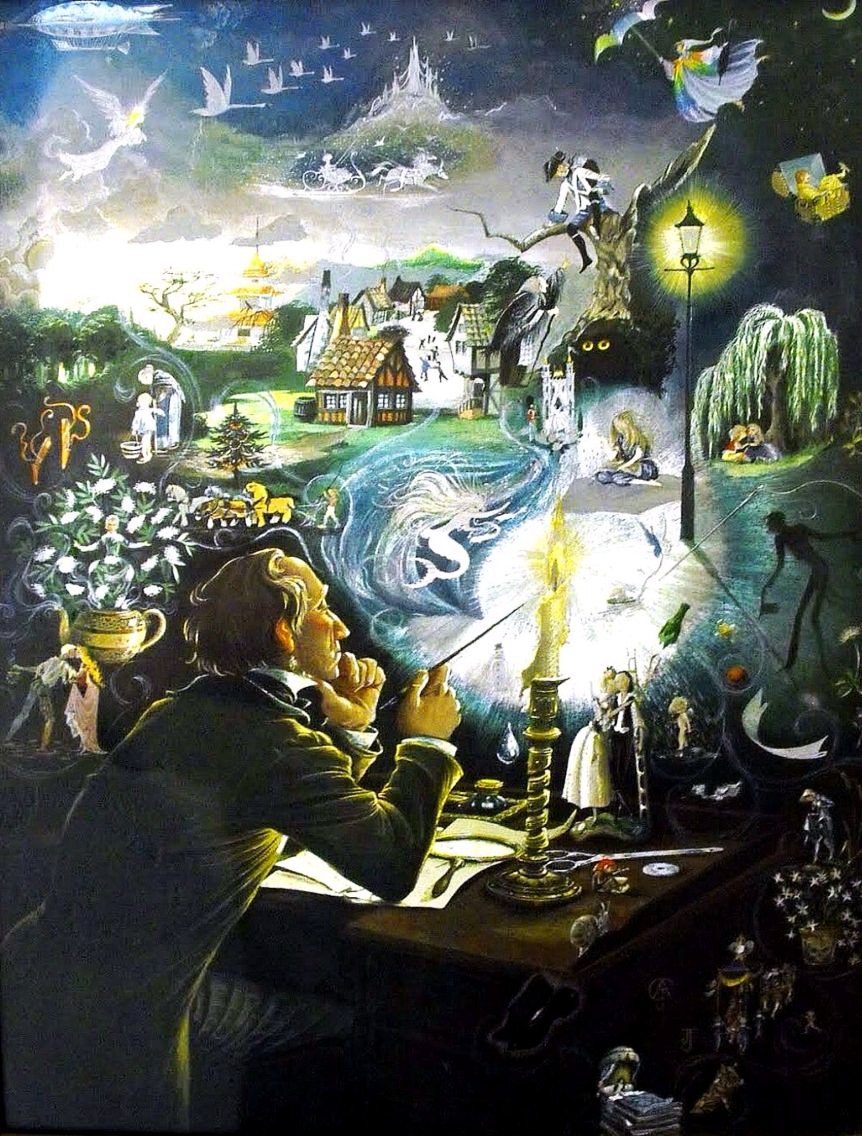
For a long time, I assumed that H.C. Andersen's museum in Rome was dedicated to the storyteller who I was very appreciative of and who had lived in the city between 1833 and 1834. Since I came to Rome, I had for a long time planned to visit it. Perhaps a year was a somewhat too limited time span for honouring a writer’s stay in town. Nevertheless, Andersen's Italian sojourn had for him, like it had been for so many others, had a great impact on his life and writing.
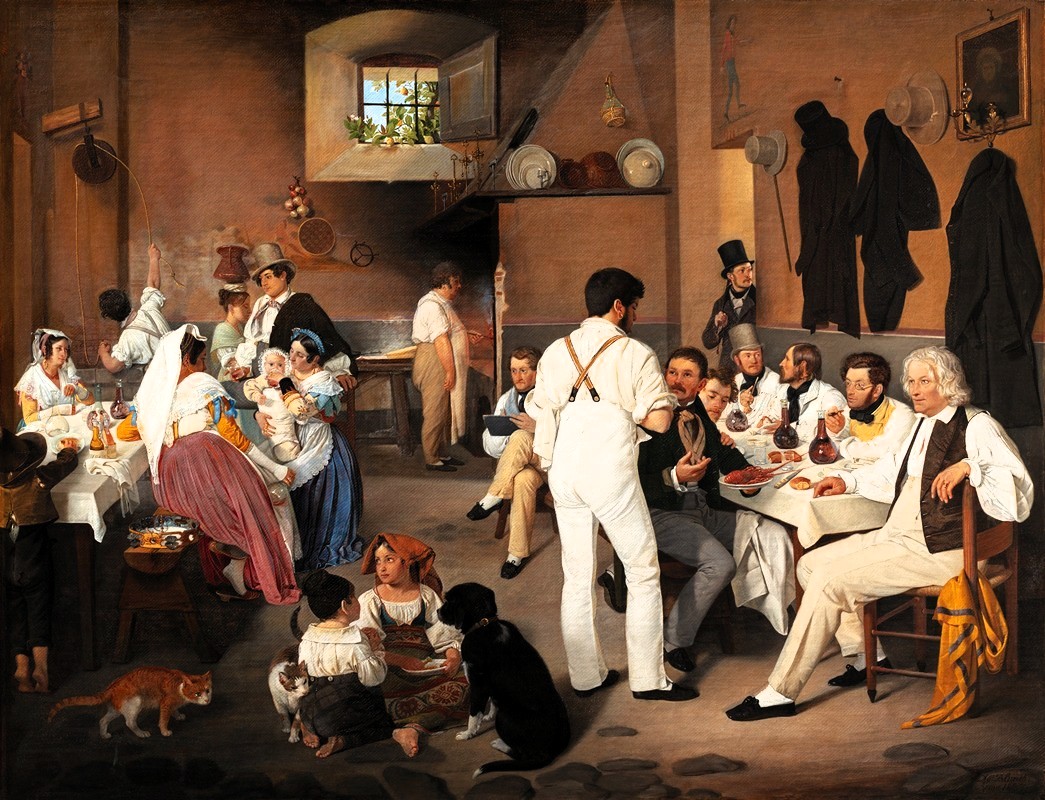
Hans Christian Andersen came to Rome supported by a fairly modest royal scholarship and it was here that his life changed completely. Endowed with a fine singing voice and a charming talent for acting and storytelling, he was generously received by Rome's Scandinavian artists, not least by the successful sculptor Thorvaldsen, who is seen below on the far right sitting with his Scandinavian friends in the trattoria of La Gensola in the Trastevere quarters (the restaurant can still be found at the same address, but is now a fancy place and completely changed).
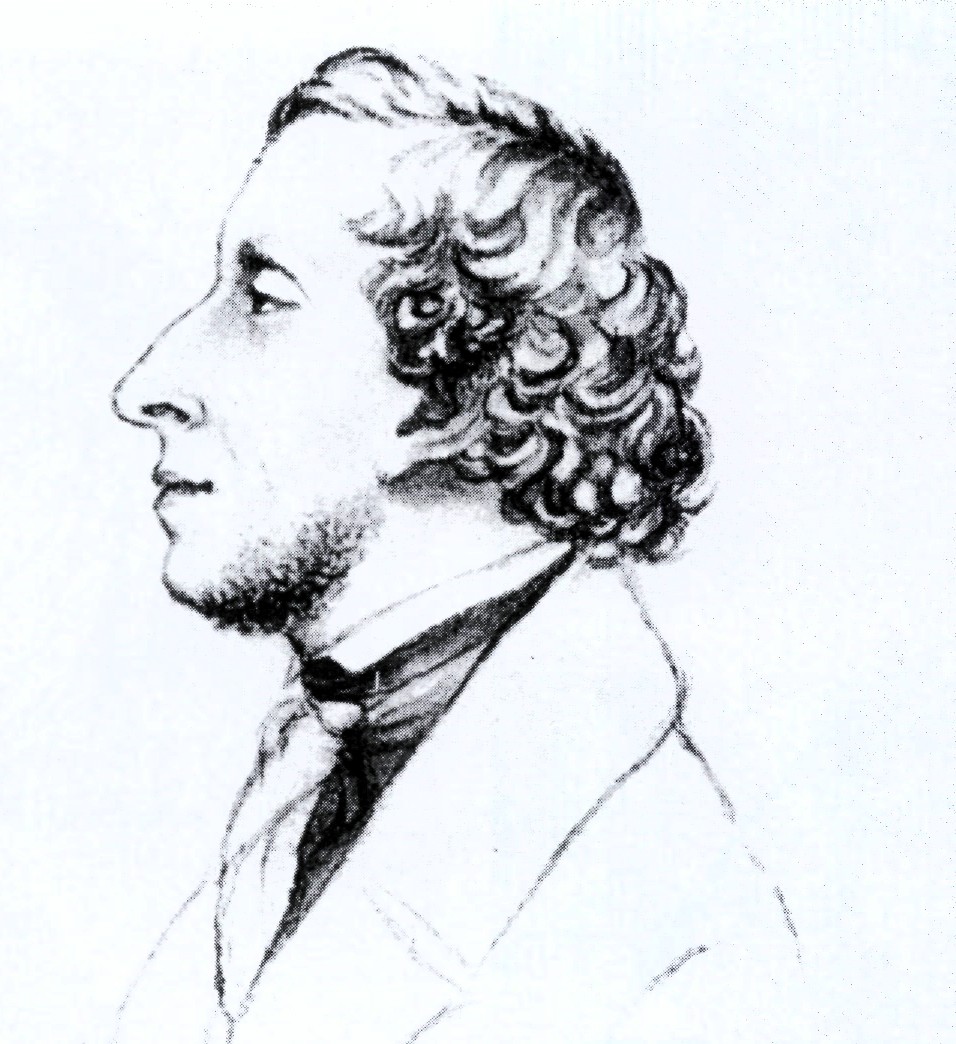
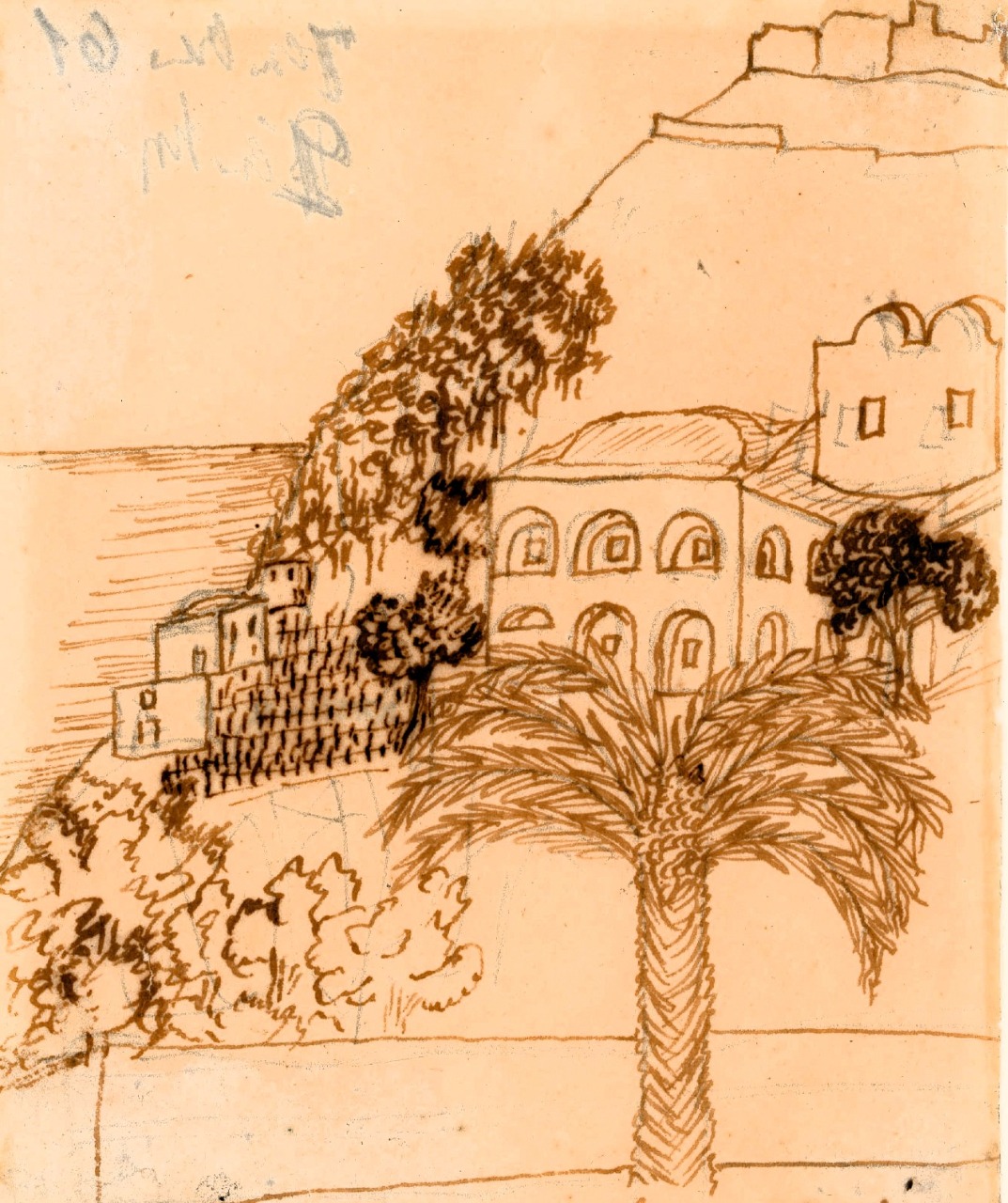
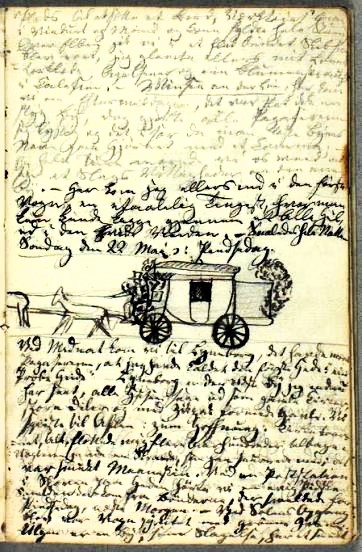
Andersen kept a meticulous diary, filled with awkward drawings. To him, it felt as if arriving in Rome had been like stepping out of a gloomy and cold North and being greeted by a warm, open, sunny, summer's day. He was captivated by Rome – its fountains, ancient ruins and baroque sumptuous churches. The pines and cypresses of the Eternal City, its shops adorned with hams and mozzarella cheeses, as big as ostrich eggs. In the mild evenings he wandered through the alleys of the city, watching the lamps burning in front of the madonelle, Madonna statuettes standing in niches of the house façades, how fires blazed under the chestnut pans of the street vendors, how the moon was reflected in the sluggish waters of the Tiber. The noisy townspeople dancing and singing in the trattorias. He wandered far out on the Campagna, with its dilapidated tombs, purple mountains, golden evening clouds, heavy rains, and suffocating summer heat, as the deadly malaria-stricken sirocco swept over the swamps, while large, black, red-eyed buffaloes cooled themselves in the stagnant pools.
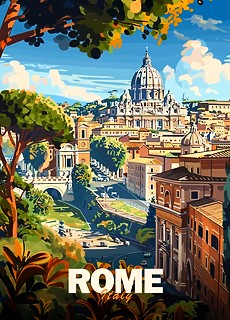
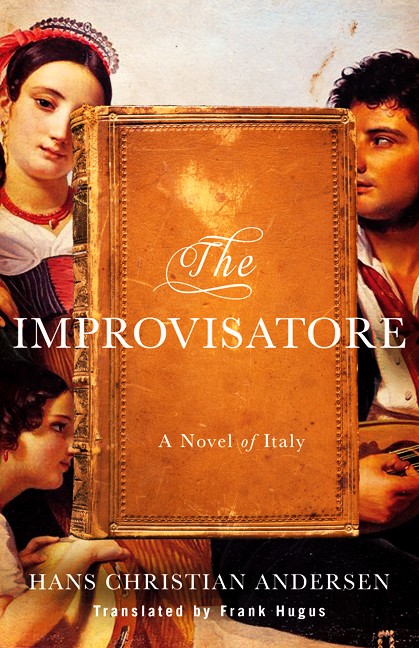
The young Hans Christian took all this to heart and then wrote his first bestseller –The Improvisatore. He had been annoyed by all the books he read, written by casual foreign visitors to Italy. He had found them empty and lackluster. None of them had conveyed the strong feelings that had overtaken him while visiting Italy.
I love Italy, with all my youthful soul: in its orange groves, by its blue sea, my thoughts linger.
Andersen stated that if he only had three years left to live, he would gladly give away two years of them only to live in Naples:
I don't belong in the Nordic countries at all and consider it one of my earthly misfortunes that I was born and raised in the corner of Greenland and Novaya Zemlya.
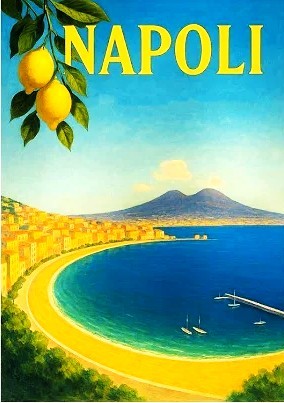
The Italian experience led Andersen to unleash all his powerful and exquisite imagination – his natural storytelling talent, which he had previously forced into the straitjacket of artificial poetry, which he had imagined to be the taste of the time. Now, within The Improviser he let his whims and unhindered observations flow freely. The novel is about Antonio, a boy born in Rome's poor quarters, but who, thanks to his specific talents, is destined to free himself from the shackles of poverty. He moves among robbers, witches, beggars, farmers, artists, priests and academics. Antonio is discovered and cared for by wealthy patrician families – the powerful Borghese clan keeps its protecting hands above him and he finds final peace and joy in a happy marriage to a beautiful, but blind girl.
This was something completely different from the Italian travelogues that were read by Europe's educated elite. It was an exciting story, and above future writing. In fact, The Improviser is a quite transparent, fictional depiction of Andersen himself, transferred from Denmark to Italy, while at the same time it is a captivating travelogue endowed with the entire colour palette of a vivid and constantly attentive narrator.
Filled as the novel is with evocative and beautiful depictions of Rome and Italy, it quickly became an international success (it was almost immediately translated into German, Swedish, Russian, English, Dutch, French and Czech). The year after the Danish edition, Hans Christian Andersen's first collection of fairy tales, Adventures, told for Children, was published and his fame was secured for the rest of his life, and beyond.
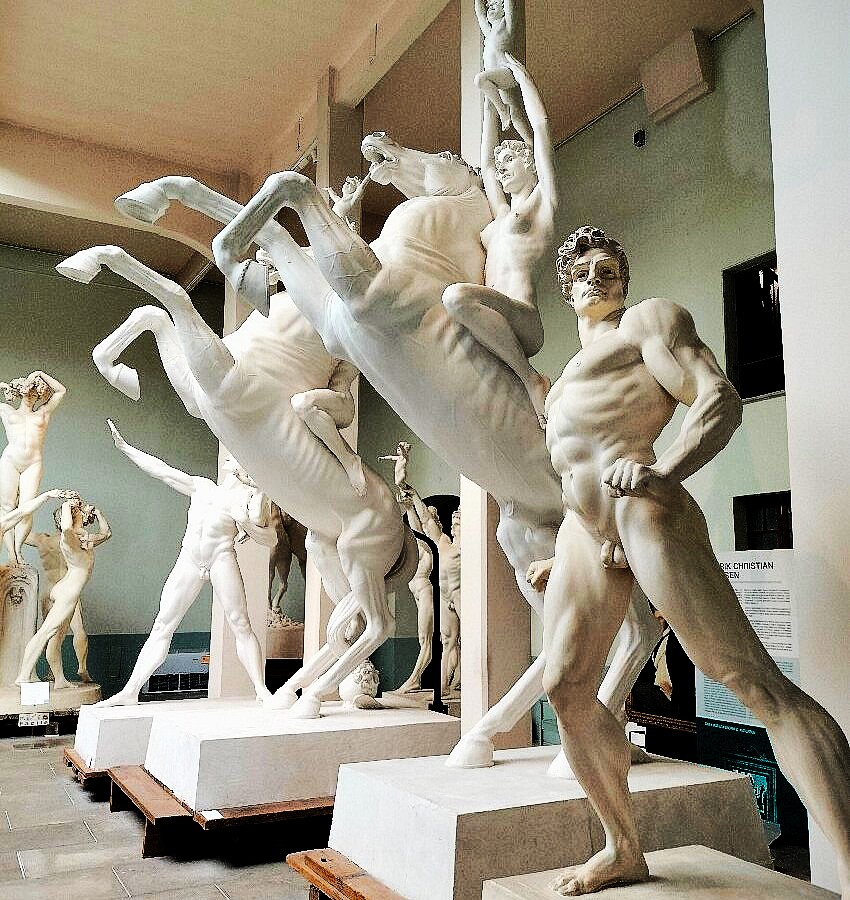
Imagine my surprise when, in early 2002, I finally arrived at the Hans Christian Andersen Museum I Rome and did not find any small, dingy rooms with a worn writing desk and display cases with manuscripts, as is usually the case with writers' homes converted into museums, but instead I had ended up in bright rooms filled with a multitude of dazzling white plaster casts and/or marble statues of naked men and women (they must regularly have been dusted off).
.jpg)
Several of these strange groups of statues seemed to be juggling with babies, for some reason that was entirely incomprehensible to me.
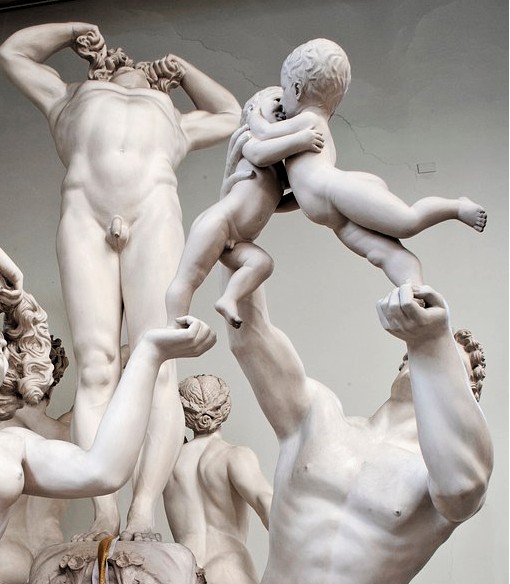
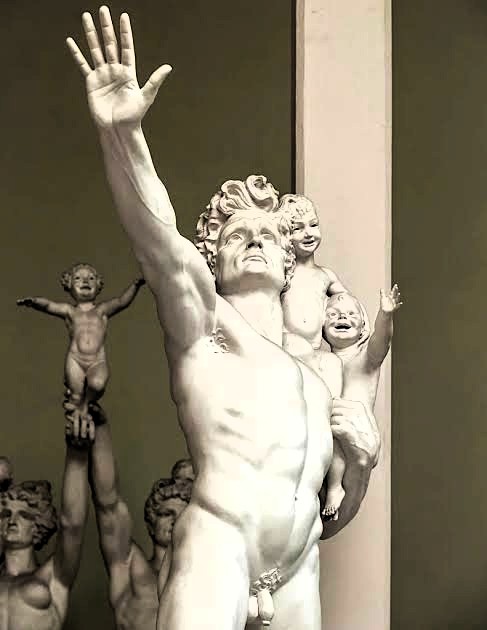
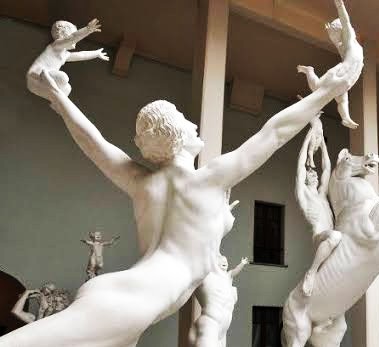
An unusually large number of the artworks also appeared to have homoerotic overtones.
.jpg)
When I saw these naked muscular men, I was reminded of a dissertation I once read – Naked Men: Masculinity and Creativity in Swedish Visual Culture 1900 – 1915. The Swedish art historian Patrik Steorn described how by the turn of the century 1800/1900 a perception emerged in Europe that urbanization and industrialization had drained humanity of spiritual and physical energy. A particular concern was that men were being psychologically emasculated and that this also could have repercussions on their physical appearance. Soon, in all sorts of contexts, depictions of naked, athletic men were presented as an epitome of unadulterated masculinity, usually these ideal men were presented in close contact with nature. This male nudity appeared in Old Norse, biblical, and nationally patriotic motifs, or as allegorical personifications and in symbolic depictions. Sports magazines were filled with masculine athletes who radiated hardness and physical inaccessibility, while this unrestricted exposure of male nudity attracted some viewers who appreciated the physical accessibility and tactile gentleness of the male bodies.
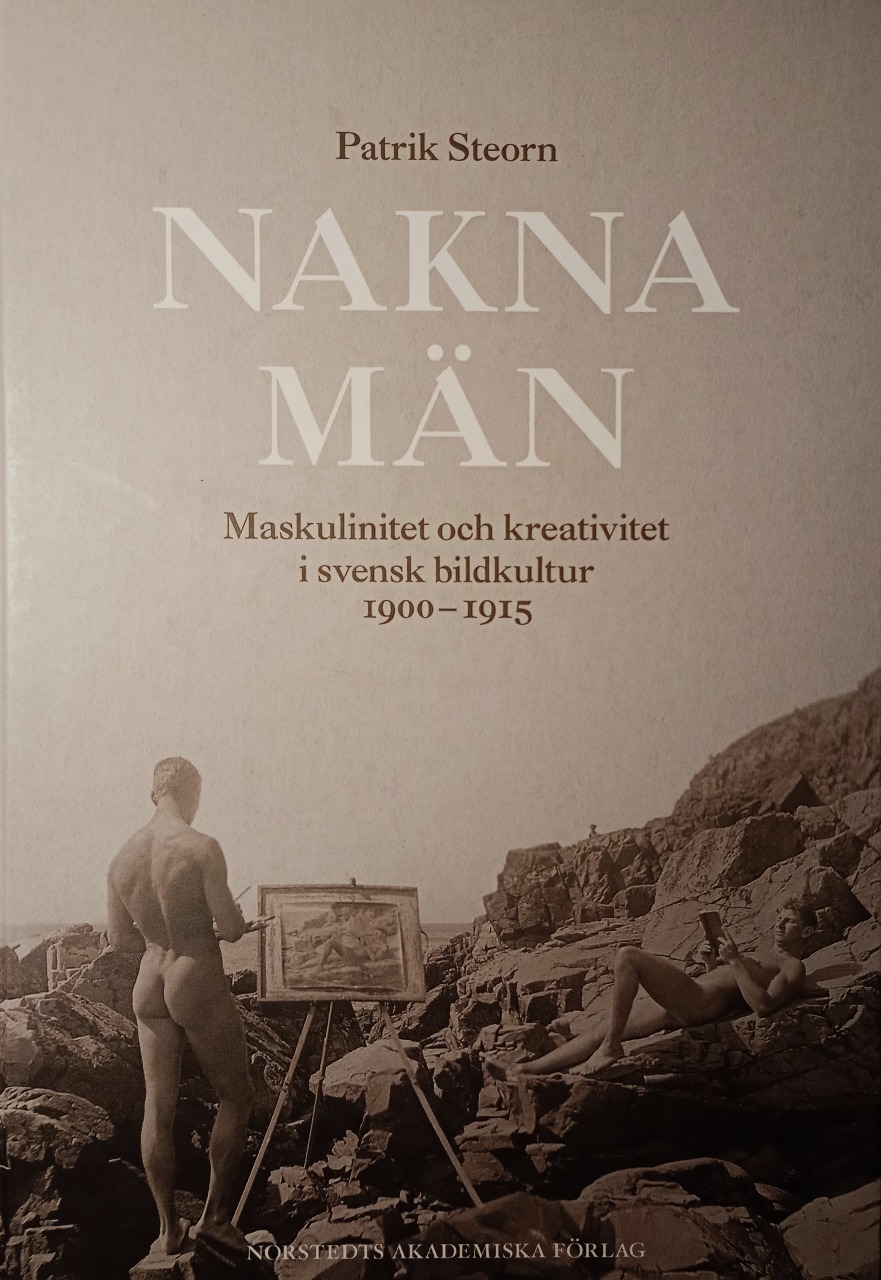
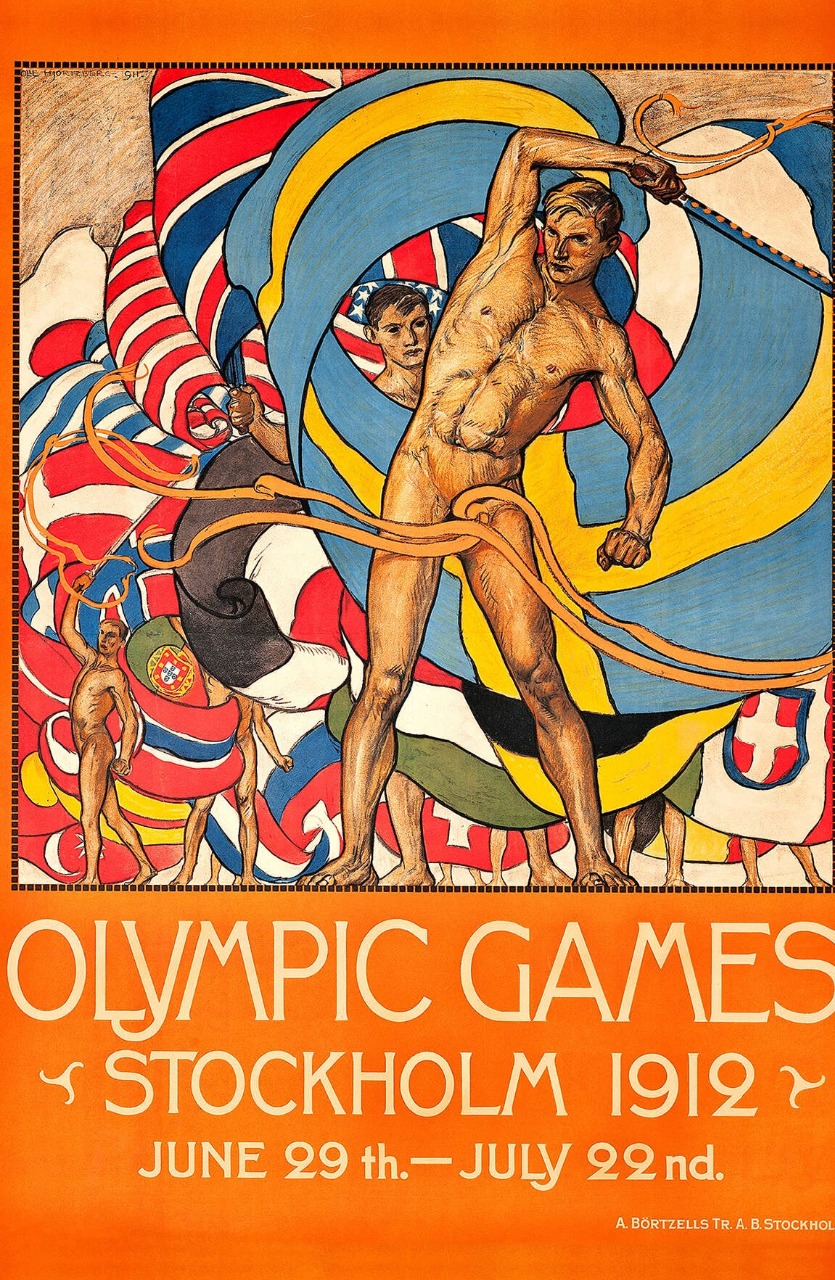
This slightly too pompous macho culture's celebration of naked male bodies was thus was in tune with the times. In the United States we find Carl Paul Jennewein, in Norway Gustav Vigeland and in Sweden Carl Milles, among many others. In America and Europe, athletic naked men became a monumental fashion that seemed to be universally appreciated by those in power, both on the right and left side of the political value scale. Artists who worked in this heroic style were often rewarded with well-paid, official commissions.
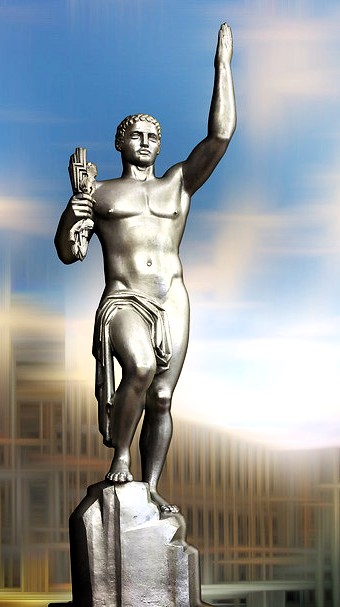
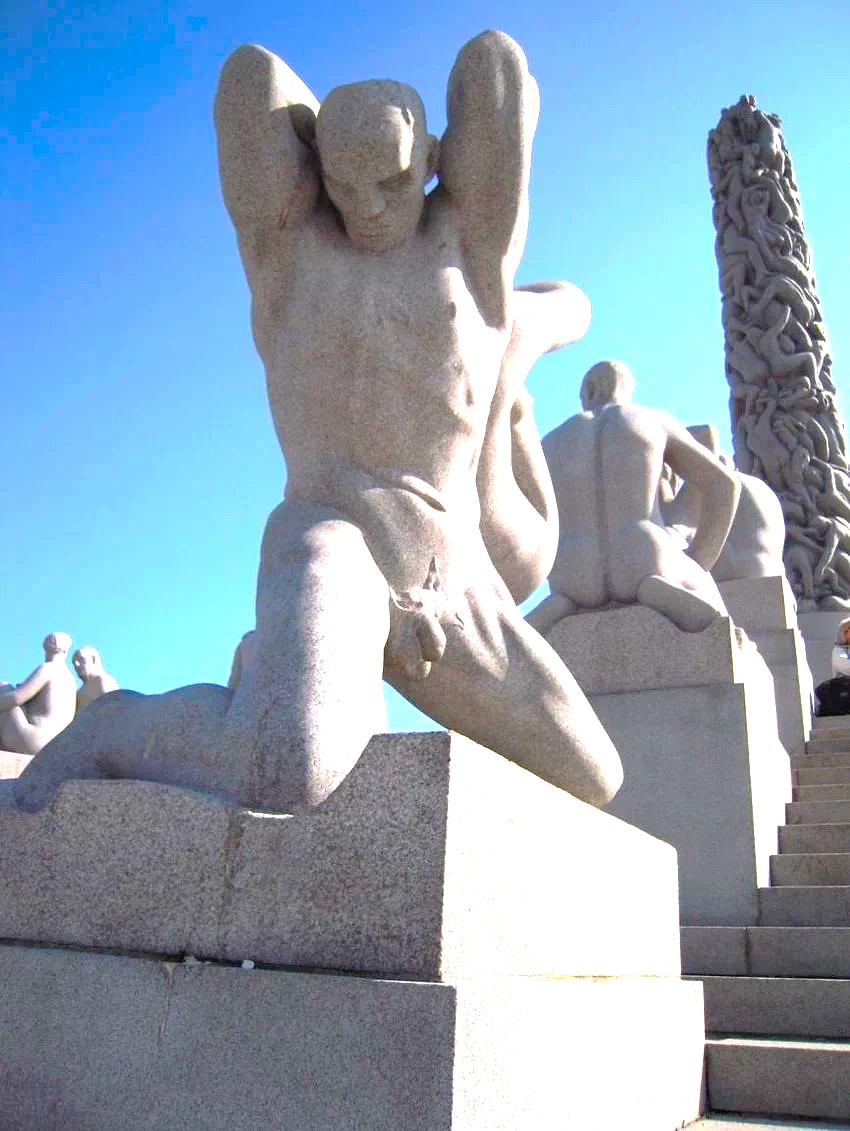
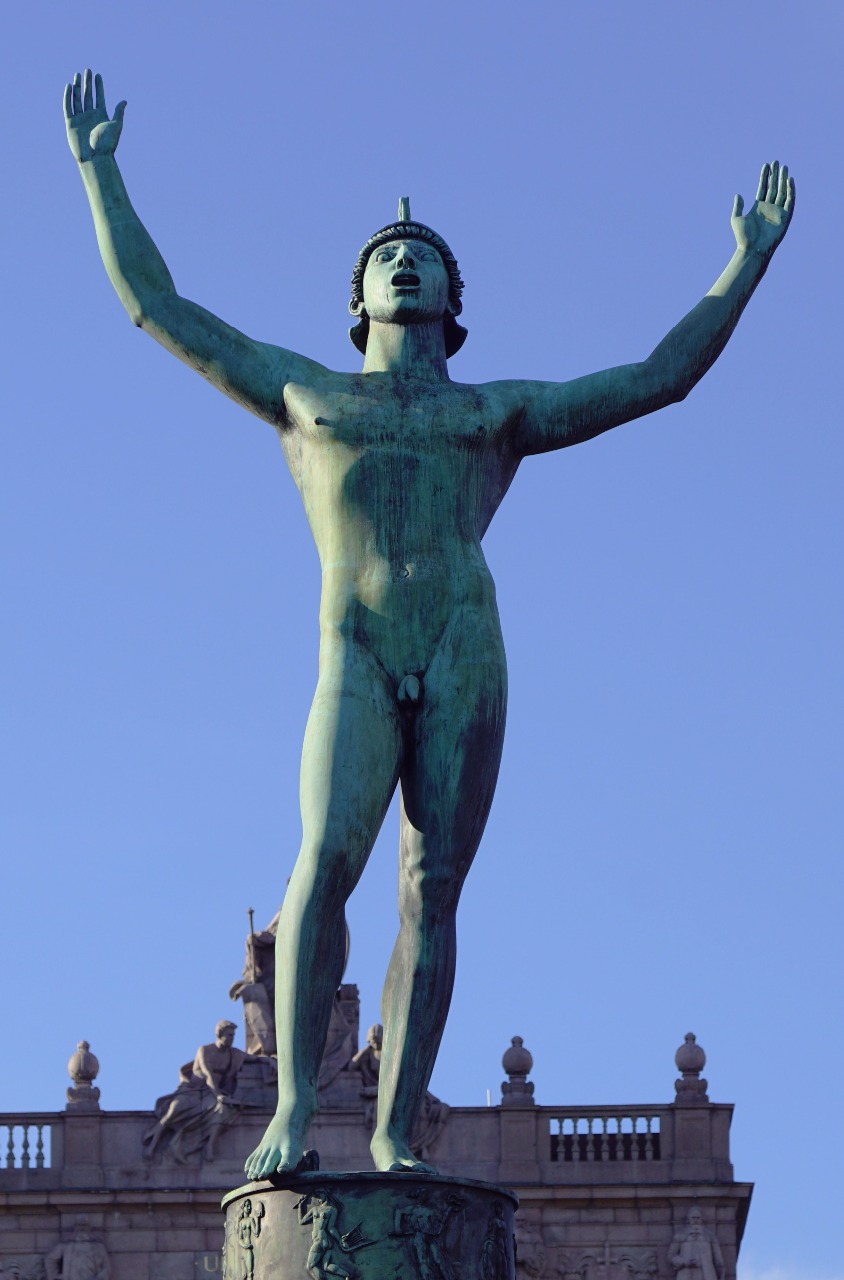
When I found myself among the Andeersen Museum's naked male bodies, most of which seemed to be extreme bodybuilderswere (even the women had a muscular rather "unfeminine" character), I was seized by a slightly disgusted feeling of having ended up inside a fascist hideout. It is a well-known fact that totalitarian regimes appear to be particularly attached to muscle-swelling naked men. This was the case of Nazi terror regime that vividly appreciated Josef Thorak's and Arno Breker's colossal statues of naked musclemen. The latter, despite his well-known and close friendship with Hitler, was after the war by Stalin offered preferential working conditions in the Soviet Union. Breker declined the offer, but the muscular male style continued to thrive unhindered in the communist East.
.jpg)
.jpg)
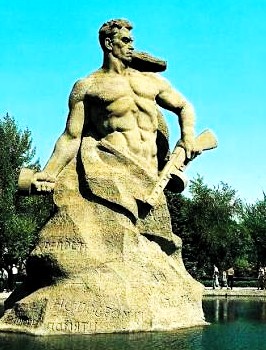
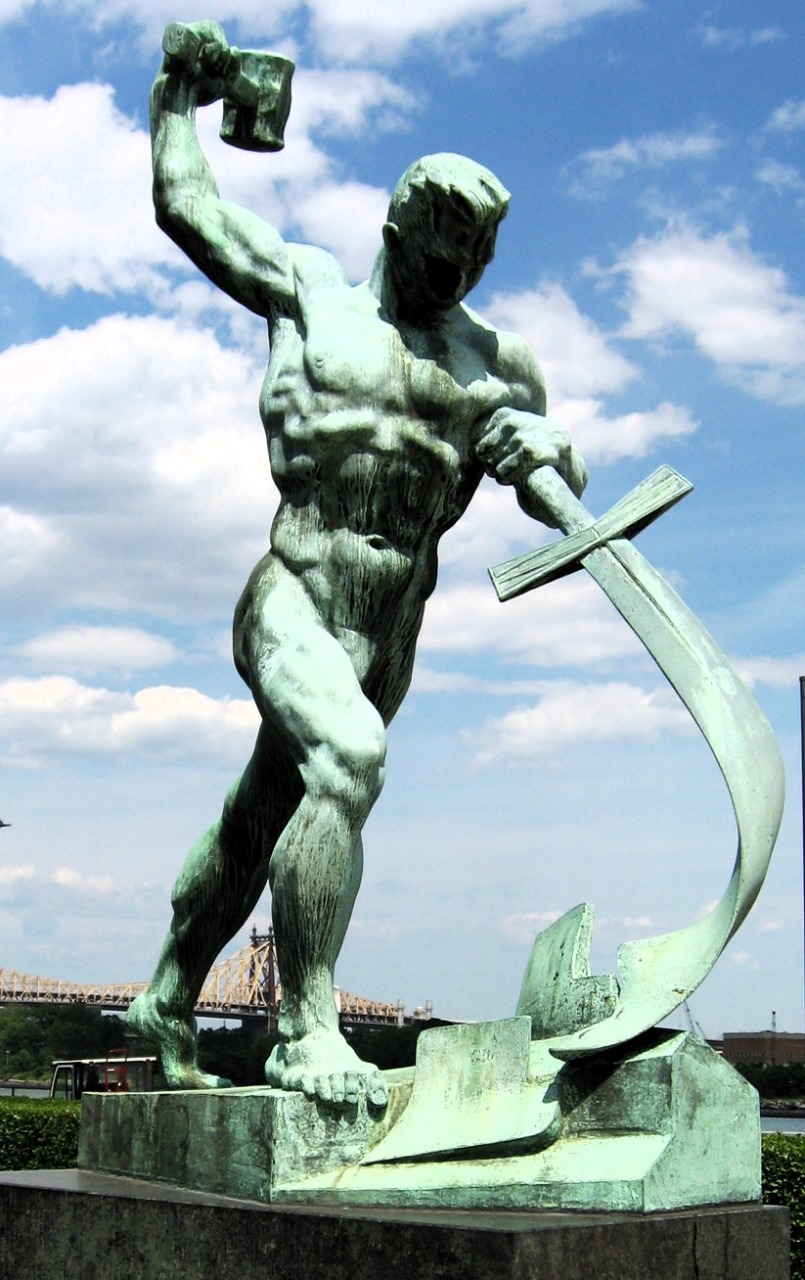
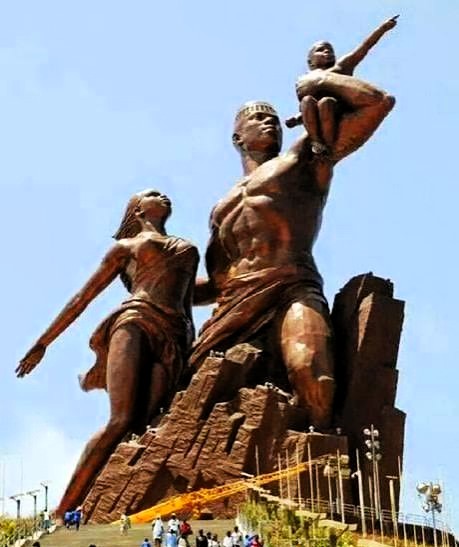
And even in perhaps not so obvious contexts, such as in front of the UN high-raiser in New York where Evgeniy Vuchetich's superman forges a sword into a ploughshare, or in Dakar where Pierre Atepa's huge African Resistance Monument, which was inaugurated as recently as 2010, depicts a largely naked male athlete who, as is the case with several of the naked atheletes in the Roman H.C. Andersen Museum, rather carelessly balances an undersized infant on one arm.
In Hendrik Christian Andersen's museum, I had thus ended up far away from Hans Christian Andersen's enchanting fairytale world. The museum’s Andersen had been a Norwegian-American sculptor, painter and urban planner. Born in 1872 in Bergen to Norwegian parents, who the same year of his birth had moved to Newport, Rhode Island, where the charming and talented young man later came to hang out among the city's wealthy elite. Facilitated by the fact that he taught art to the millionaire's daughter Gertrude Vanderbilt Whitney, who was three years his junior. She would later found the famous Witney Museum of American Art in New York. Meccenates such as Vanderbilt's gave Andersen an opportunity to travel to Europe where he contionued move in the circles of the rich and famous.
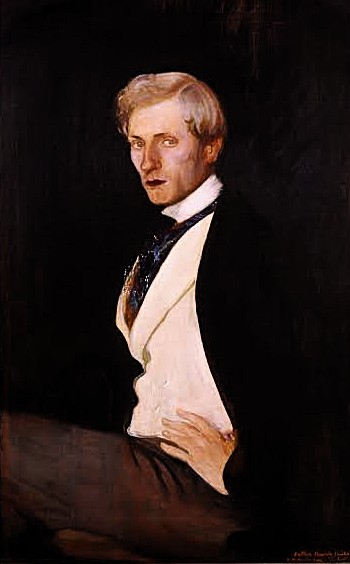
Andersen was deeply engaged in the contemporary cult of youthful vigour and beauty, manifested primarily in his great appreciation of the masculine body's harmony with nature and culture. He dreamed of a utopian world which citizens would be stimulated to self-improvement through a spiritual and physical body culture, combined with the stimulating beauty of the surroundings and access to intellectual empowerment. Andersen did not miss any opportunity to present his detailed plans for a "World City" to presumptive stakeholders. It was to be a beautiful town, filled with art, sculptures, libraries, swimming pools, and sports arenas.
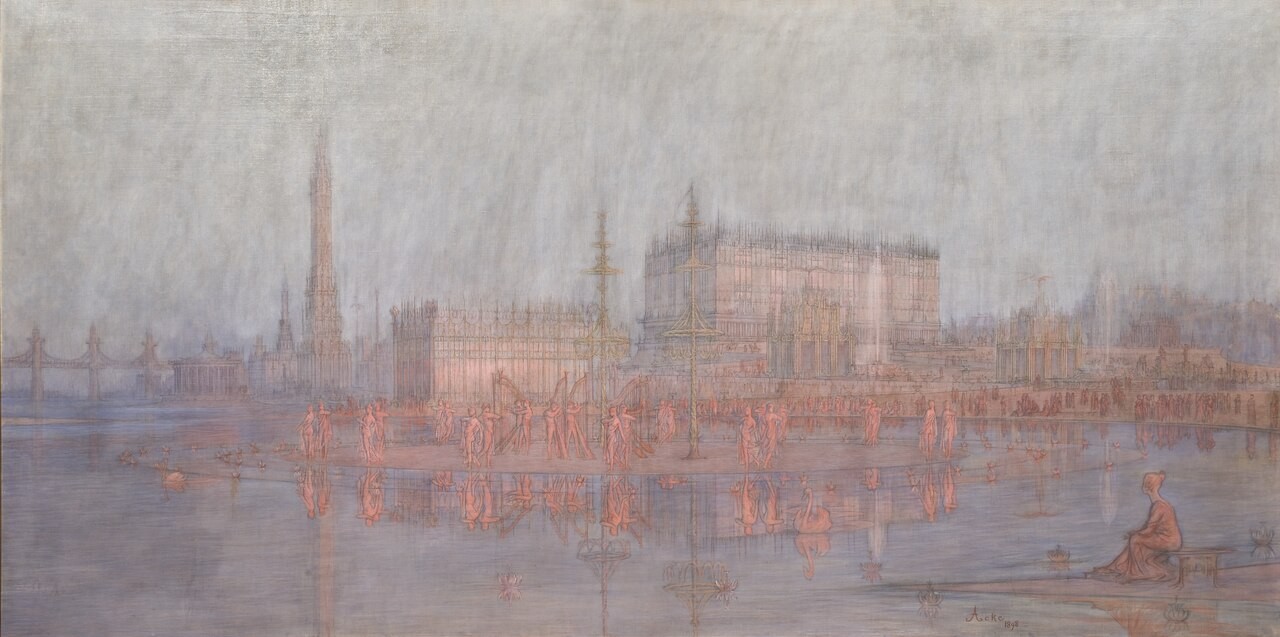
What comes to my mind is the Swedish artist Johan Axel Gustaf Andersson, known as “Acke”, who like his contemporary Hendrik Christian Andersen, depicted athletic, naked men and also imagined utopian cities characterized by modernism and aesthetic perfection, as in his blurrily dreamy Midsummer Party in the Metal City from 1898, in which one with some difficulty might distinguish naked people playing the harp and moving on the beach around a maypole, in front of a utopian city.
-Östrasalt I.jpg)
Demolishing "unhealthy" city centers and also building up completely new sophistically modern cities was also in vogue, and still so bearing in mind what is currently happening in different parts of the world – such as the construction of Egypt's "New Capital", SuadiArabia's Neom and Indonesia's Nusantara.
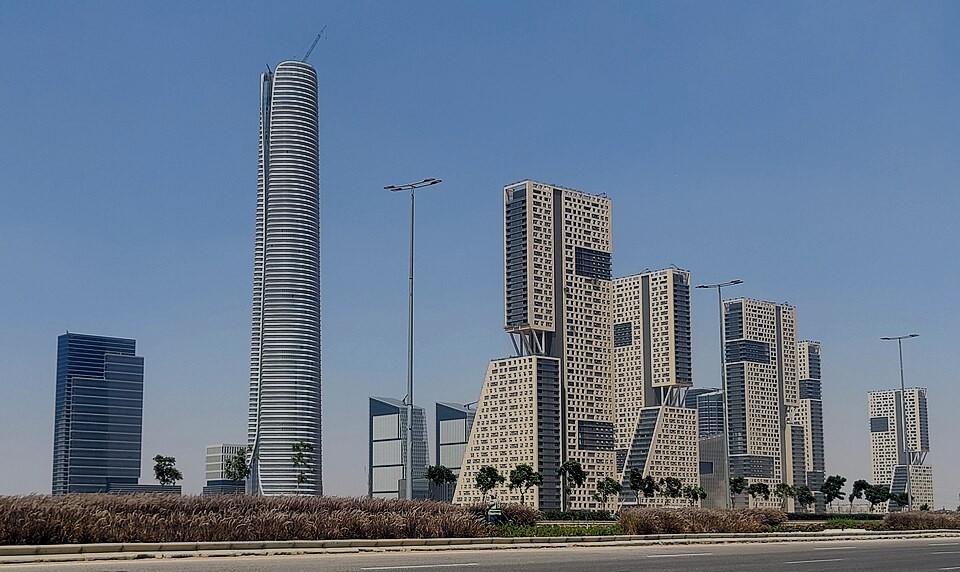
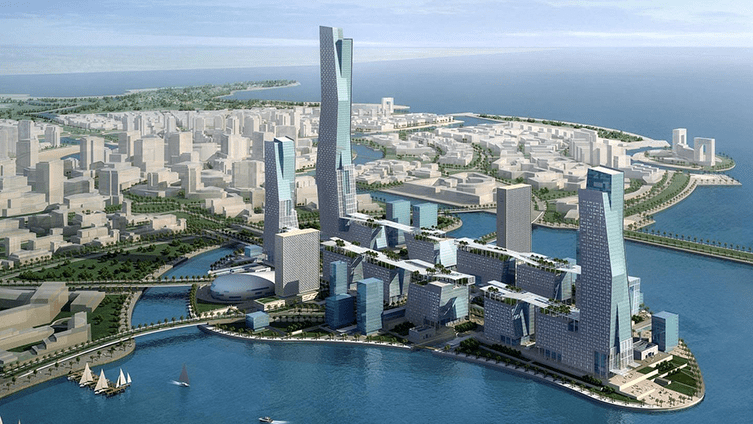

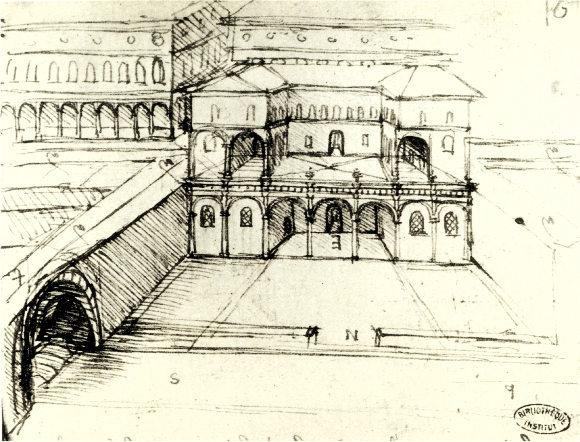
New cities linked to the ideas of utopian dreamers are an old phenomenon. Leonardo da Vinci drew up plans for ideal cities, presenting upper and lower areas. The lower areas would include transport, commerce, canals and sewage systems, while the upper parts of the cities would be dedicated to more aesthetic ideals, with parks, wide roads and official buildings.
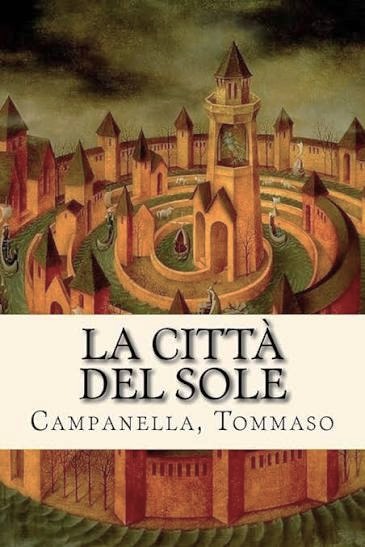
In the 17th century, the Dominican monk Tommaso Campanella wrote his City of the Sun, planned to be built on a hill its buildings were to be decorated with frescoes and statues representing every conceivable area of human thought. The city was to be adapted to man and not the other way around. It was to meet human needs and demands; workshops and homes were to be constructed in such a way as to realize human aspirations and make possible an existence that required no more than a four-hour working day, the rest of the inhabitants' time was to be devoted to the further development of knowledge and the promotion of peaceful coexistence.
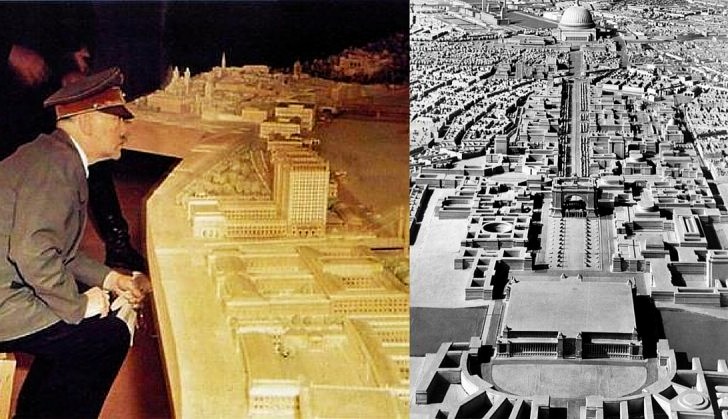
As the bombs fell on Berlin and his thousand-year-old empire crumbled, Hitler imagined a grand Germania, a new pompously monumental capital that he dreamed up together with his friend and favourite architect Albert Speer.
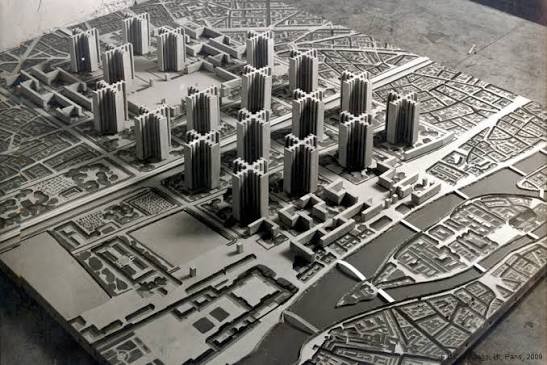
Earlier, Le Corbusier had presented his Project for a City of Three Million Inhabitants in 1922, which in 1925 developed into his radical Plan Voisin, which was to involve a total restructuring of Paris, with large green spaces and huge skyscrapers.
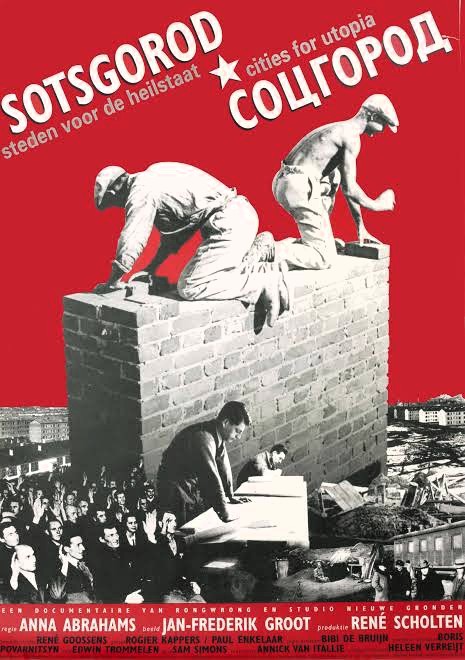
In 1930, the communist Nikolai Aleksandrovič Miliutin in Stalin's Soviet Union wrote his Sotsograd: The Problem of Building Socialist Cities, in which he further developed the same idea that Le Corbusier had presented in his Ville Radiuse, which was that a city should be built according to its function, i.e. that industrial complexes, residential areas and recreation (sports facilities, parks, libraries, etc.) should be separated, but be closely united by an integrated communication system.
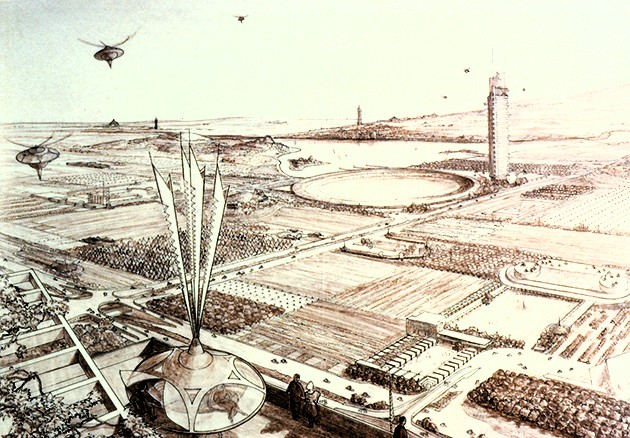
In 1932, the world-famous architect Frank Lloyd Wright began sketching his utopian urban project Broadcare City, a large suburban complex that would appeal to its residents and meet their wishes and needs. He devoted much of the rest of his life to further developing and drawing his ideas for Broadcare City.
For a couple of years, the young Hans Hendrik Andersen moved among Europe's elitist circles before settling in Rome by the end of the century. In Paris, he had been impressed by the then-prevailing Beaux-Arts architecture, which integrated sculptures into its designs and could arguably be viewed as a hybrid of Neoclassicism and Art Deco.
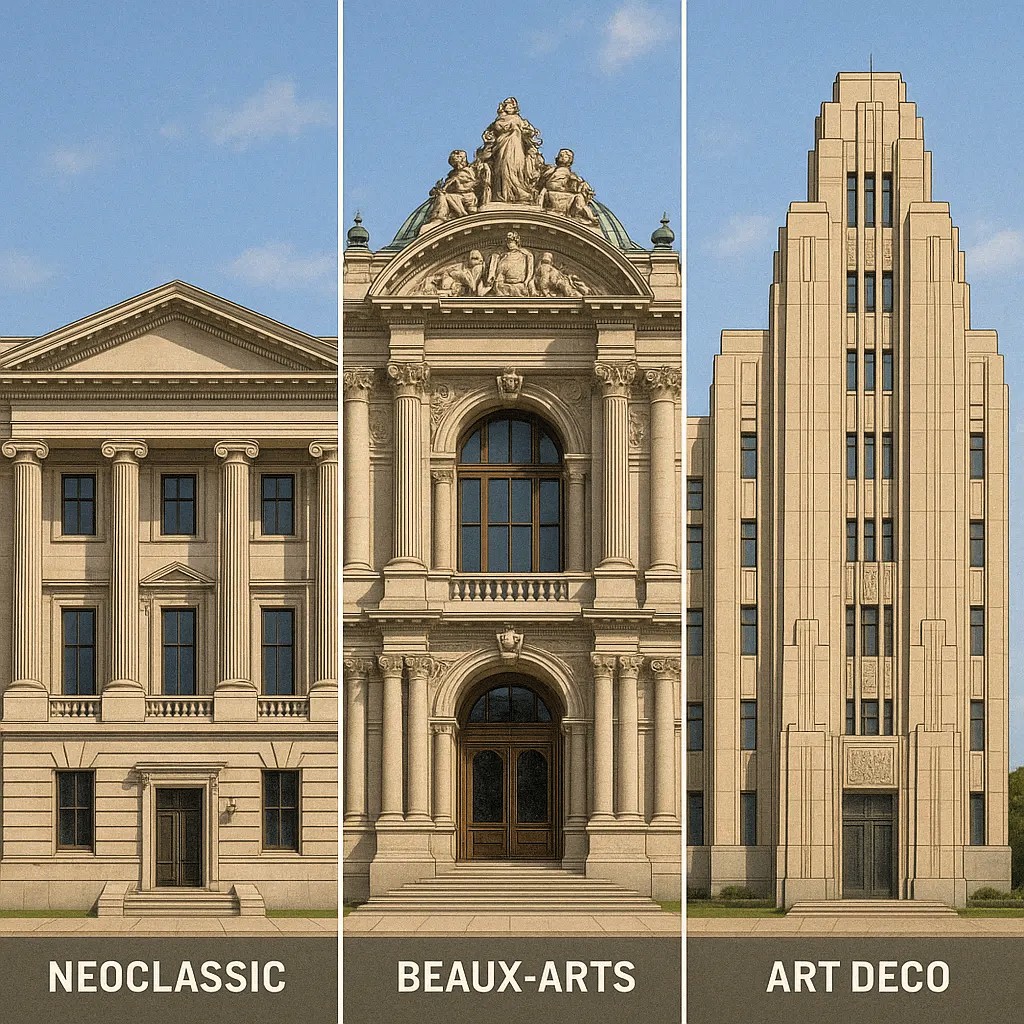
Andersen now began to combine his work as a sculptor with ideas about an ideal city that he envisioned would become
Like a source that would spread throughout the world enthusiasm for human endeavors in the arts, sciences, religions, commerce, industry, and law, the City would be as one grand, divine body, begotten of God to spread life-giving power, renew the strength of mankind, protect its rights, and enable us, through a concentration of world efforts, to attain greater heights.
In Rome, Andersen had become good friend with the young architect Ernst Hébrard, who was working at the French Academy in Rome invited by a scholarship, there he worked with a pictorial reconstruction of Emperor Diocletian's palace in Spalatum (Split). The results were published in 1912 in a book praised for its meticulous colour plates and accurate reproductions of results from excavations and previous studies.
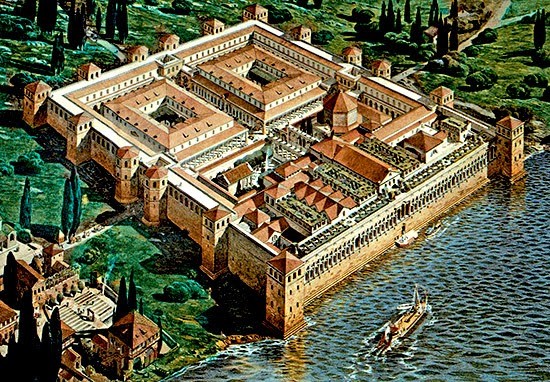
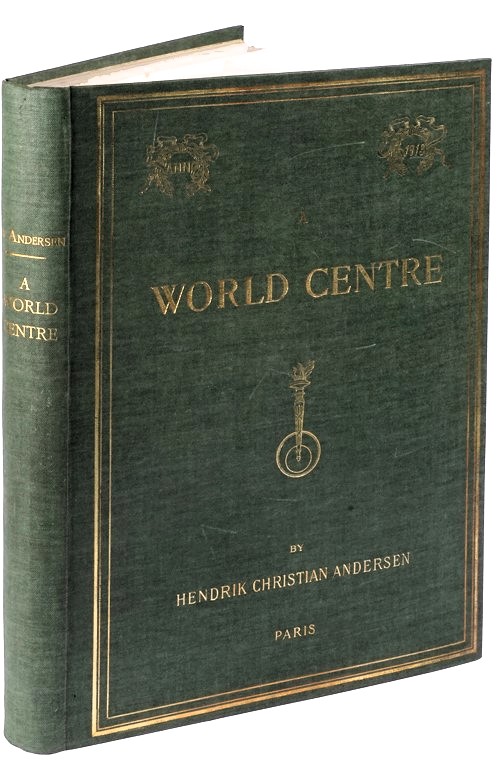
A method of presentation that was reflected in the major work that he published the following year in English, French and Italian together with Hendrik Christan Andersen – A World Centre for Communication. A lavish coffee table edition, certainly made possible by generous contributions from Andersen's wealthy patrons. The extensive book, richly illustrated by Hébrard and Andersen, weighed no less than four and a half kilograms. Andersen donated it to major libraries of Europe and the United States, as well as he gave it to influential men such as the King of Belgium, the King of Italy and the President of the United States. However, interest in his ambitious project turned out to be almost non-existent. Despite this, the magnificent work was published in several editions. Strangely enough, in later editions Hébrard did not appear as a co-author, but had then been replaced by Hendrik Christian Andersen's sister-in-law, Olivia Cushing Andersen, a millionaire's daughter from Portland and widow of his brother Andreas, who had died in 1902.
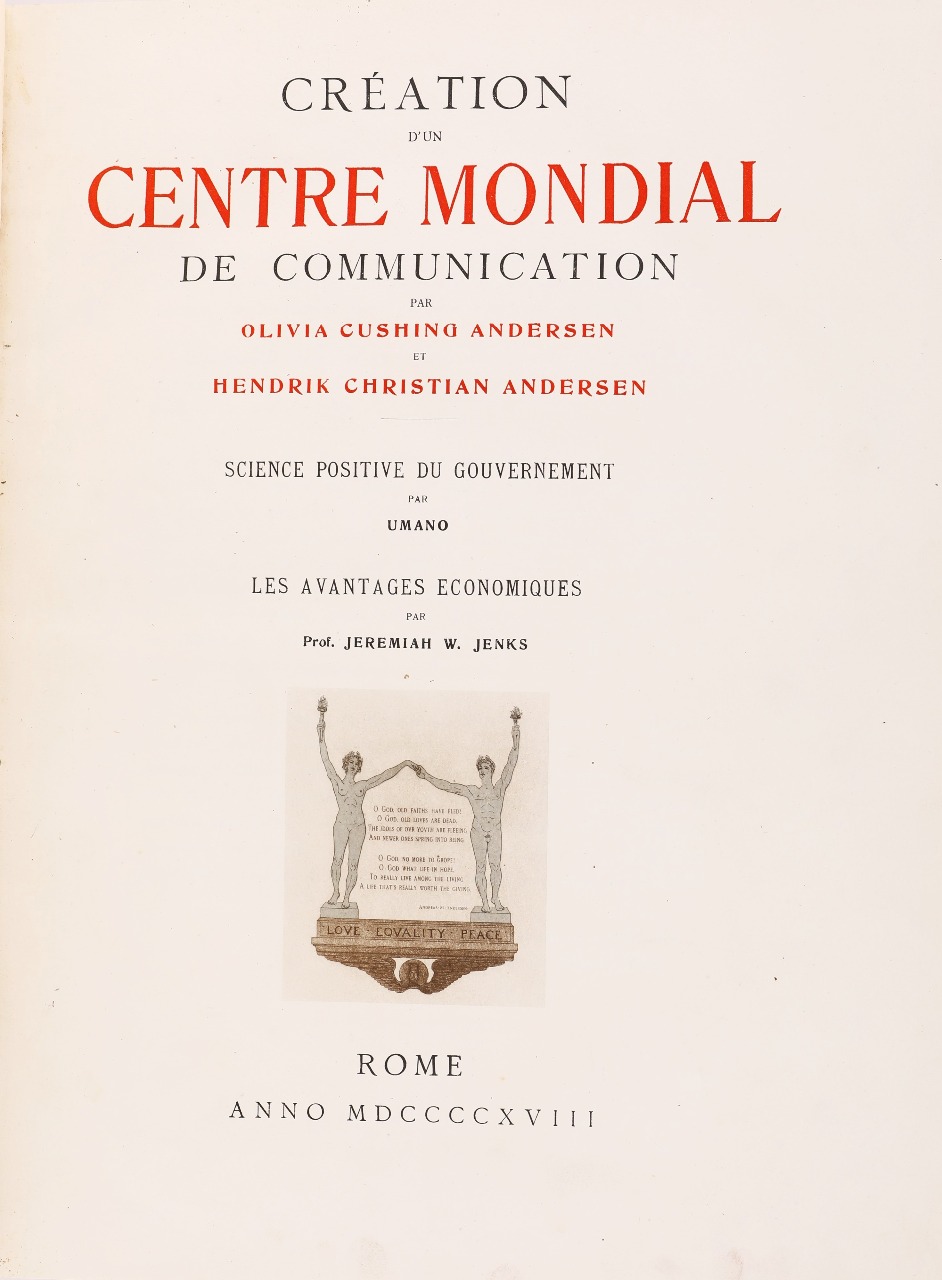
Andersen's utopian city was to cover an area of five square European miles with parks, canals, fountains, a botanical garden, and a zoo. The vast complex was to be crowned by a Tower of Success from which nighttime spotlights would be directed across the city and up into the sky. Palaces of Congress and justice, "communications centers," libraries, university buildings, and "temples of the world's religions" were to be erected along avenues lined with statues and shady trees. Vast parks were to include music conservatories, concert halls, theatres, and sports facilities, with pools and stadiums. The city was to be located by the coast line and the entrance was to be placed under the united arms of two colossal sculptures, depicting a naked man and woman.
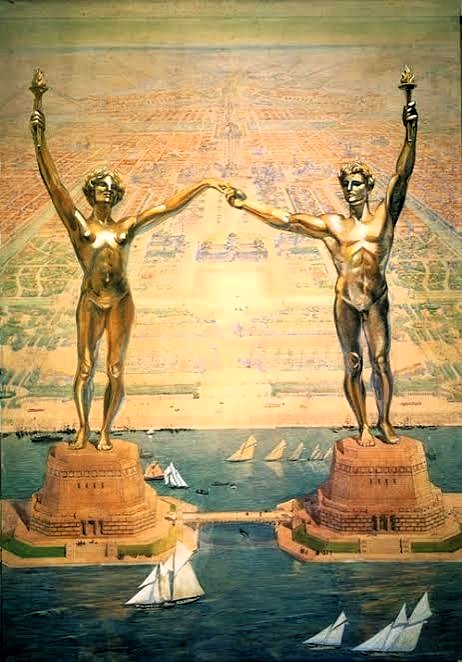
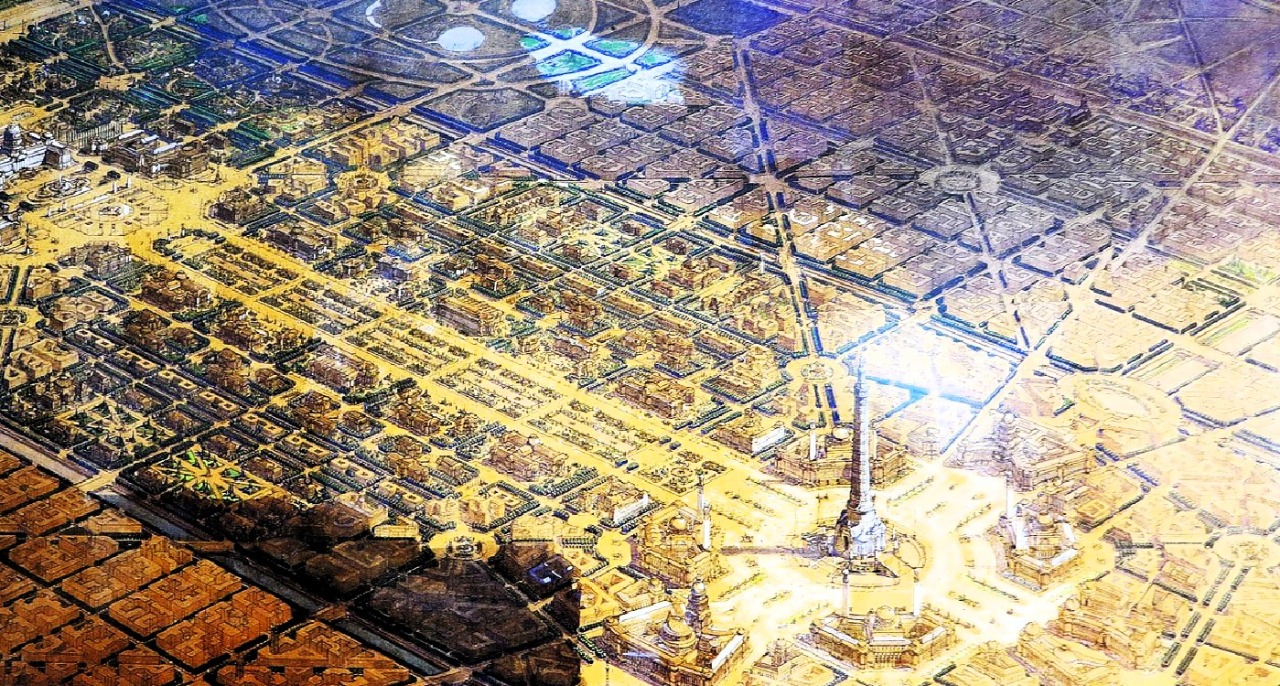
Certainly, an unrealizable project, but Andersen breathed morning air when Mussolini after his accession to power in 1922 declared that
Ancient Rome must be freed from its mediocre state. However, alongside the ancient and medieval Rome, we must create a monumental Rome worthy of the new century. Rome cannot, must not, be merely a modern city, in the banal sense of the word; it must become a city deserving its grandeur, and this splendor must be constantly renewed and passed on to future generations as a legacy of the Fascist era.
An extensive urbanization project was immediately initiated. Old quarters were mercilessly demolished and new ones emerged; administration buildings, museums, universities, parade streets and much more were built. Several radical architects were provided with an opportunity to develop their ideas and the results were not always as unsuccessfully pompous as, for example, the case had been in Nazi Germany. Nor did the destruction lead to the total destruction of the ancient heritage, Mussolini saw it as a necessity to open new archaeological sites every year and present them to the public.
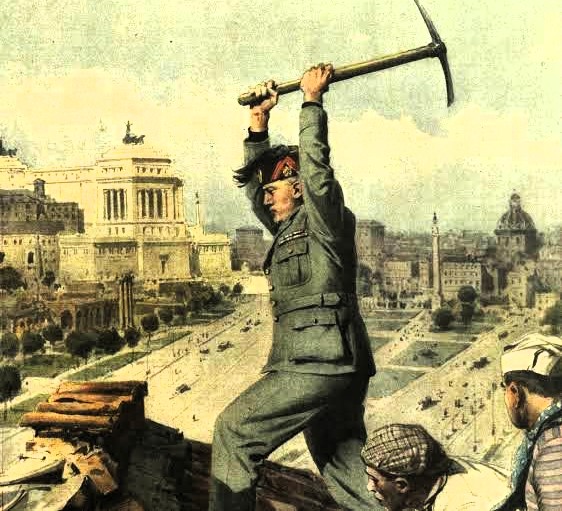
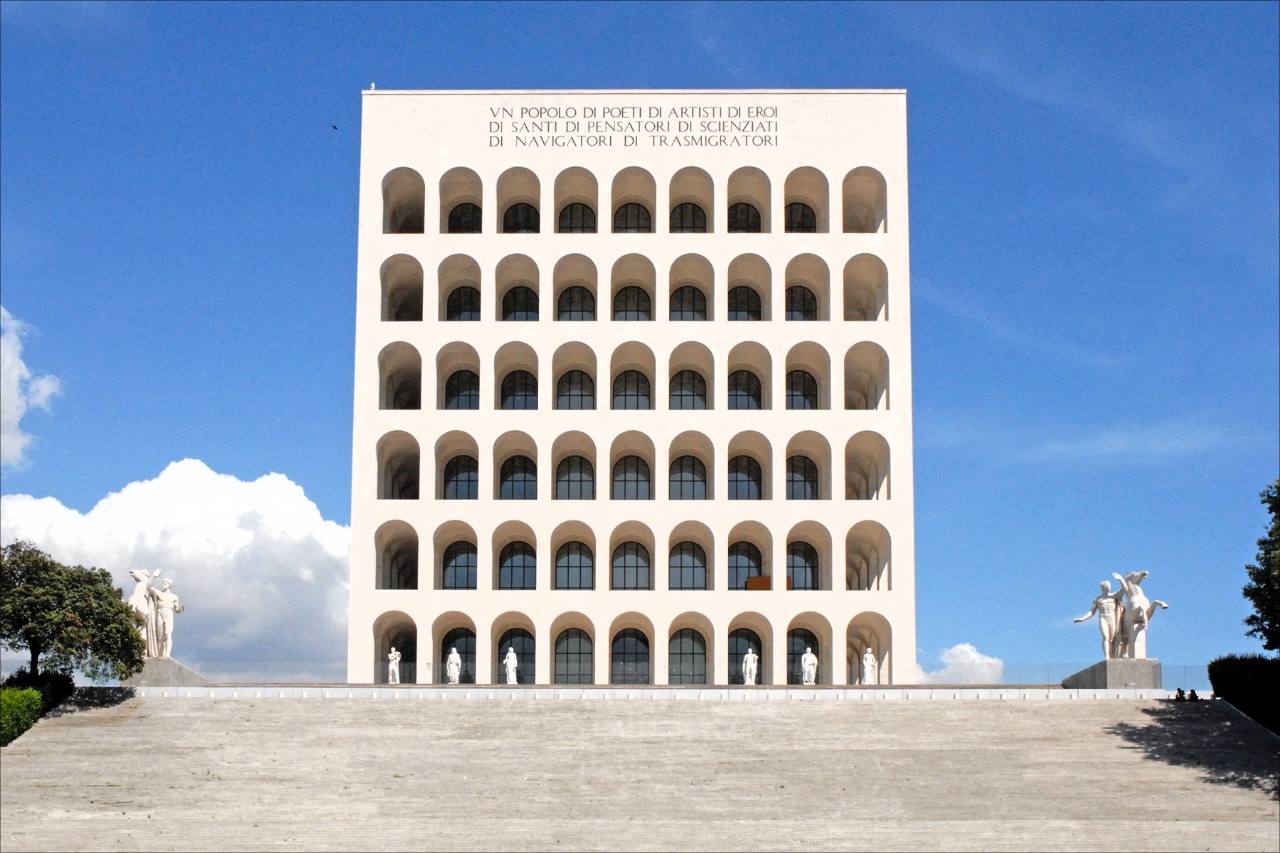
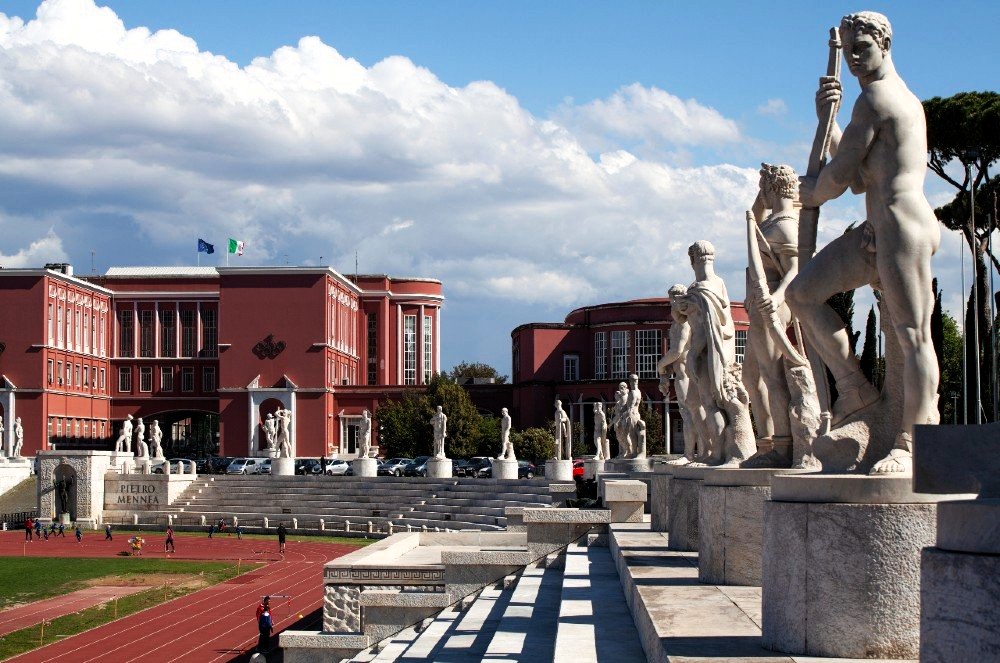
On the drained Pontine swamps, modern cities were built, often inspired by the latest trends in modern architecture. Le Corbusier, shortly after visiting the Soviet Union, was by admiring Italian architects invited to conferences. However, Mussolini refused to receive him, which did not prevent the radical ideas of the French/Swiss from being partly integrated in the large facilities that sprang up in Rome's outskirts – EUR and Foro Mussolini, now Foro Italia, with their impressive sports facilities and strict, modernly stripped-down administration buildings.
.jpg)
In November 1925, Hendrik Christan Andersen took the opportunity to donate to Mussolini his magnificent work, A World Centre for Communicative Action, with an admiring dedication that surely appealed to Il Duce:
My devotion is great and my esteem high, Your Excellency, for the noble, for the glorious works of rebirth and reconstruction you’re Your Excellency has done for this Italy, which now is my Fatherland.
On February 28, 1926, Andersen was invited to a personal audience with Il Duce, who then expressed his admiration for Andersen's ideas and also praised his book. Perhaps Mussolini was attracted by the fact that Andersen, after all, with his mixture of a rather pompous beaux-art architecture and a rich presence of nude athletes, was far from being as radically oriented as Le Corbusier, who certainly did not appreciate how the large stadium constructed within the Forum Mussolini had been lined with no less than sixty rather grotesque marble sculptures depicting naked, or sometimes almost undressed, bodybuilders.
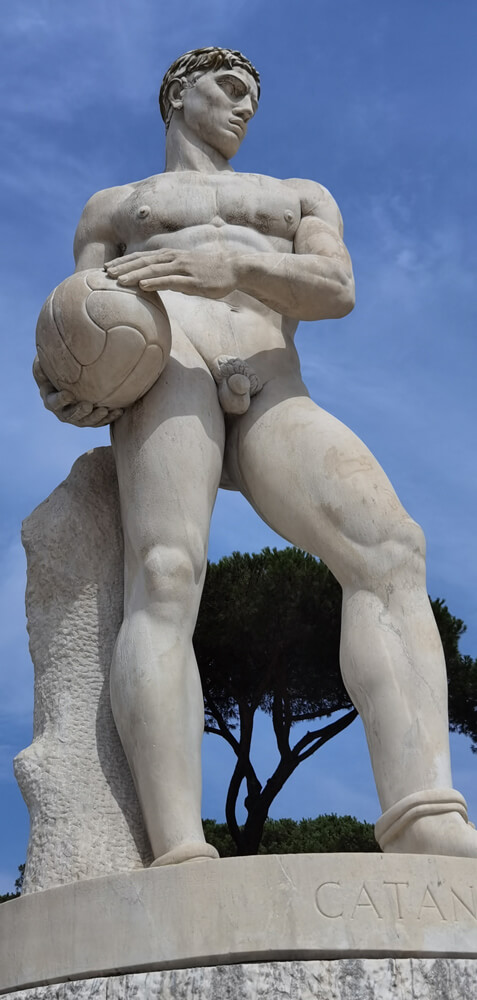
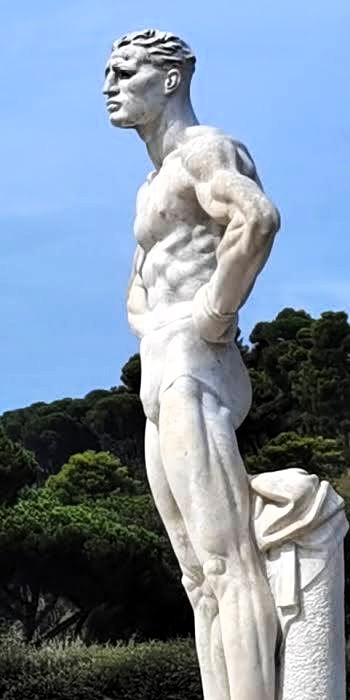
Mussolini did just north of the port city of Ostia set aside the land desired by Andersen for the construction of his "world metropolis". However, it all ran out in the sand, or became, as the Italians say – a hole in the water. The land was measured, but that was all. The authorities seemed to ignore, or completely forget, the whole thing.
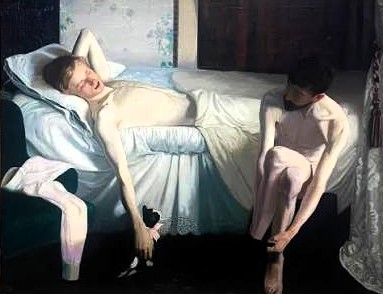
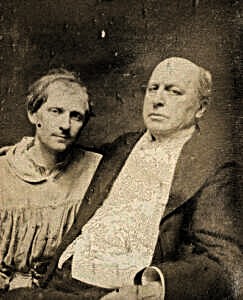
Hendrik Andersen's homosexuality does not seem to have posed much of a problem for his close friends and family. His older brother Andrew even made an unusually unreserved painting of Hendrik and his then-lover John Briggs Potter.
It was quite different with the famous author Henry James, whose family and admiring biographers for several years did everything possible to prevent any knowledge about his homoerotic inclinations. They had acted with horror when the bold Andersen, for an anthology of the author's letters, offered them his extensive correspondence with the by now very famous author. Henry James' sister-in-law had been shocked when one after the other “not quite proper” collection of letters from James' various male acquaintances began to appear and wished they all could be destroyed, or if possible – not published. She complained to her son Harry, who was in the process of compiling an extensive collection of his uncle's correspondence: "People interpret in a disgusting way his silly letters to young men. Poor, dear Uncle Henry."
Henry James and Hendrik Andersen had met in Rome in 1899 and until 1915 Andersen received no less than 87 letters from him, most of these were love letters from his thirty-years-older friend and, by all accounts, lover.
In 2004, the previously somewhat obscure Hans Hendrik Andersen was suddenly noticed through two books. One, Beloved Boy, was the publication of Henry James' long-withheld letters to Andersen, which proved what so many literary scholars already knew, but had not made public. Virtually every letter speaks for itself about a deep infatuation:
The sense that I can't help you, see you, talk to you, touch you, hold you close & long, or do anything to make you rest on me, & feel my deep participation – this torments me, dearest boy, makes me ache for you, & for myself; makes me gnash my teeth & groan at the bitterness of things. ... This is the one thought that relieves me about you a little - & I wish you might fix your eyes on it for the idea, just, of the possibility. I am in town for a few weeks, but return to Rye April 1st, & sooner or later to have you there & do for you, to put my arm round you & make you lean on me as on a brother & a lover, & keep you on & on, slowly comforted or at least relieved of the bitterness of pain – this I try to imagine as thinkable, attainable, not wholly out of the question.
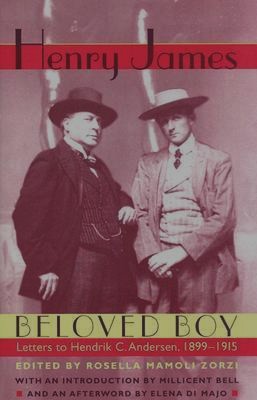
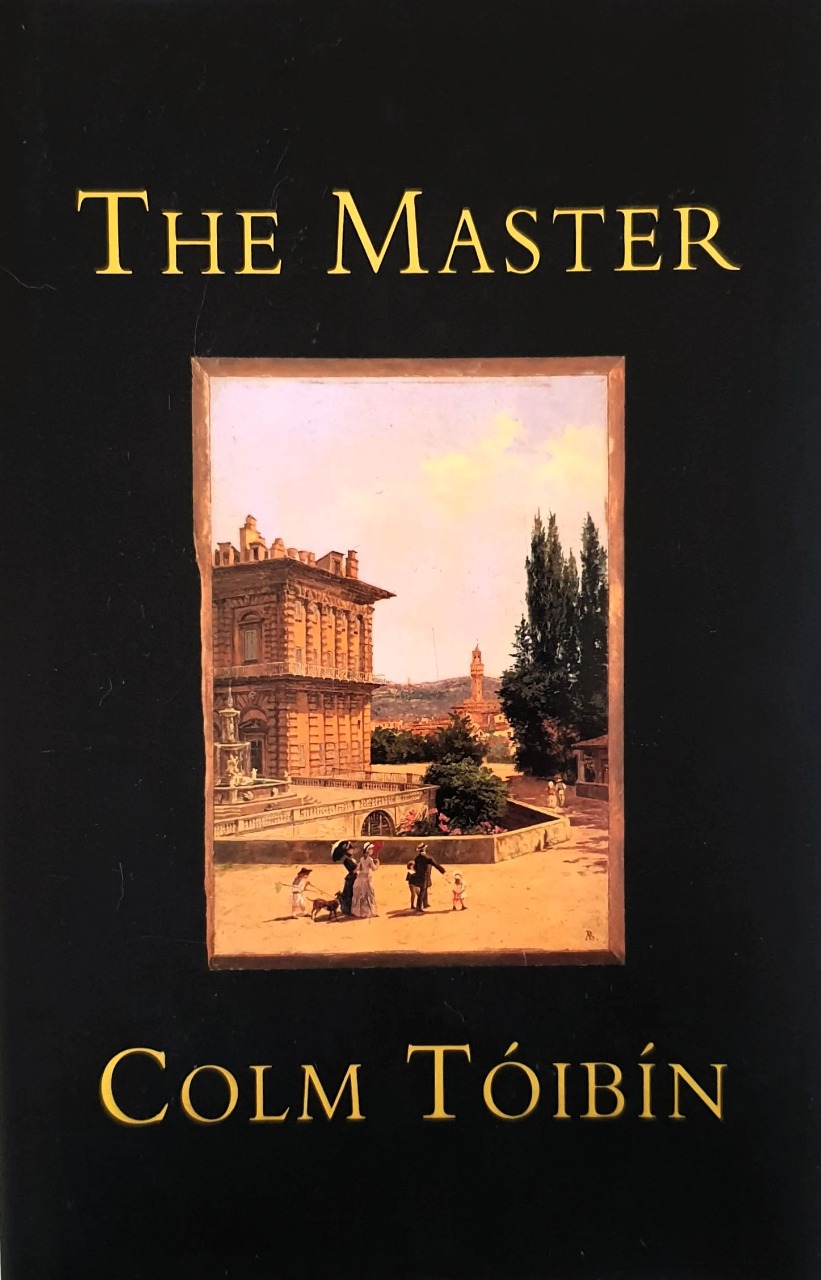
The same year that Beloved Boy was published, the Irish author Colm Tóibín's unusually well-informed and widely acclaimed novel The Master was published. It takes place between the years 1895 and 1899 and here, by the end of the novel, Hendrik Andersen appears in an entire chapter. The Master deals with Henry James' life at this time. It is written in a style reminiscent of James' own, with a sharp look at his surroundings, a refined sense of language and a penetrating analysis of the thoughts of the characters involved, not least Henry James himself. He meets the young sculptor in Rome and becomes enchanted by his enthusiasm and appealing looks. The homoerotic attraction James felt towards the handsome and sensually sensitive Andersen is in the novel considerably more restrained than the more intimately erotic character that would develop in the following years.
Tóibín's depiction of James' attraction to Andersen reminds me of the enchantment the composer von Aschenbach is seized by at the sight of the young Tadzio in Thomas Mann's Death in Venice. However, in Tóibín's The Master, Andersen is considerably more active than the much younger Tadzio, and Tóibín gives us an idea of how James is repelled from the outset by Andersen's apparent desire to get the well-known author's support for the "world-improving" utopian "world city" that he recently had begun to plan, and how the aging writer is irritated by this calculating trait of a young man who exerts an influence on him that he is both attracted to and frightened by.
A decade after the time that Tóibín had described, James could no longer contain the unease he felt at Andersen's insistence on his interest in the utopian project, and in a long letter from 1912 James warned Andersen of the risk of being seized by his own self-overestimation, becoming overpowered by megalomania through his high-flying plans for a World City. When Andersen and Hébrard's enormous book was published in 1913, James, despite his passionate love, had had enough. On the fourth of September of the same year, he wrote to Andersen:
I simply loathe such pretentious forms of words like "World" anything—they are to me mere monstrous sound without sense. The World is a prodigious & portentous & immeasurable affair, & I can't for a moment pretend to sit in my little corner here & "sympathise with" proposals for dealing with it. It is so far vaster in its appalling complexity than you or me, or than anything we can pretend without the imputation of absurdity & insanity to do to it, that I content myself, & inevitably must (so far as I can do anything now) with living in the realities of things, with "cultivating my garden" (morally & intellectually speaking) & with referring my questions to a Conscience (my own poor little personal) less inconceivable than that of the globe.
The contact between Andersen and Henry James cooled and disappeared.
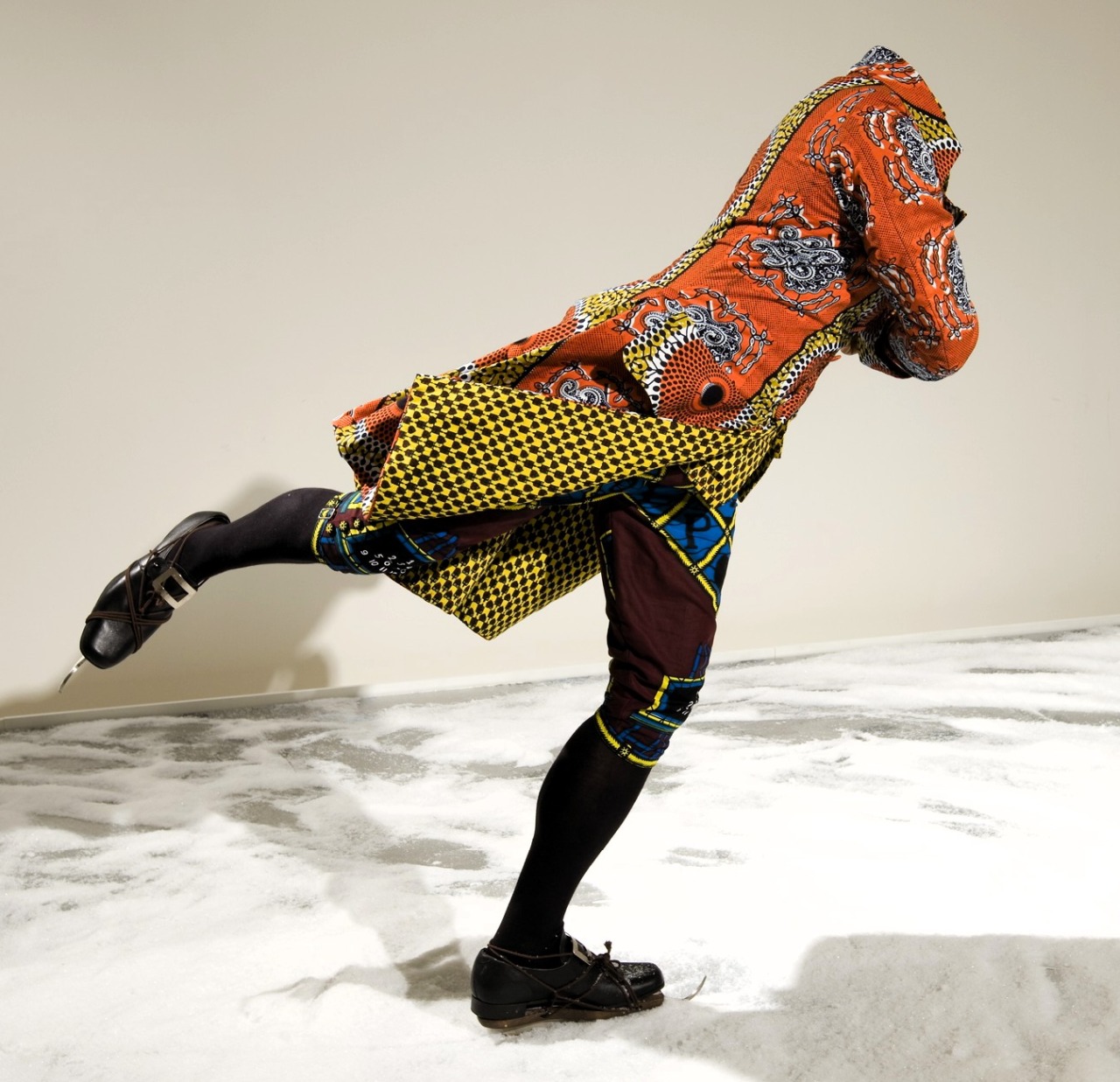
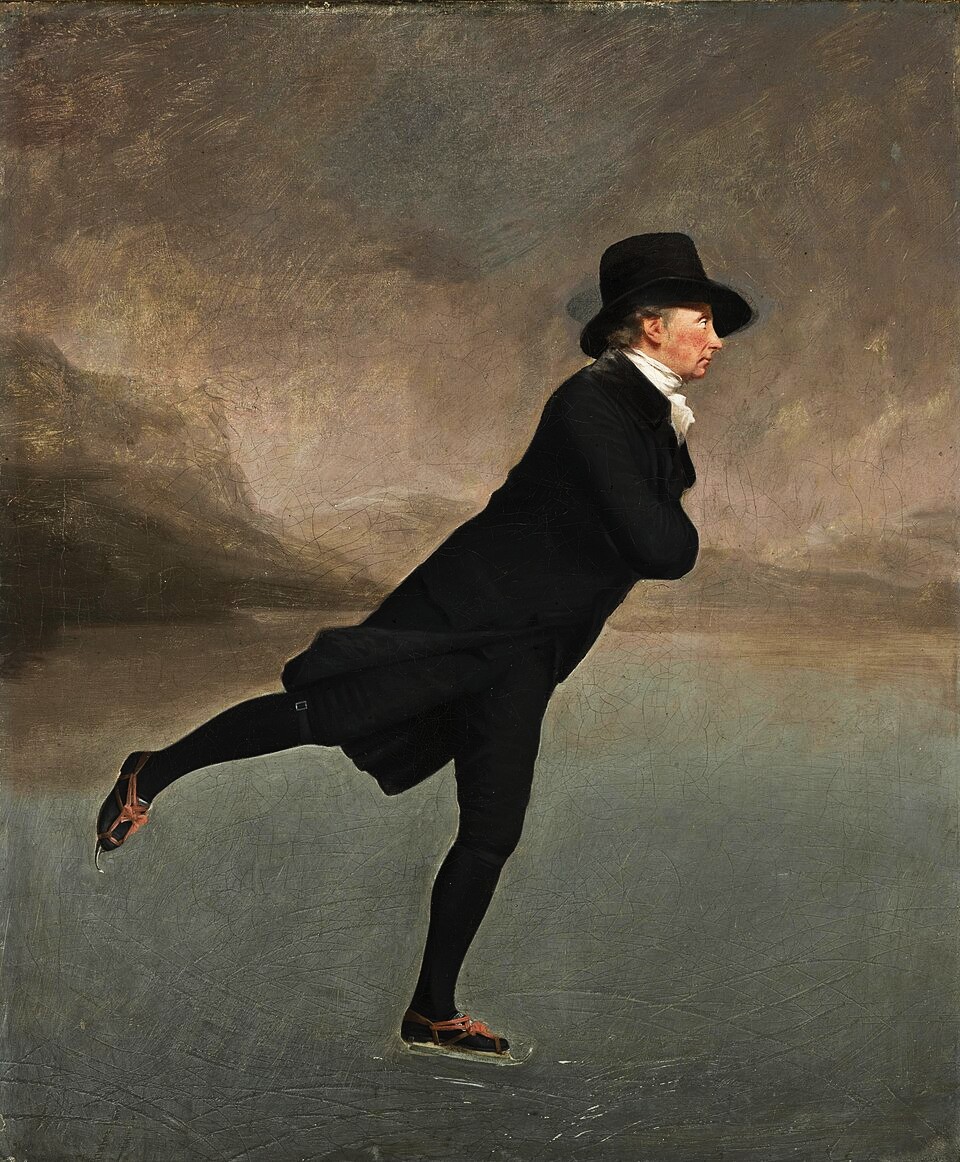
I knew nothing about that when I, in early 2012, had ended up among Hendrik Christian Andersen's bizarre nude sculptures. What caught my attention at that time was that among all these dazzling white and often oversized sculptures were glimpsed what seemed to be figures from the eighteenth century, without heads and wearing colourful African-patterned clothes. Wasn't that man balancing on one leg, for example, an allusion to Henry Raeburn's painting of a skating Scottish pastor?
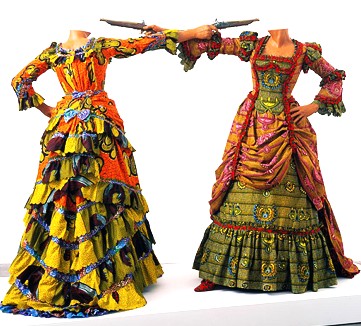
Two duelling ladies wearing crinolines while pointing their pistols at each other, and even though they were women with African-patterned fabrics, they made me think of the duel scenes in Stanley Kubrick's Barry Lyndon: "Mr. Lyndon, are you ready to receive the fire of Lord Bullingdon?"
https://www.youtube.com/watch?v=6bos2ZTGNZc
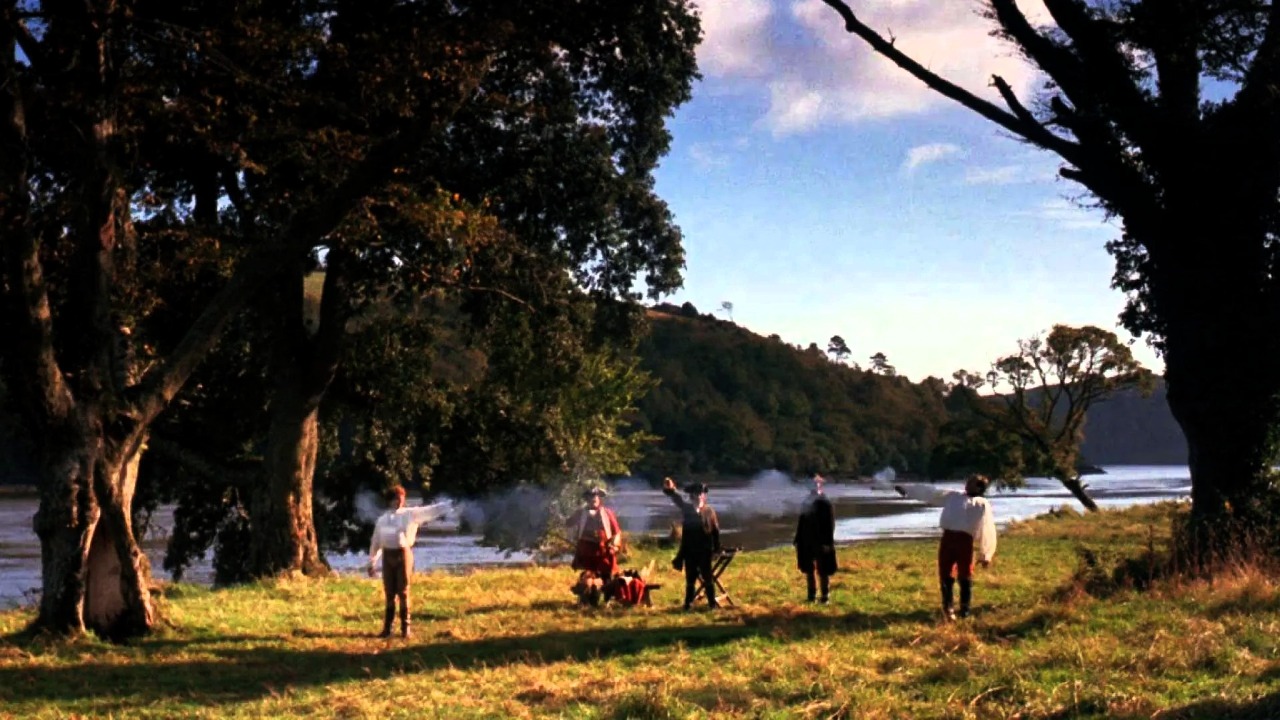
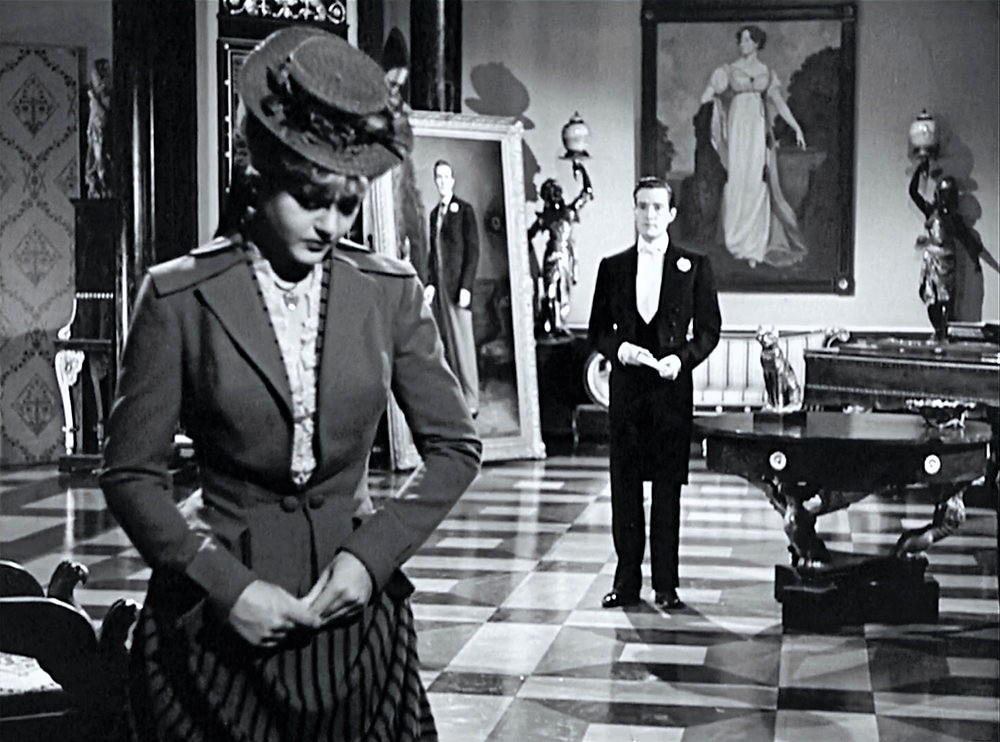
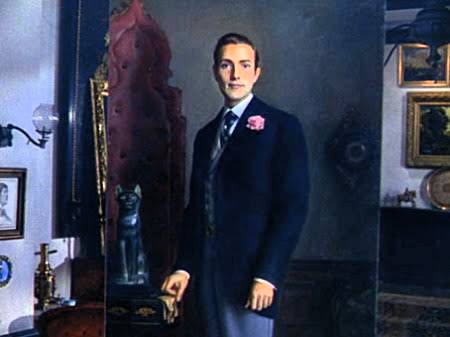
In the exhibition catalogue, the artist, Yinka Shonibare, also pointed out that when he arranged his exhibition, he had actually been inspired by films. Not only Barry Lyndon which took place in a rococo world, but also, strangely enough, Albert Lewin's elegant version of Dorian Gray's portrait from 1941.
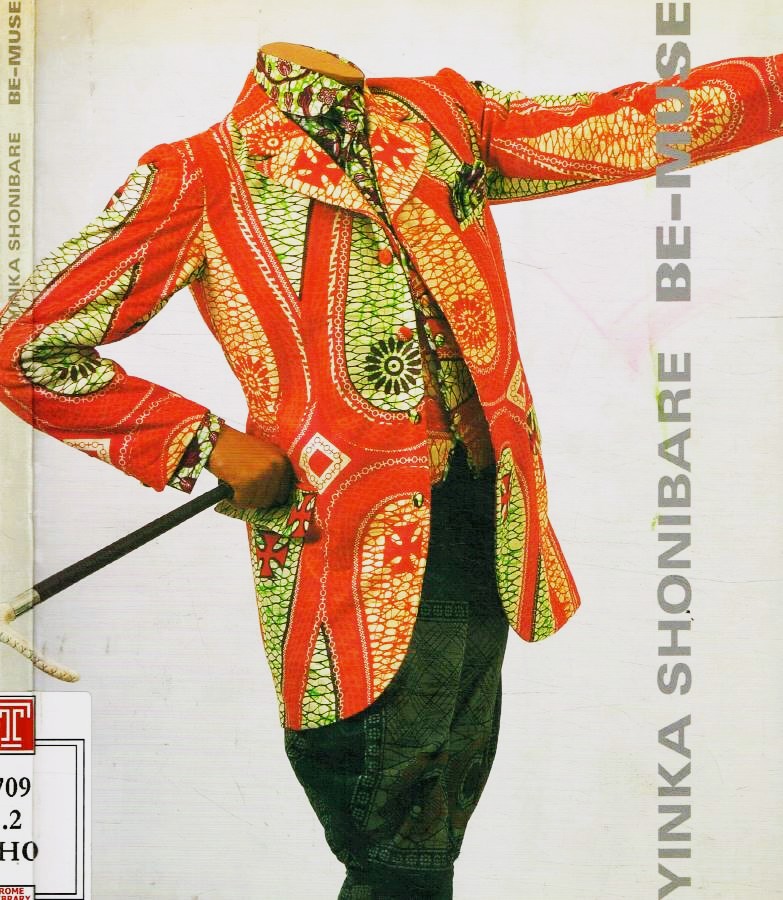
Yinak Shonibare, who divided his time between London and Lagos, often demonstrates through his art the contrast between African and European culture. Through boundary-crossing and unexpected effects he fuse things that otherwise might seem to be absurd. Shonibare called the exhibition in Andersen's museum Be-muse, which can mean both "puzzle" and a being a fusion of "being/existence" and "muse", i.e. a personification of art in Greek mythology.
The costume patterns were African, but the clothing cuts and poses seemed to be taken from the European eighteenth century. The mannequins lacked heads and could thus not be identified as black or white. An effective element was discovering these playful and colourful roccoco figures among Hans Hendrik Andersen's admittedly humorless depictions of ideal nude figures, a further development of an all-too-serious tradition that had depicted the European youthful nude body as an ideal of health, nobility and culture.
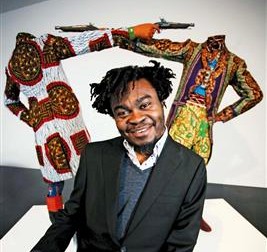
Two years before I saw the exhibition, Shonibare had created an even more astonishing fusion of African and European templates within an almost impossible historical perspective. Perhaps Shonibare's satirical approach of placing a black man in a "white" historical context in 1999 cannot today seem to be as radical as it was twenty-five years ago.
For example, in a film from 2018, Mary Stuart's fifteenth-century court was portrayed as a composite of people from other continents – the English ambassador to the Scottish court, Lord Randolph, was portrayed by a black actor, the Scottish queen's Italian private secretary, Rizzio, by a mulatto, and Queen Elizabeth's informant at the court, Bess of Harwick, by an actress of Chinese origin. A tendency that I don't find offensive at all. Just as I'm not upset by the TV series Bridgerton, which takes place under the English Regency, but nevertheless wildly mixes "white" and "coloured" actors. Admittedly, not historically accurate – but what does it matter? Acting is acting.
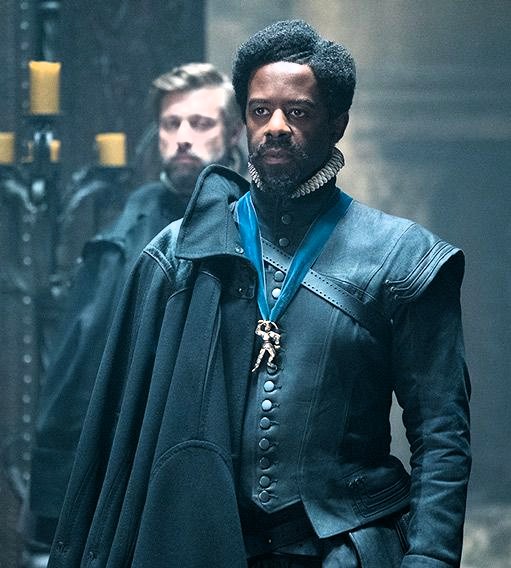

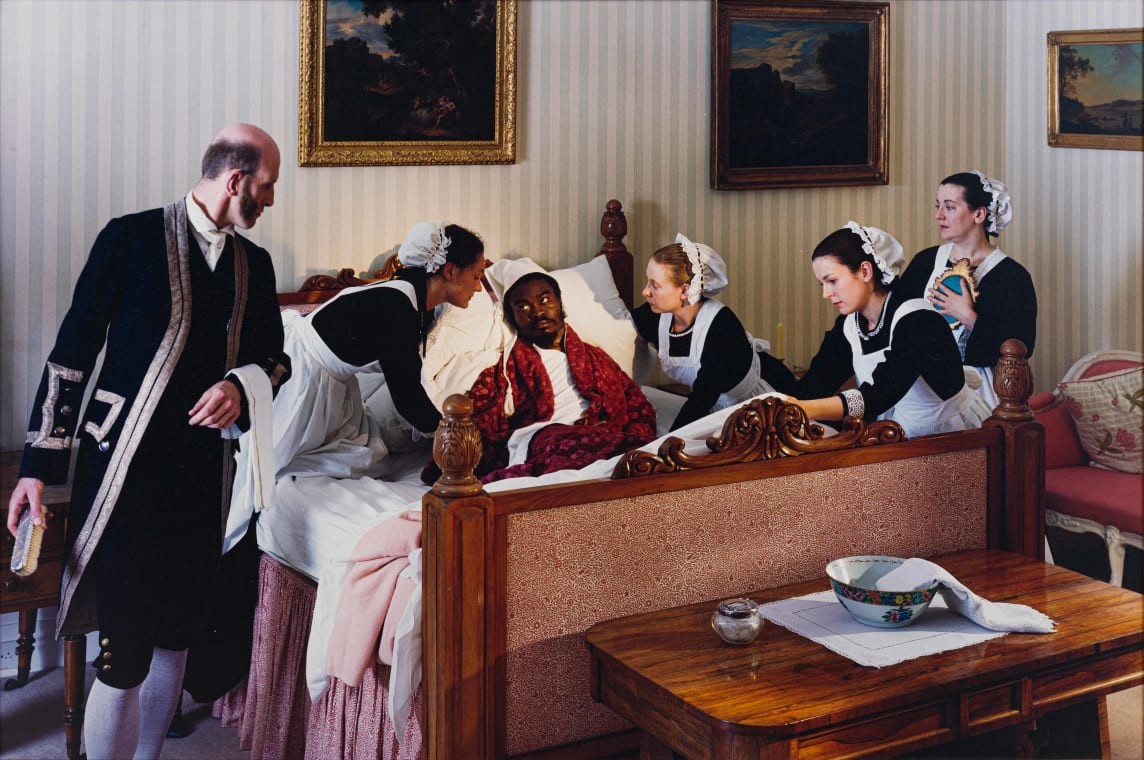
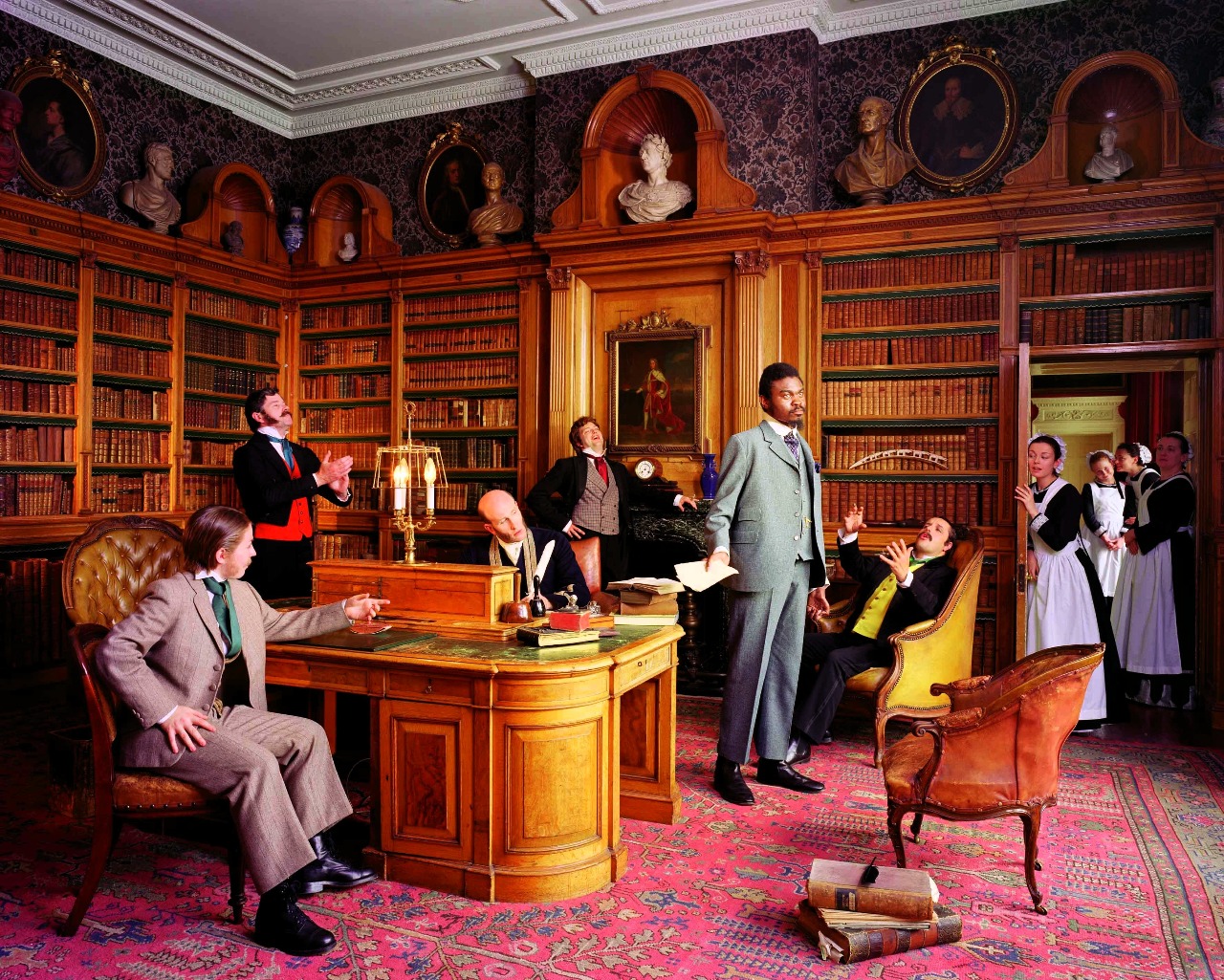
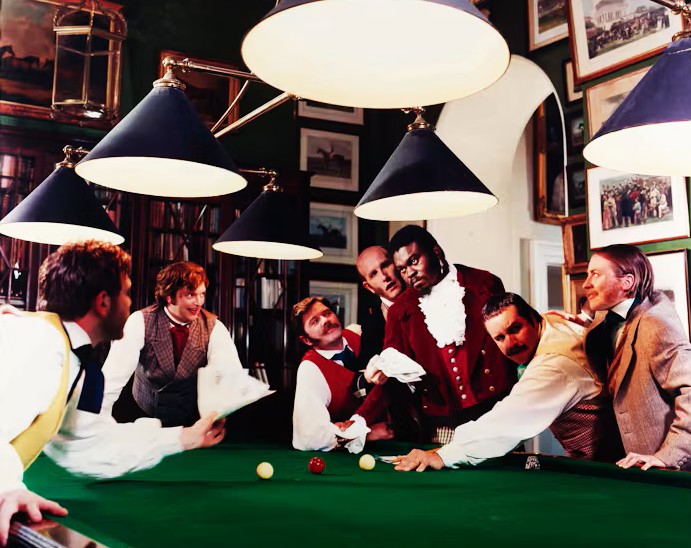
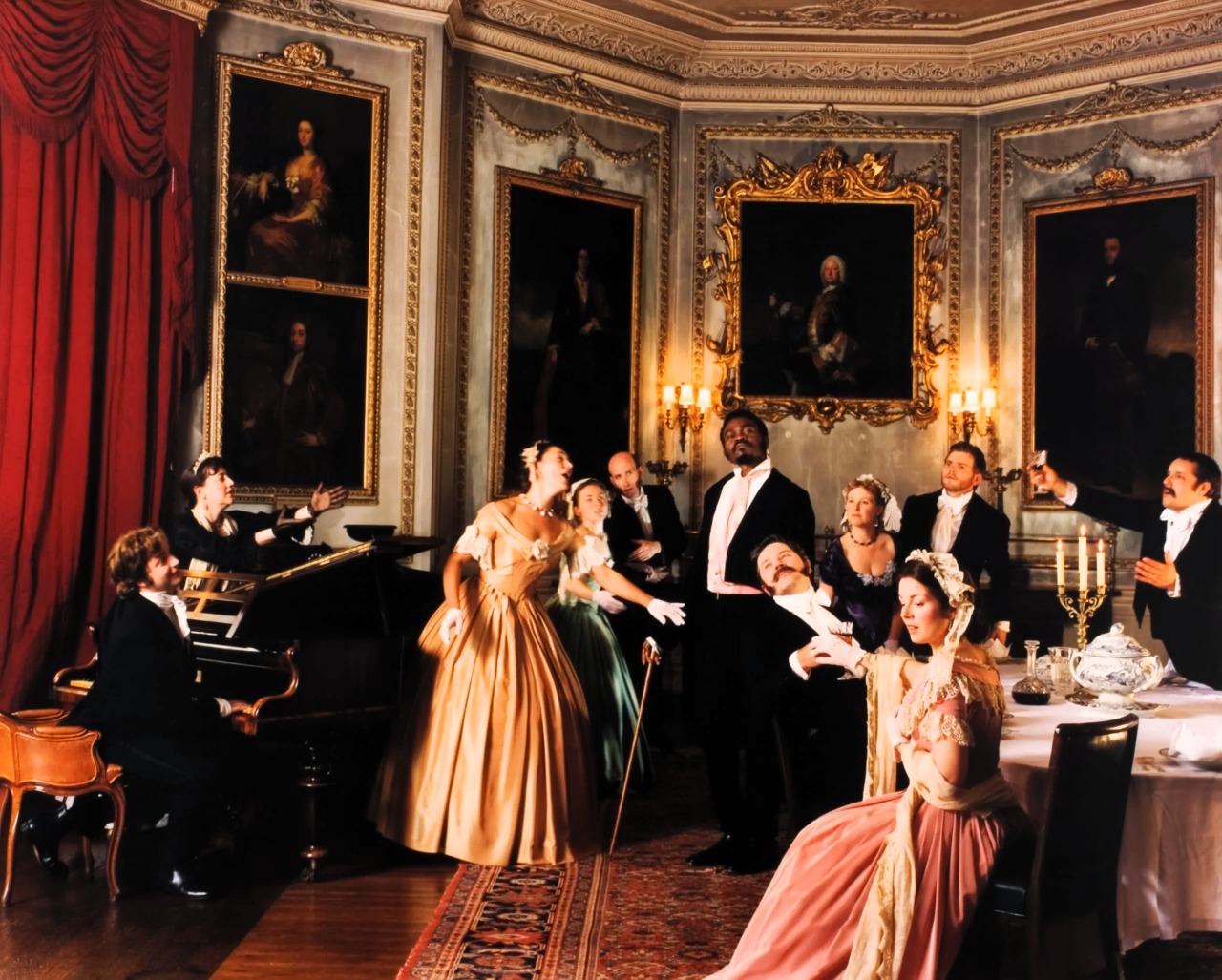
25 years ago, however, the effect was rather bewildering when Shonibare in his A Diary of a Victorian Dandy, in a series of staged photographs, portrayed himself as a Victorian dandy and thus played with prejudices and English colonialism. We follow the day of a wealthy black man, from the moment he wakes up at eleven o’clock in the morning, watched over by submissive servants.
At two o'clock p.m. the dandy arouses public appreciation with a speech he gives to a political/scientific association of distinguished gentlemen.
At five o'clock p.m. he relaxes with a game of billiards with his friends at the men's club. His servant disturbs the company by showing up with a message, which does not seem to be to our dandy's liking, but he appears to ignore it.
At nine o'clock p.m. in the evening we find him again as the centre of attention, during a soiree in an exclusive salon with a wealthy, cultured company.
The dandy is obviously not God's best child, at three o'clock a.m. we find him, either exhausted or dead drunk, during an orgy attended by beautiful ladies and suspicious figures. The servant has reappeared – to pick up his master, or does it all have something to do with the message he gave him during the billiard game?
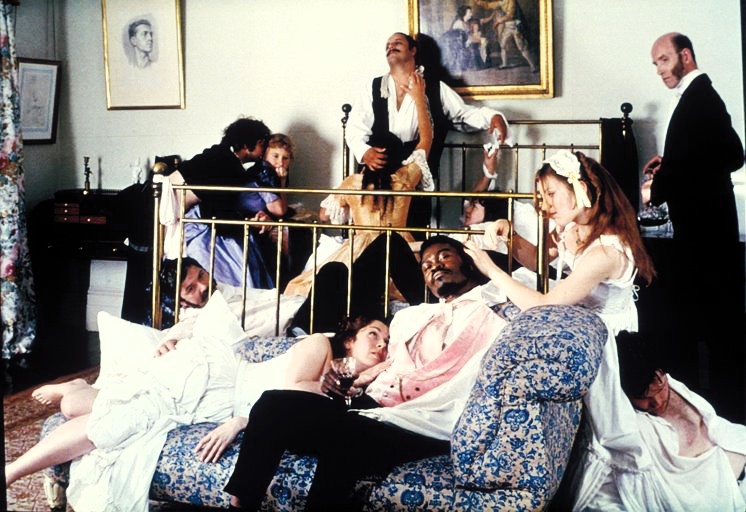
The irony is obvious. Everyone can understand that this is not how a black man's life could be in the nineteenth century. As the case was with his mannequins, which Shonibare presented at his exhibition Be-Muse, he also had European models, at least in the final scene, which is reminiscent of Hogarth's A Rake's Progress, which Kubrick also alluded to in his Barry Lyndon.
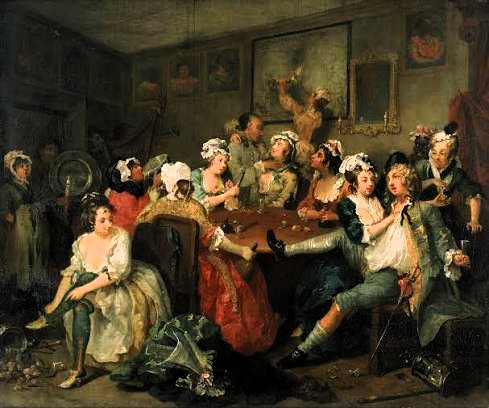
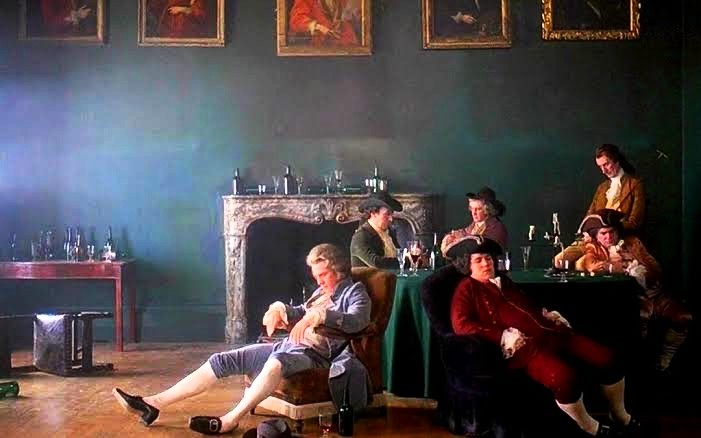
Otherwise, Shonibare's dandy is of course an allusion to all the wealthy, well-to-do young men we have read about, seen in pictures and in films, but certainly they have never been black. Shonibare ran off his series of pictures as forty posters, which pasted up in the London Underground, without any comments.
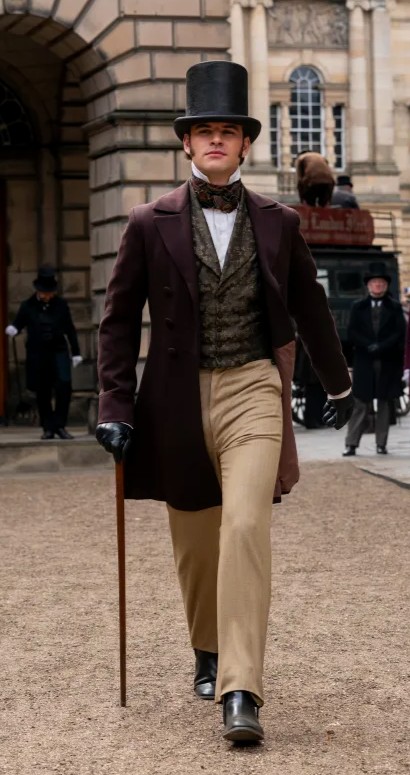
Shonibare's pictures of an African dandy are reminiscent of the pictures that used to often appear in various magazines in connection with questions such as "what is it that is not right with this picture?", or "is there something that does not belong here?"

What Shonibare draws our attention to is racism, the exclusion of other people from society because of the colour of their skin. Films like Mary Queen of Scots and Bridgerton cannot overshadow centuries of racial oppression and make us believe anything other than that the presence of people of colour in Europe's ruling circles was nothing but vanishingly slight.
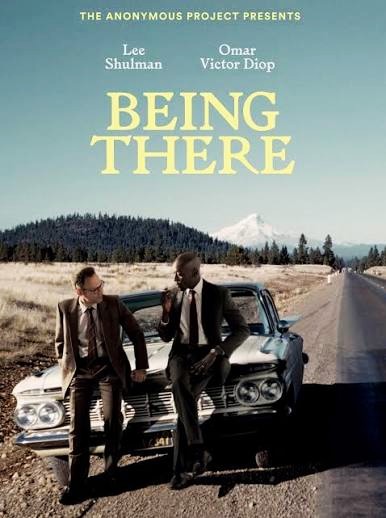
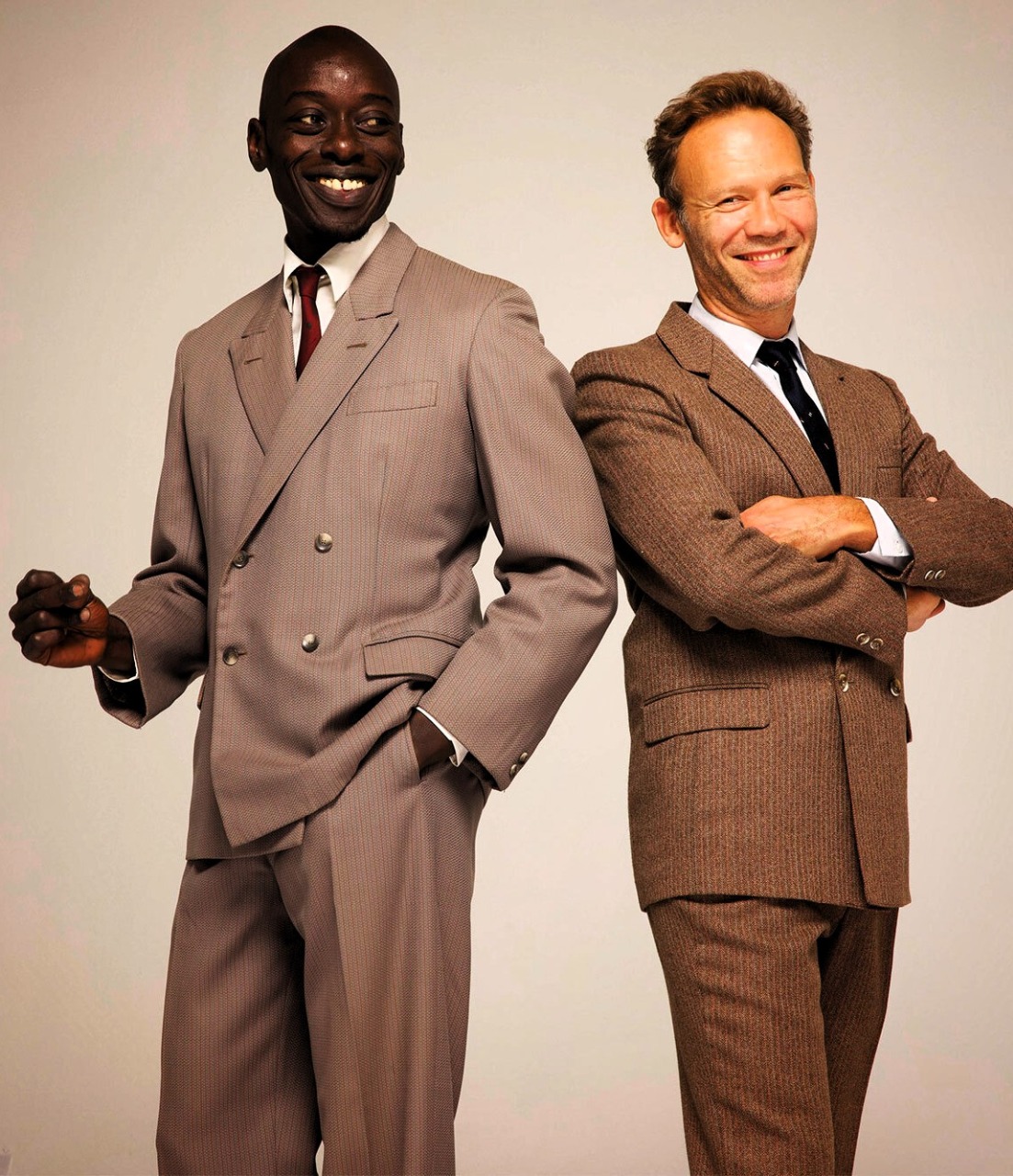
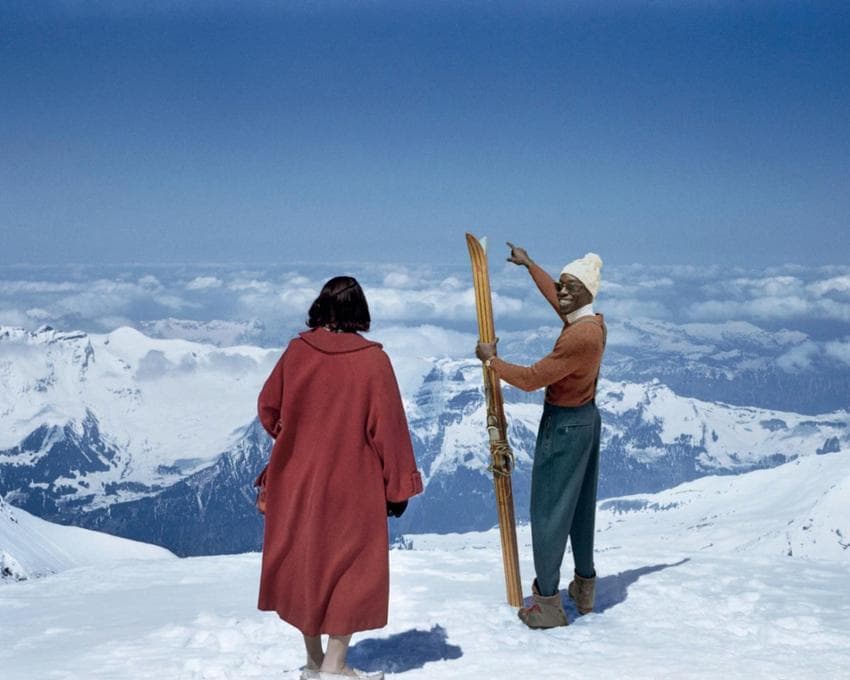
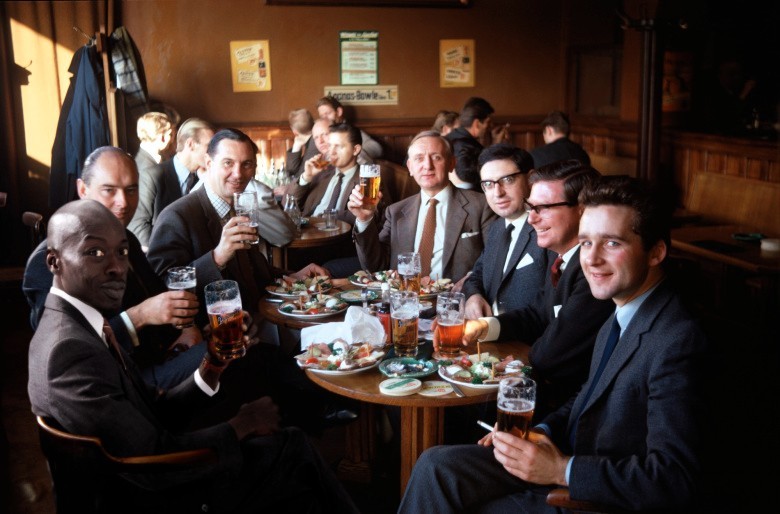
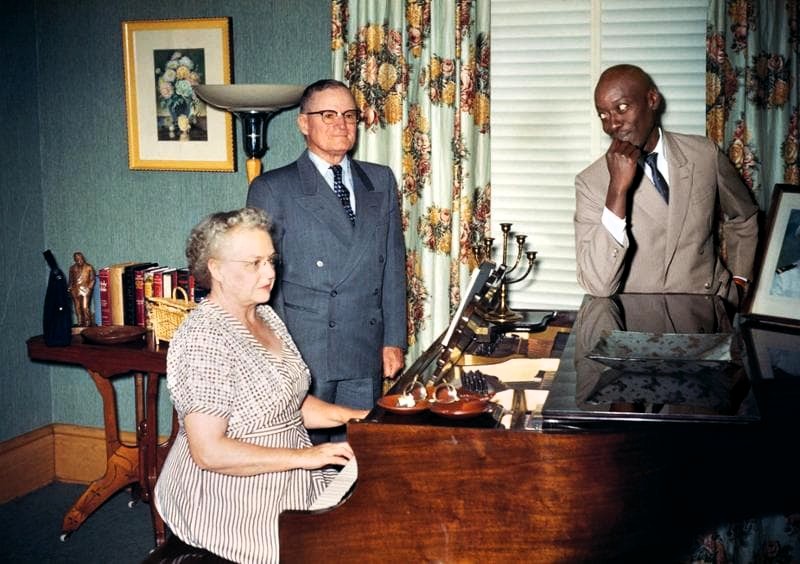
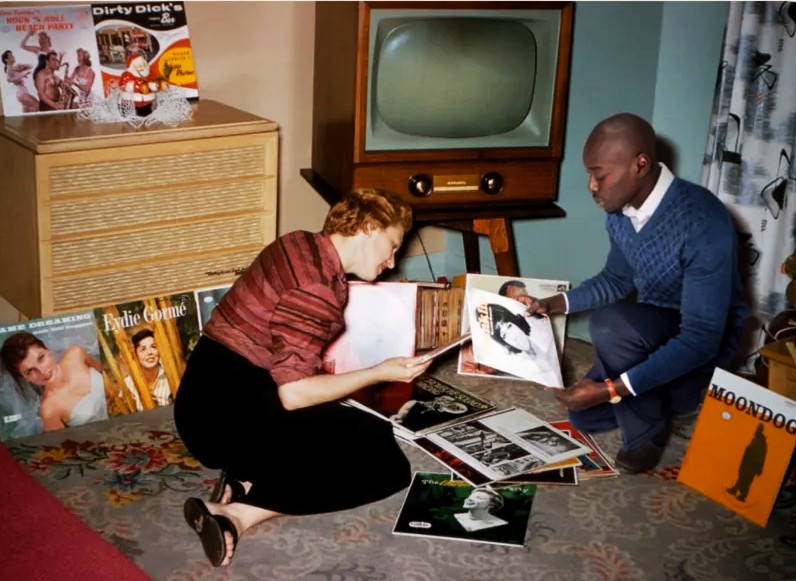
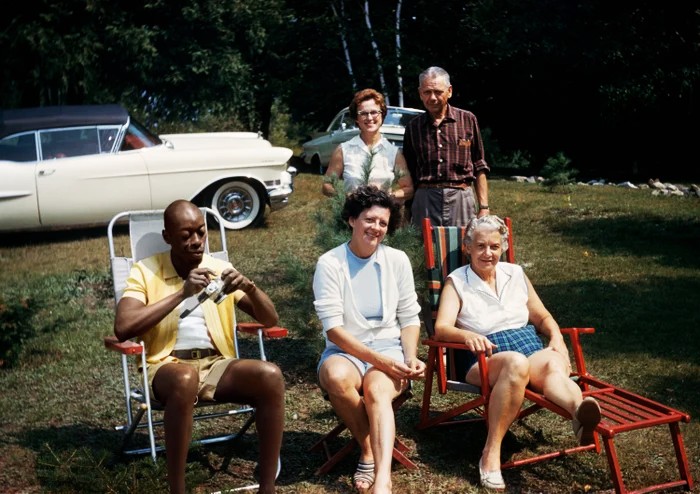
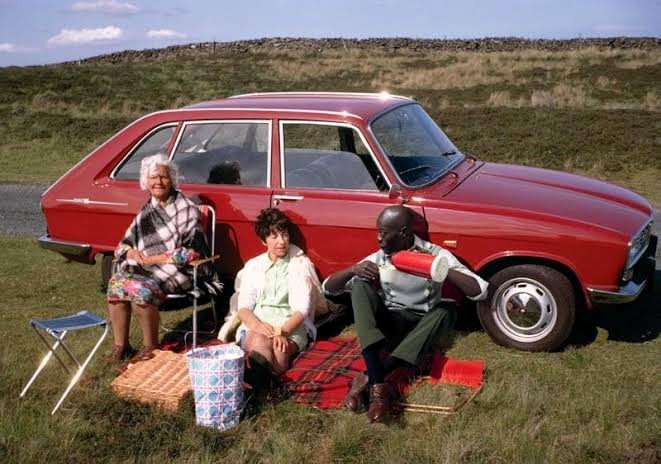
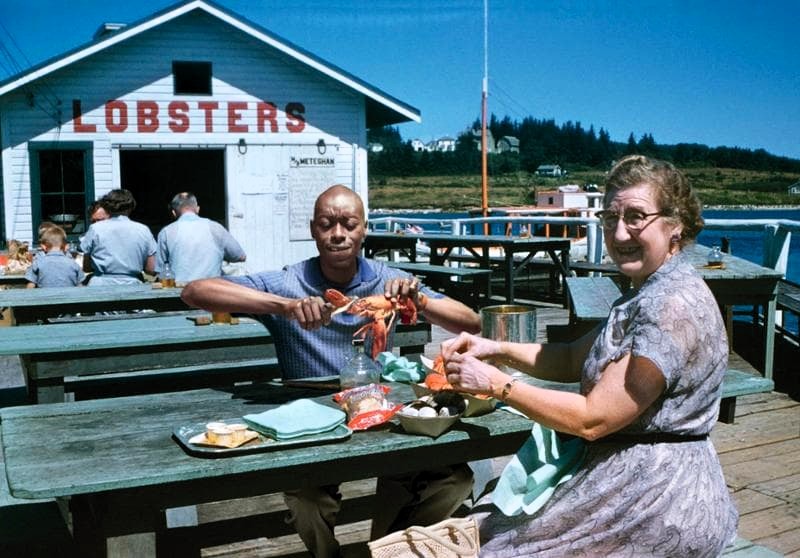
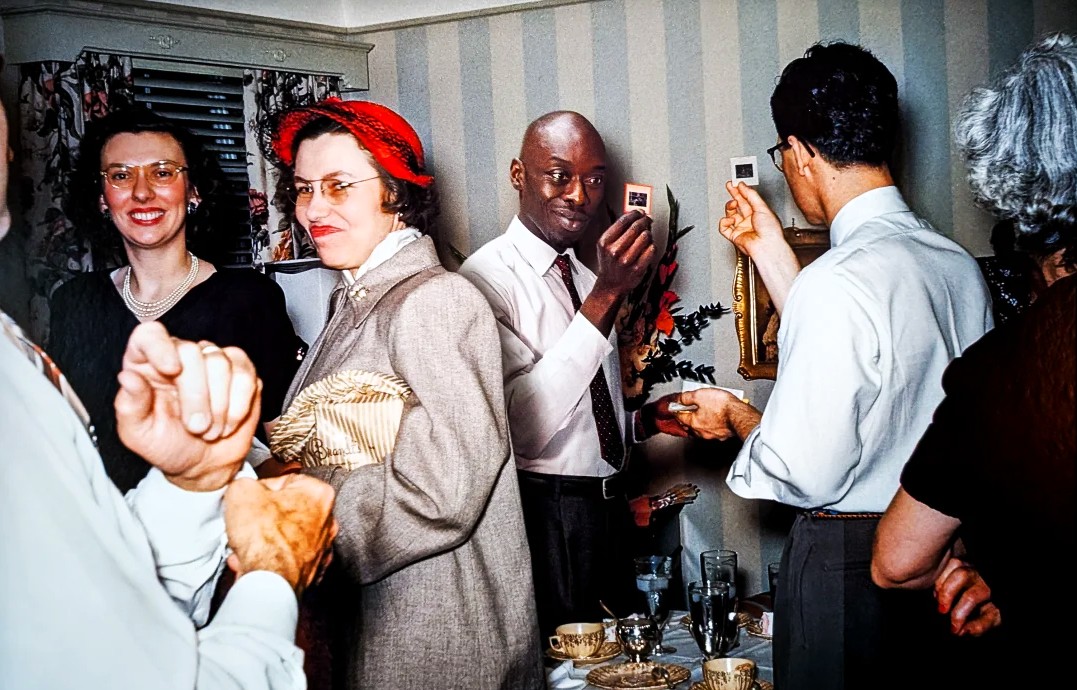
The fact that racial segregation has been endemic and to some extent still is, especially in American cultural and social life, was highlighted in 2023 by artists Lee Shulman and Omar Victor Diop when they published a book of manipulated family photos from the late fifties and early sixties. The book Being There presents the Senegalese Victor Diop as if he were a completely integrated part of a typical middle-class American family. The book takes the form of a family photo album, but in reality, Diop's presence is copied in and harmonized with the lighting of the photographs.
We get to follow Diop on a ski excursion.
An evening with the gentlemen at the pub.
Respectful listening while the mother of the house is playing the piano.
He plays records with his daughter.
Participates in family outings.
Eats lobster with Grandma.
Selecting slides for a screening evening for family and friends.
And relax on one of the sofas at home, with hearty laughter and fellowship.
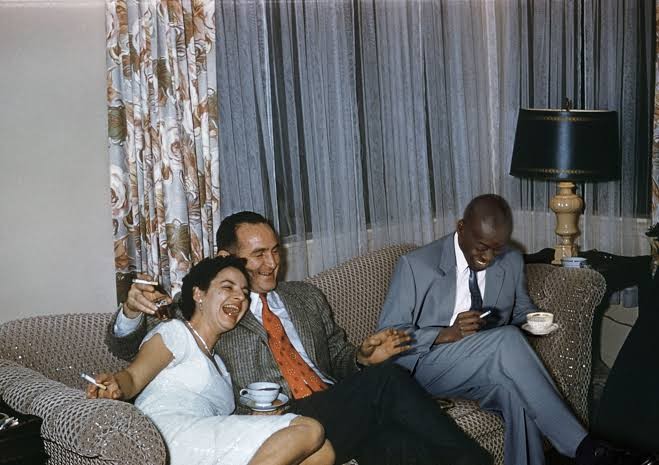
Shulman and Diop do not comment on the photos, but present them as if they were taken from any American photo album. However, we know that this cannot be true. This is not what we could have expected if we happened to flip through an American photo album. We know that racial segregation and discrimination were everywhere thoroughly ingrained and perhaps for the most part still are. That such a family album could not have existed in real life. And if that were really the case, we would be extremely amazed, as when I once stepped into the Hendrik Christian Andersen Museum in Rome and instead of a writer's den found Aryan-inspired sculptures and African mannequins, which in turn led me into paths far removed from the exalted emotions that Andersen had probably hoped a visitor would be directed to after stepping into his studio filled as it is of ideally naked human bodies.
Andersen, Hans Christan (2018) The Improvisatore: A Novel of Italy. Minneapolis: University of Minnesota Press. Bredsdorff, Elias (1975) Hans Christian Andersen: Story of His Life and Work, 1805-75. London: Phaidon Press. James, Henry (2004) Beloved Boy: Letters to Hendrik C. Andersen, 1899-1915. Charlottsville: University of Virginia Press. Jean, George (1994) Voyages en utopia. Paris: Gallimard. Shonibare, Yinka (2001) Be – Muse. Rome: Museo Hendrik Christian. Sidoni, Paolo (2019) La Roma di Mussolini. Roma: Newton Crompton. Shulman, Omar and Victor Diop (2023) The Anonymous Project, Being There. Paris; Editions Textuel. Tóibín, Colm (2004) The Master. New York: Scribner.


