
I am utterly tired of the chauvinistic nationalist nonsense that is drowning Europe. This stupid tunnel vision that tars every individual with the same brush. The obvious insanity of turning an individual into a representative of an entire ethnic and/or religious group. Are you Swedish or not? German or not? Serb or not? Who am I? Do I attach myself to any “Swedish values"? For countless generations I descend from Swedish ancestors. I was born a Swedish Lutheran and contrary to so many others I have not left the Church of Sweden. I am intimately familiar with my mother tongue, have studied Swedish at university level and worked as a Swedish teacher. I have done my Swedish military service. I pay taxes in Sweden. But "Swedish values" – what the hell is that? Nothing and no one could induce me vote for the Sweden Democrats or believe in their gibberish about "Swedishness".
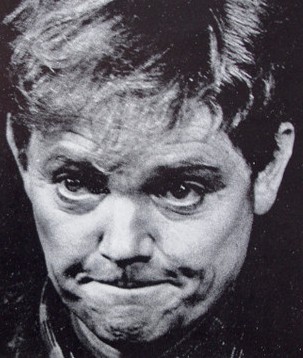
I remember the Swedish authors Yngve Gamlin's and Beppe Wolger's terrible and fundamentally ingenious dialogue from 1968, in which have the famous actor Lars Ekborg portray a bitter, angry and prejudiced old man from the northern provinces express his resentment of everything and everyone. He generalizes wildly and ruthlessly and intends to solve all social problems by “bundling together and kill” people from Stockholm, the Sami people, pensioners, holigans and women over 40. It is insane and actually quite funny considering how ruthless bullies currently are allowed to pour their unnuanced, hate-filled smear on us from lecterns, TV sofas and social media.
Actually, it should be just as fun to listen to Jimmie Åkesson, leader of the Sweden Democrats, when he transmits his deplorable nonsense, if it weren't for the sad fact that a quarter of Sweden's population have voted for him and if he hadn’t had such a great influence on our Government (as I write this, general elections will take place tomorrow and I fear the worst). Like when Jimmie greases his speeches with embellishments of how wonderful Sweden once was, before all those shady immigrants introduced crime and decay into this unparalleled paradise. God have mercy! He takes a deep breath and comes up with a quote from our great national poet Esaias Tegnér. Of course, Jimmie generally uses Tegnér's Svea, the powerful poem the poet wrote in 1811, driven by a surging desire for revenge after Sweden had lost Finland to the Russians.
Hear me, O Svea! You gave me birth,
and within thy bosom rests all Swedes of worth!
Those whose names are soon forgotten,
to you this simple hymn’s begotten,
though flattery's tongue benumbed this northern Reign,
for once – hear a voice of truth, it can’t be sung in vain.
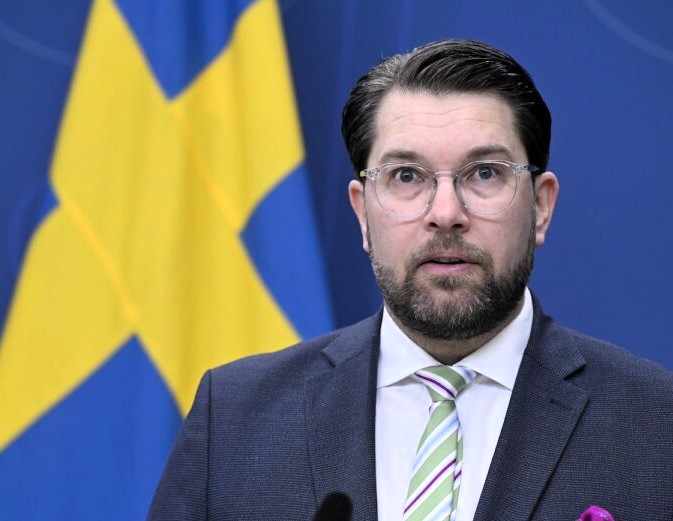
Jimmie's raising quote apparently intends to make my heart and those of other Swedes as well, to swell with pride at having had the privilege to have been born in this amazing land, home of heroes and Aryans and at the same time be filled with indignation towards those who have defiled this noble Kingdom.
In my mind's eye, memories are awakened of how I as a child stood in the schoolyard watching how our beautiful flag in the Nordic fresh south wind breeze fluttered against a dramatically cloud-covered sky. And we sang the hymn to the Swedish banner:
Flame proudly against dark skies
like a glimpse of the summer sun
above Sweden's forests, mountains and villages,
over violet-coloured waters,
you are the harbinger
of pride and joy:
The sun is shining! The sun is shining!
No will ever dare
to threaten our valiant people!
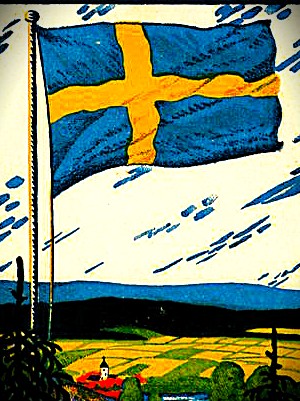
That doesn't happen anymore, but the Sweden Democrats would certainly want to reintroduce these proud traditions. If we could only could get rid of these damn foreigners, we would be could once again sing the old childrens’ song:
I'm so happy to be Swedish!
Oh, tell me where is a country so starry bright
so summer light, as Sweden, wide and mild?
See the fields, see the meadows,
where Father and his father are walked.
Look at fields of rye,
wonder at the flowers,
where once my cradle stood!
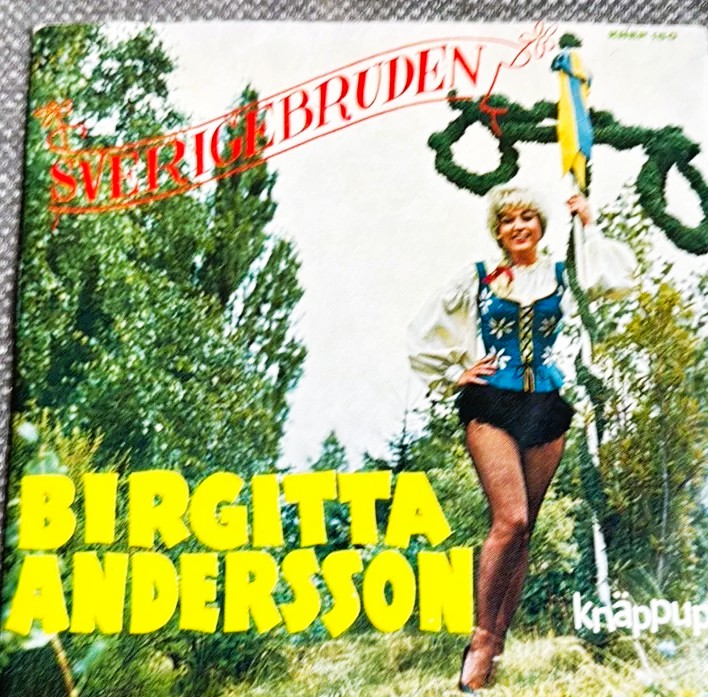
No, don't think that I'm not a patriot. If anyone loves Swedish nature, it's me. What I hate is the dark and gloomy chauvinism I hate. My deep hatred of xenophobia makes me laugh at Birgitta Andersson, rather than listening to smug patriotism, when she in the funny monologue The Swedish Bimbo time after time cheerfully exclaims: "I'm so happy to be Swedish. Ho, ho!"
Back to the Sweden Democrats' favorite poet – Esaias Tegnér, also highly appreciated by me, but not for the same reasons as Jimmie Åkesson. To me, Tegnér is hardly an inflated patriot, but a tone-confident, well-sounding poet, who did not, like careless readers like Åkesson and Co., indulge in reckless xenophobia. Had they read a little further in the poem Svea, they would have found valuable, albeit conservative, advice such as:
Become again, people of Sweden, what you once were.
Learn from other countries, to tackle what you suffer.
The Sweden Democrats' prejudiced exaggerations, their "Swedishness" and worship of antiquity, which easily lapse into generalizing lies and nonsense, would also benefit them if they took into account the words of their favorite poet in The Eternal:
Rightousness is eternal,
it’s flower can’t be crushed,
it grows and conquers what’s infernal.
Truth cannot be hushed.
Why boast of glory that’s not yours?
If you can't draw the bow, forget it.
You have to set another course,
walk another path, you won’t regret it.
And best of all, Tegnér's observation that "Swedishness" is not something that has grown out of the Swedish soil out of its own accord, like all other education, Swedish "culture" is about adapting to external impressions, customs and customs:
All education stands on unfree ground.
Only barbarism was once patriotic;
wit was planted, a language changed it’s sound
the song was tuned, another joy was found.
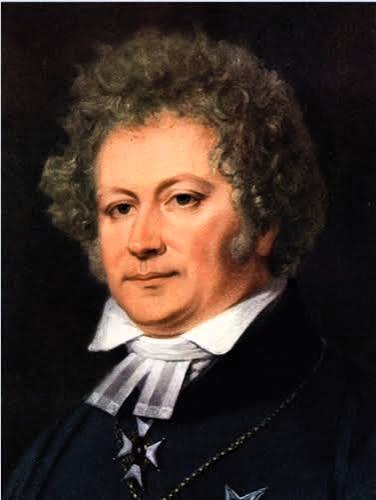
Early on, I became fascinated by Tegnér. Grandfather, as the old school teacher he was, naturally had a lot of Tegnér in his bookshelves. Among others, there was a magnificent edition of Frithjof's Saga, illustrated by August Malmström. Of course, I was attracted by the Viking pictures, especially as Father had a book with Tegnér's selected writings, which on its protective cover had a picture of a Viking that I on several occasions asked Father to allow me to cut out. For a long time, he refused to let me do so, but he finally gave in to my nagging. I cut out the Viking and pasted him onto a large drawing I had made of fighting Northmen, to which I had been inspired by another magnificent book that I found among Grandpa's bookshelves, The Tale of Ragnar Lodbrok and His Sons, also illustrated by Malmström. I found the Ragnar Lodbrok book to be much more exciting than the rather boring Frithjos saga.
_-_NM_7113_-_Nationalmuseum.jpg)
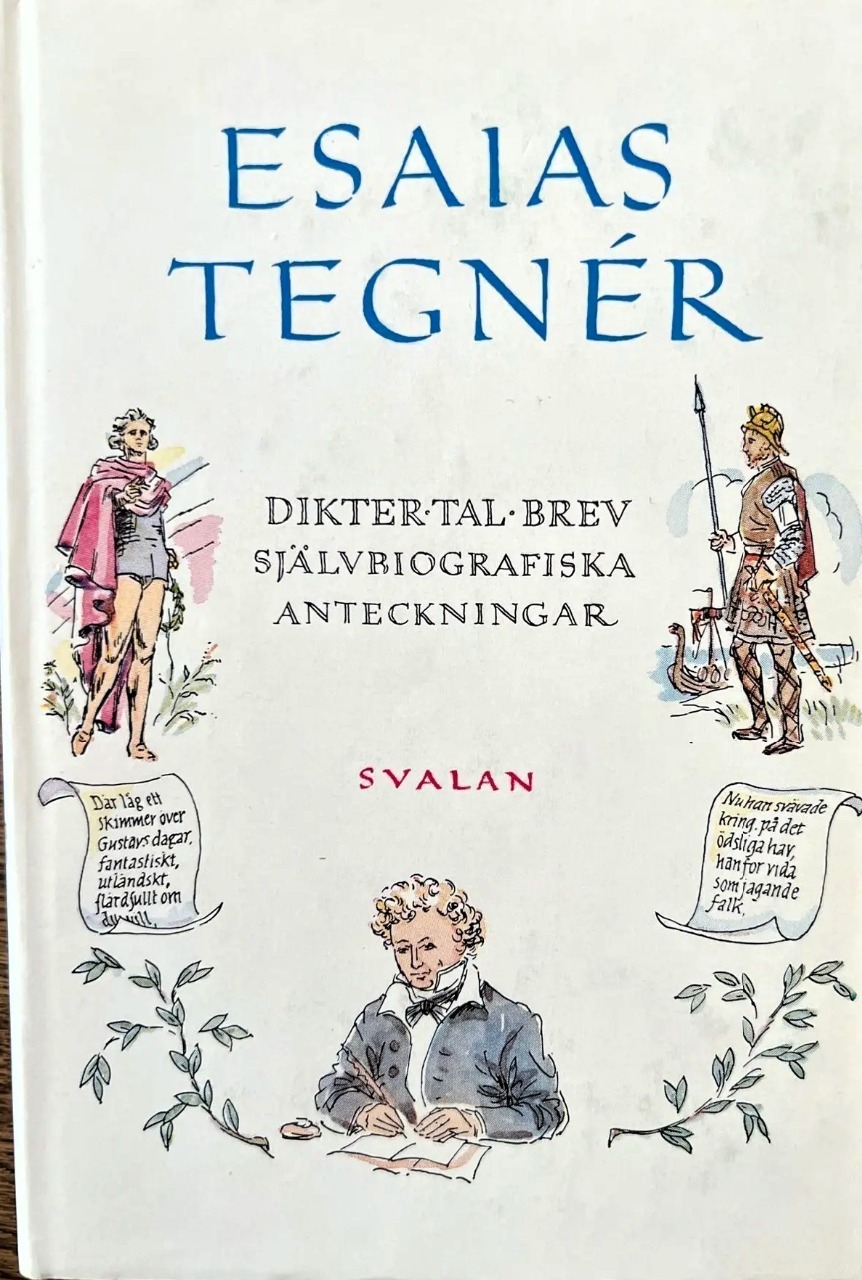
Much later, I actually read Fars Tegnér book and found to be far from being as boring as I had previously assumed he was. Tegnér turned out to be an excellent stylist, with an unusual strength and rhythm to his language (not at all apparent in my clumsy translations). I began to read a lot about him.
When I for a year worked as a teacher in Växjö, the town where Tegnér died after having had his diocese there, I had after coming there by train to pass through the cemetery and never neglected to make a short stop by Tegnér's tomb. He was certainly an interesting man – professor of Greek, a womanizer, politician and member of the Parliament, bishop, member of both the Swedish Academy and the Academy of Sciences, a skilled speaker and not least a cheerful man, but also occasionally quite gloomy, eventually he became insane.
To recruit such a man as a supporter of Sweden Democrats is simply ridiculous. Tegnér as a great Swede? Well, you can always pick the cherries out of the cake, but when it comes to such a multifaceted man you might do best to abstain – it is easy to go wrong. Incidentally, Tegnér was not particularly inspired by Swedish culture, for sure he wrote about Vikings and beating the Russians, though his role models were Englishmen like Byron, Danes like Oehlenschläger and not least Germans like Schiller and Goethe. He was more of a European writer than a Swedish patriot.
It would not surprise me at all if another deplorable, ultra-nationalist and successful party like the Alternative for Germany, AfD, for its shabby purposes has usurped another writer I admire – Johann Wolfgang von Goethe – humiliating him by making him into a “Great German”.
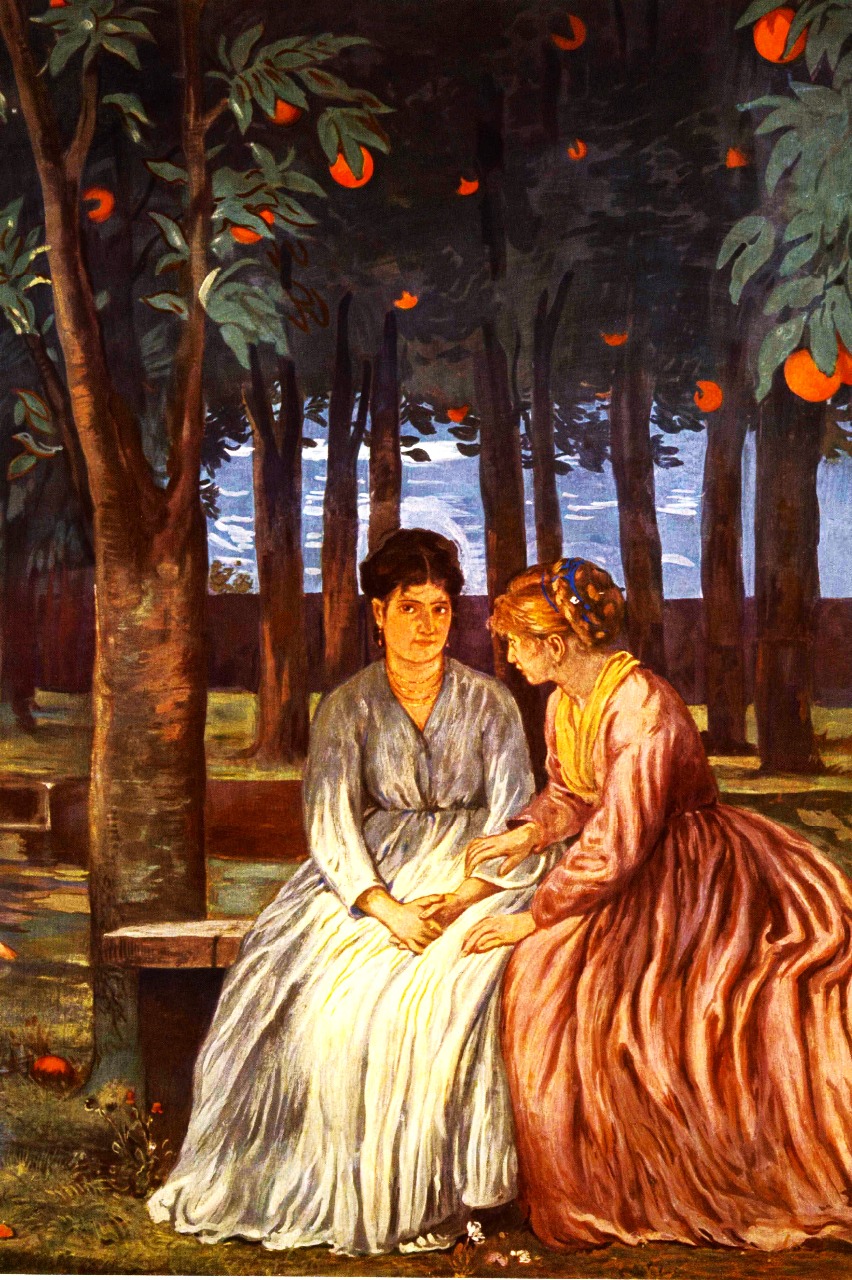
Goethe certainly sang and wrote about his beloved Germany. He knew and loved its deep forests, its fairy tales and myths, small duchies and picturesque villages. But ... what would Germany be without Italy? What would Sweden be without Germany?
Kennst du das Land, wo die Zitronen blühn,
Im dunkeln Laub die Goldorangen glühn,
Ein sanfter Wind vom blauen Himmel weht,
Die Myrte still und hoch der Lorbeer steht?
Do you know es wohl? Dahin!
Dahin möcht' ich mit dir,
O mein Geliebter, ziehn.
Do you know the land where the lemons blossom,
Where oranges grow golden among dark leaves,
A gentle wind drifts from the blue sky,
The myrtle stands silent, the laurel tall,
Do you know it?
It is there, it is there
I long to go with you, my love.
Goethe made a career in the Weimar principality, where he became the archduke's advisor, as well as minister of finance, mining, roads, agriculture, art, science, and the armed forces. He also directed its theater, writing and staging plays. Due to a difficult Platonic love affair with a powerful, elderly and married mother of seven, lady-in-waiting to the Dowager Duchess, and overexertion due to his heavy workload, Goethe asked the duke for a period of leave. The latter kindly gave him unlimited recreation with full pay, Goethe "sneaked out" of Weimar and traveled to Italy.
After his return to Weimar, after spending more than two years in Italy he claimed that "we are all pilgrims seeking Italy". When Goethe had stepped out of the stagecoach at the Brenner Pass on the border with Italy, he took a deep breath and exclaimed: "At last I can breathe".
For Goethe, Italy was synonymous with the warm, passionate South, as opposed to the humid, disciplined and anxiously vigilant North. In Italy, classical Antiquity lived on, among ruins, landscapes, colours, customs, cities and monuments. A world that Goethe had hitherto only experienced through written texts. Now he endow names and barren words with soul and meaning. He wanted, as he put it, to get to know himself through things and experiences. In Italy, Goethe devoted himself fully to life and pleasure. Here he did for the first time experience erotic fulfilment.
On his return to Weimar, Goethe was a changed man. He resumed his duties, but now lived openly, as an unmarried man, in a passionate, "scandalous" relationship with a woman whom he in his poetry praised for her sensually affirming voluptuousness. In his lyrical texts he went even further than Italy and wrote, with the Persian poet Hafiz as a model, an East-West divan, diwan being the Persian word for a collection of poems.
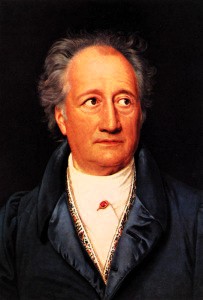
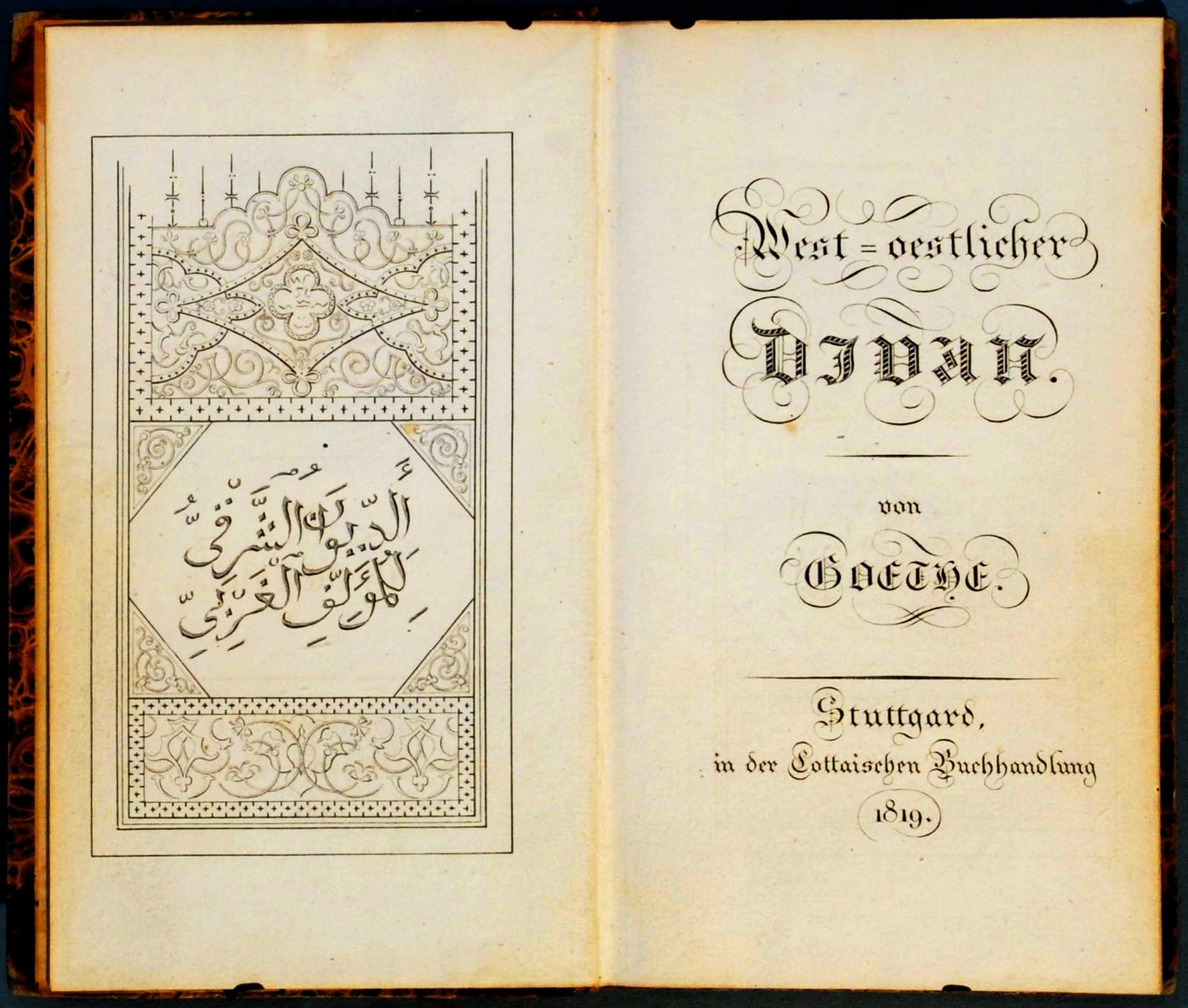
Goethe is a representative of the diversity of culture. He was German. OK, but what does that really mean? Bach, Kant and Nietzsche were also Germans, as were Beethoven, Dürer and Marx. But not Shakespeare, Jesus, Dostoevsky, Michelangelo, Gandhi, Rumi, or Cervantes. What does that say? Nothing but that it is useless to encapsulate culture as a national phenomenon, a chimera that might also extremely dangerous considering all the suffering and bloody wars it has caused.
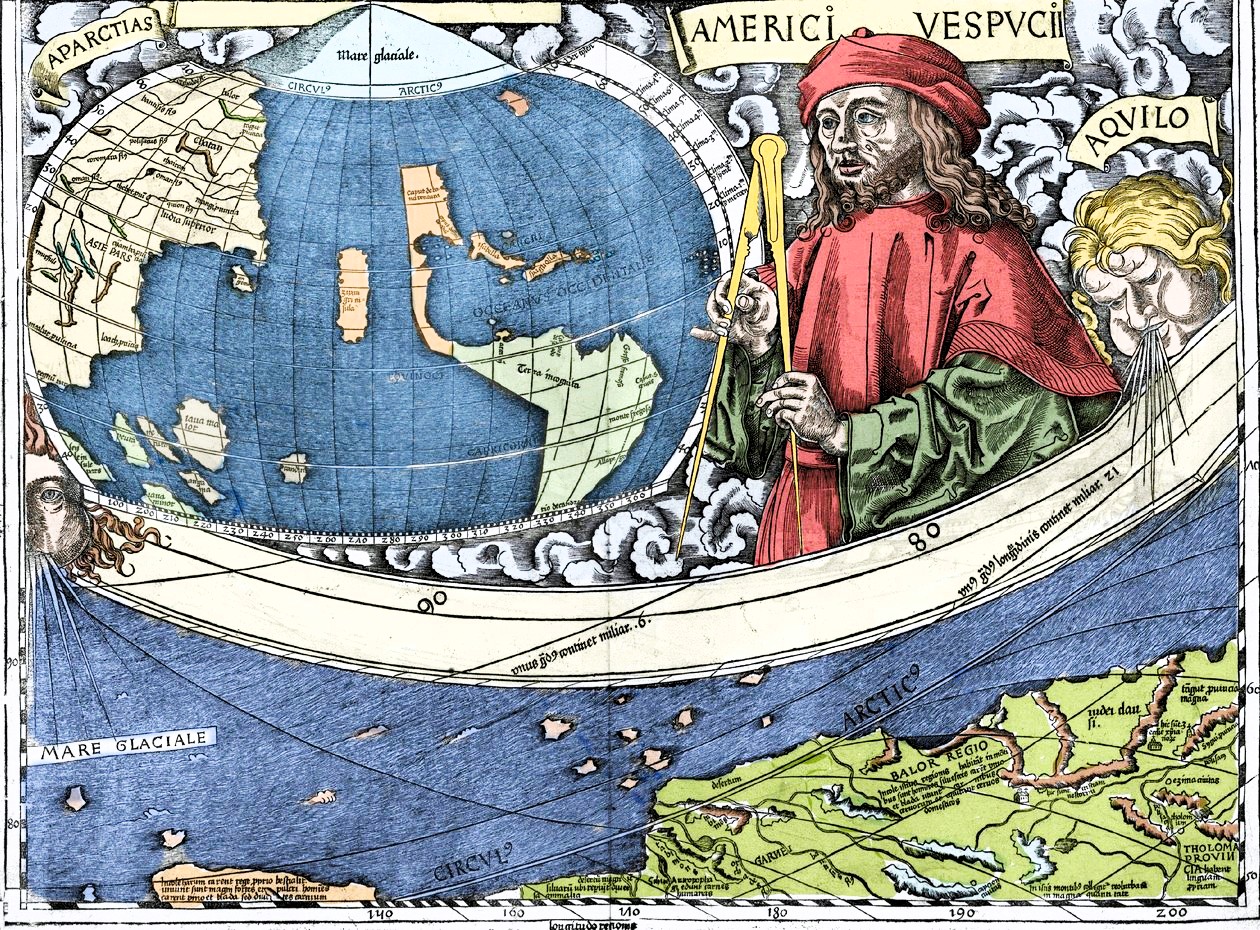
And now ultra-nationalism is raising its ugly head again and its representatives are all over the world in the process of spreading their poison and hatred. In the U.S. it is becoming endemic, an example of many is when President Trump as a gesture of incomprehensible patriotism changes the name of Lake Ontario to Lake America. What would the Iroquois have said if they knew that their name on the lake – Oniatari:io, the Lake of Shiny Waters, would now have its name changed after an Italian seafarer, who in the service of the Spanish and Portuguese had not set foot in neither what would become the United States of America, nor in Canada? Amerigo Vespucci came to present-day Suriname and Rio de Janeiro and it was his name that a German cartographer named Martin Waldseemüller, without Amerigo's knowledge, put on two continents.
In India the ruling Bharatiya Janata Party (BJP) has as the result of an emerging Hindu nationalism changed the name of several major historical locations with Islamic or Mughal roots, including cities like Allahabad, changed to Prayagraj, Faizabad to Ayodhya, and Aurangabad to Chhatrapati Sambhajinagar. BJP also wants to change the name of India to Bharata, apparently originating from the name of a legendary Hindu ruler.
Trump and other so-called patriotic leaders are actively pursuing a strategy of attacking education and public memory. If they come to power, they seek to place restrictions on what can be taught, celebrated, and represented. Their goal is to limit, or change, people's perception of whose citizenship and suffering "counts" – and ultimately who can lay claim to the future. However, does not every citizen deep down realize that an individual, let alone an entire nation, cannot be completely flawless. Without shadows we run the risk of becoming blind. It is harmful to look straight into the sun.
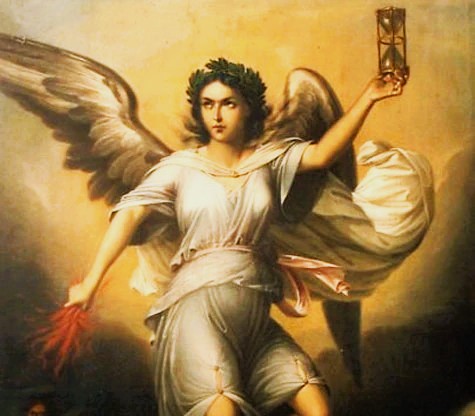
Such self-estimating blindness was called hubris in ancient Greek mythology and it was also the name of a demon who created ignorance of a human's place in the world order and thus an exaggerated confidence in her/his own abilities, as well as a contempt for other people. The punishment for hubris could certainly be long in coming, but sooner or later it appeared in the form of the goddess of retribution – Nemesis. At first, she had her eyes lowered and thus lulled her victims to safety, before she lifted her eyes and let sword and scourge wave over them, until they were completely destroyed.
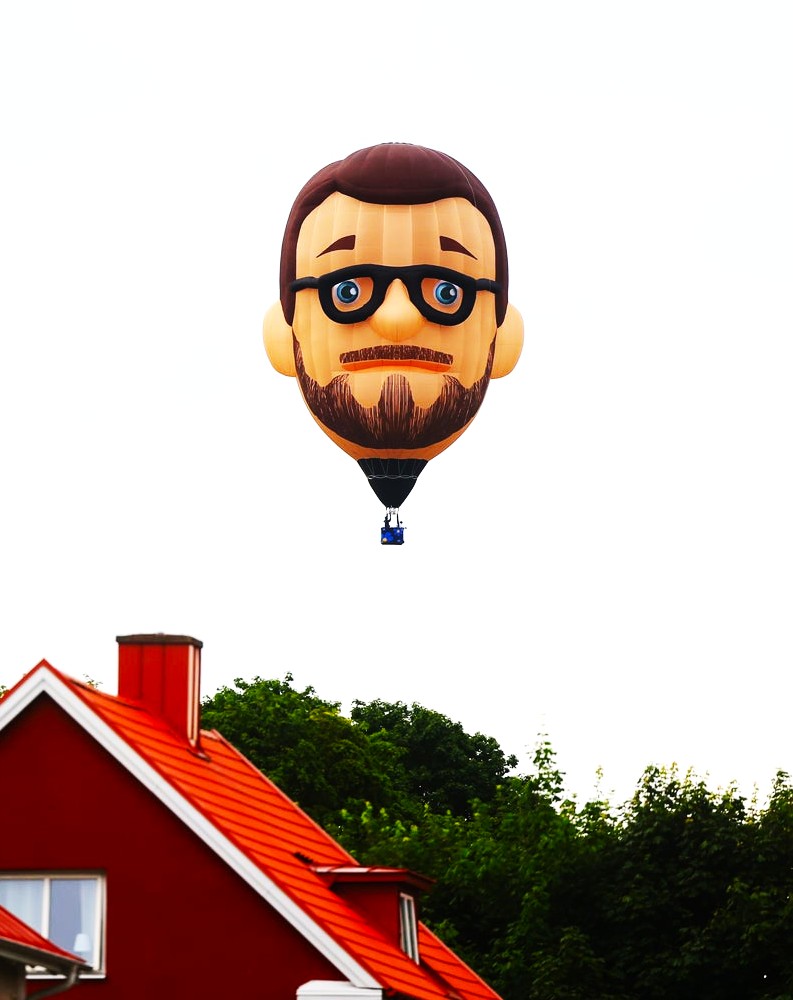
As I write this, my concern is great – will Jimmie Åkesson and his Tidö collaborators form a Government? Will their one-dimensional view of the world now become law? A world where history and culture are misused to serve limiting, shady interests. Where dead and living individuals are turned into stereotypes on a ridiculous board game where a small group of ignorant manipulators participate. People have allowed their humanity to be replaced by unrestrained hubris. Honestly speaking, I wish that Nemesis will hit these frightening clowns hard and pierce their increasingly inflated, self-righteous balloons.
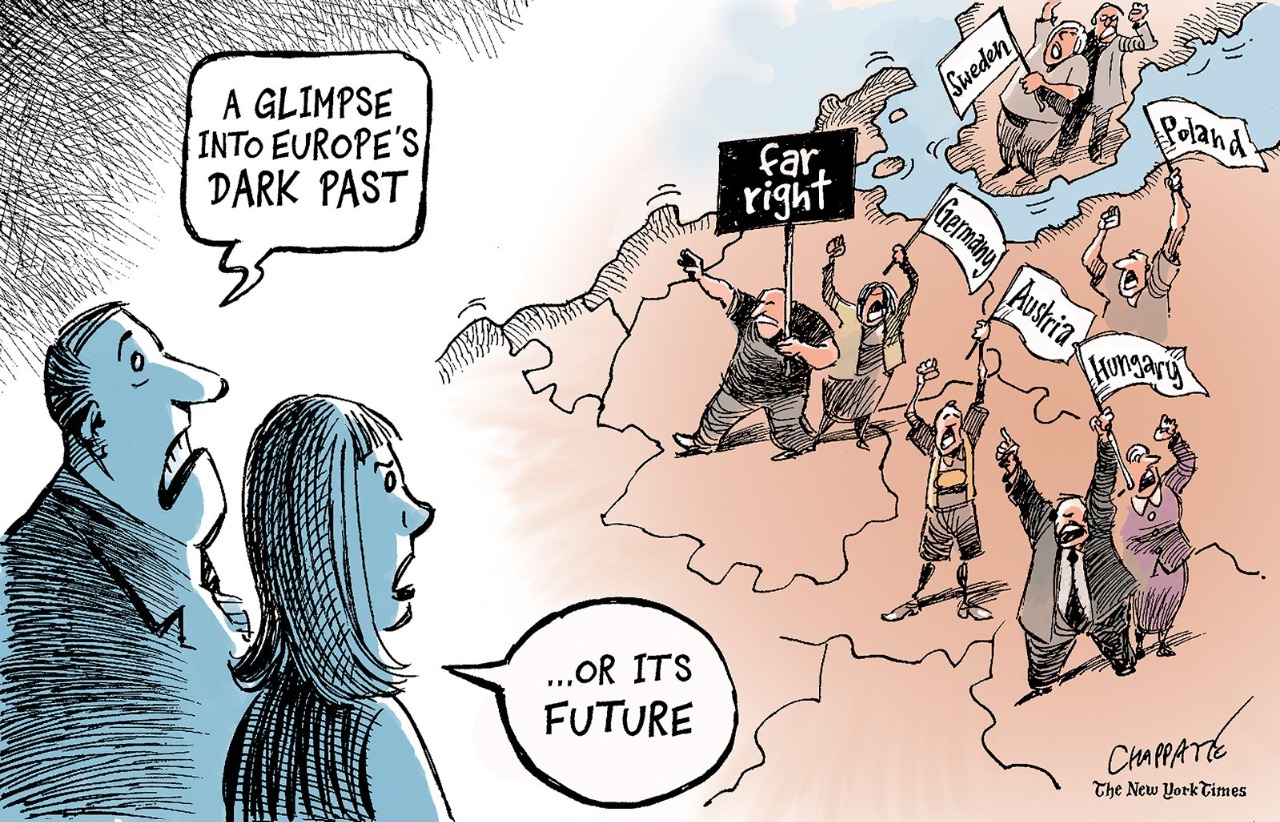
It is not only developments in Sweden politics that send shivers down my spine. Throughout Europe, the menacing ghost of ultra-nationalism has become rampant, spreading its plague and breathing its nasty odor over country after country. This year, Serbia is also having its general elections after having held a pompous funeral, with military honours and great attendance, for the convicted mass murderer Ratko Mladić, found guilty of crimes against humanity after in July 1994 having had the highest command of the well-planned massacre of over 8,000 people in Srebrenica.
Next year there will be elections all over Europe and there is a great possibility that several xenophobic parties will obtain executive power with the help of web lies and troll factories. In France we find the National Rally, heir to a party founded by Jean-Marie Le Pen, who with his well-known Nazi sympathies welcomed former members of the Waffen SS. In Spain, Vox was formed in 2913 and, after ample funding from wealthy ultra-conservative lobby groups and so-called "think tanks", such as HazteOír and CitizenGo, this party has quickly advanced to become a leading mouthpiece for all of European ultra-nationalists. Greece's Golden Dawn was dissolved in 2020 after members of its top leadership were convicted of serious crimes, and in 2023, Greece's Supreme Court banned its offshoot, Hellenes, from participating in the parliamentary elections – a decision that, thankfully, also applies to the 2027 elections. However, a host of smaller parties have taken over its political agenda. The Polish Law and Justice Party broke away from the trade union movement Solidarność to create an agenda based on political Catholicism, ultra-conservatism, anti-liberalism, nationalism and Euroscepticism. The Italian Brothers have their roots in MSI, Movimento Sociale Italiano, a fascist party founded after Mussolini's death and its leader, Giorgia Meloni, is now the president of Italy.
It has now been a day since I last sat in front of my computer and after the Swedish general election it now looks like the right-wing coalition has narrowly lost its execuitve power. Howver, I don't feel really satisfied and happy – more than 17 percent of the Swedes voted for the Sweden Democrats and we were recently reached by the news of Alternative for Germany's spectacular election success in the state of Saxony-Anhalt.
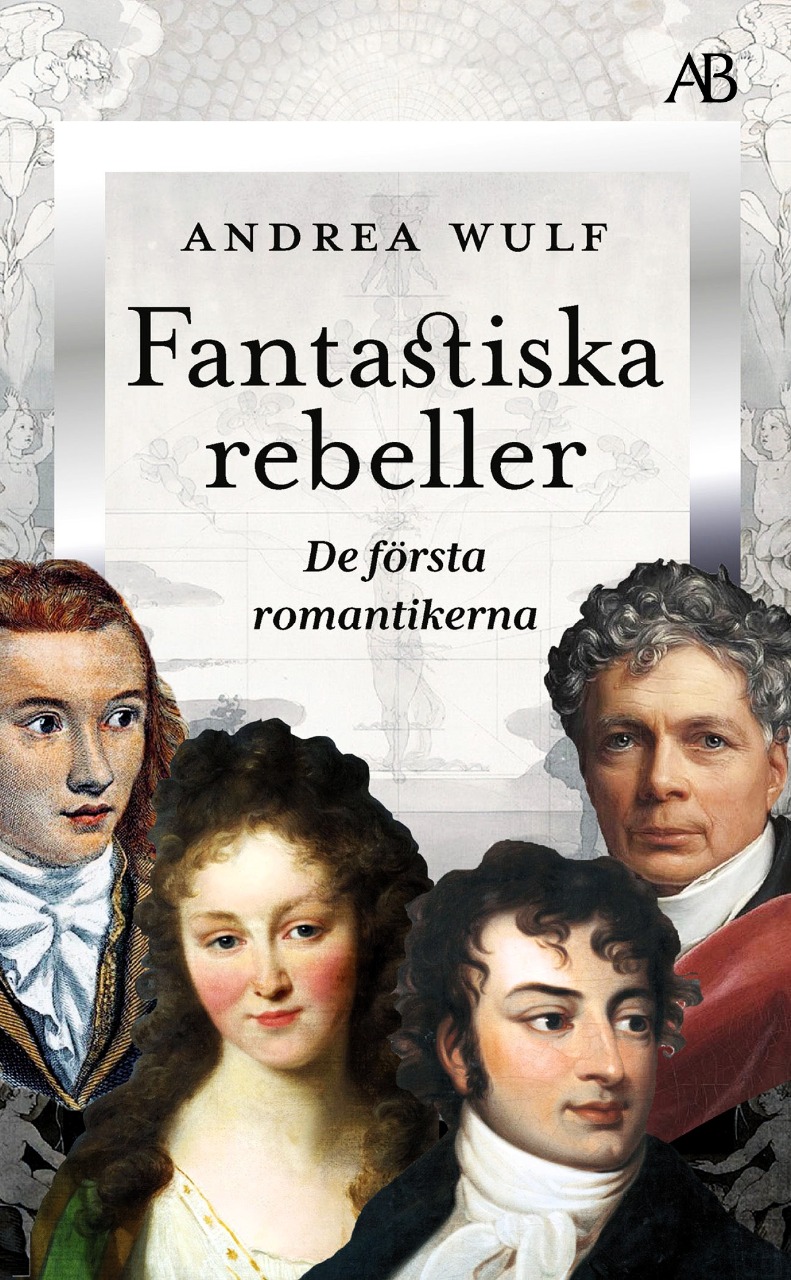
Already in 2024, Alternative for Germany had conquered executive power in the neighbouring state of Thuringia, which houses such legendary cities as Jena and Weimar. Jena, which university had by the end of the eighteenth century become the largest and most famous educational centre of the German states, with brilliant professors such as Johann Gottlieb Fichte, Georg Wilhelm Hegel, Friedrich Schiller and Friedrich Wilhelm Schelling, while great writers such as Novalis, the brothers August and Friedrich Schlegel, and Ludwig Tieck also moved there. Johann Wolfgang von Goethe often visited from nearby Weimar. Weimar was also a city known for what has been called "the German Enlightenment". All this has been vividly described in Andrea Wulf's Fantastic Rebels.
Later, Franz Liszt made Weimar a European center for radical music creation, and during the 1920s, artists such as Paul Klee, Henry van Velde, Wassily Kandinsky, Lyonel Feininger and many others flocked to the city. Several of them were active at the Bauhaus movement founded by Walter Gropius and its famous design school. All this came to an abrupt end with the Nazis coming to power in 1933.
As is the case with the Sweden Democrats and their admiration for and support for everything that they perceive as truly Swedish, the AfD is waging a cultural battle based on its slogan Deutschdenken, German thinking. Whatever that might be? Probably as fuzzy concept as the Sweden Democrats' "Swedishness".
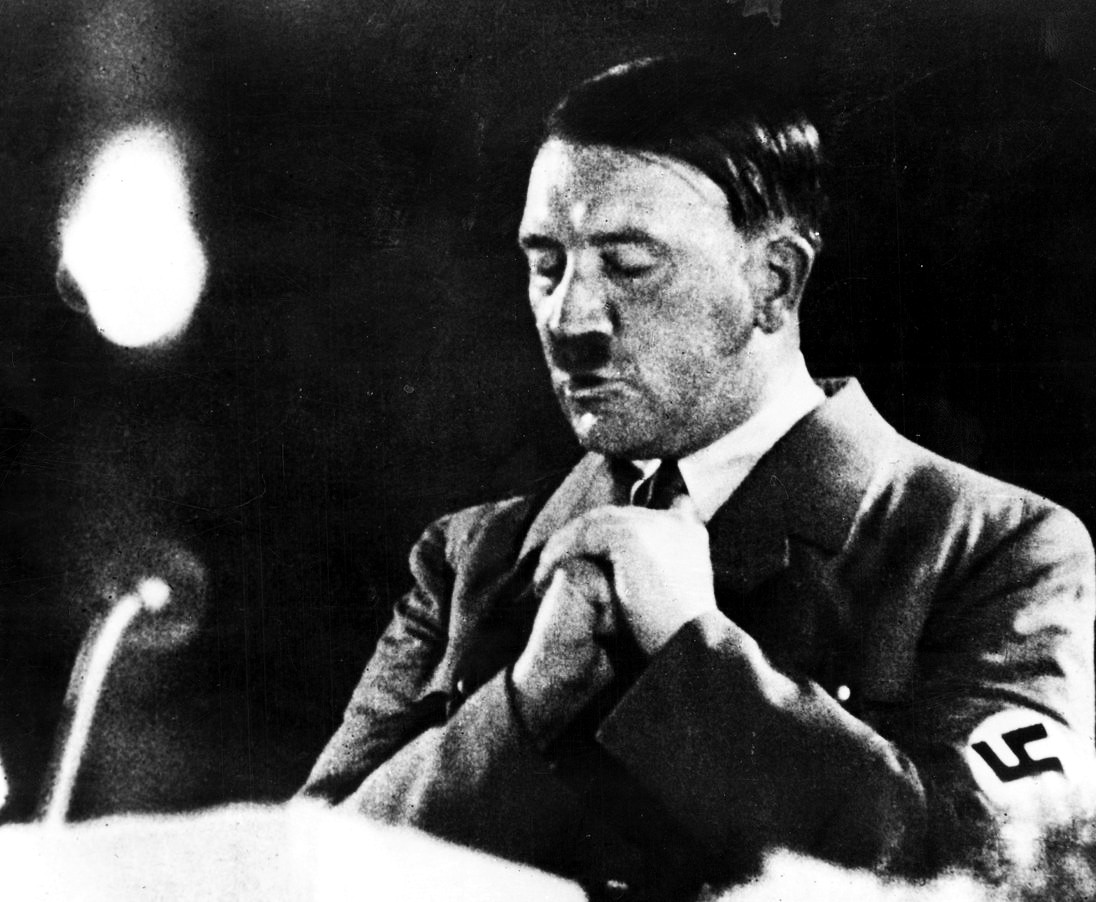
A guide to the origin of this thinking may be several of Hitler's speeches, such as the one he gave in Reichenberg, now Liberec, in December 1938. The city is located in the Sudeten-German part of Czechoslovakia, which the German Empire had annexed and named Reichsgau Sudentenland:
There will come a time when international rights will cease to exist and when the national rights of all peoples will come to the fore! […] Greater Germany has arisen out of the will of the German nation! This is confirmed by all the men and women of this people! And one day the German youth will forever commit themselves to this Reich. This is what I now demand of you!
A month later, in a speech to the German Reichstag, Hitler elaborated in more detail on what the Deutschdenken meant:
The German people do not want to be ruled by another people; they do not want others to decide their affairs in their place. France for the French, England for the English, America for the Americans, and Germany for the Germans! We are determined to counteract the efforts of a certain foreign people to settle here—a people whose members have understood how to seize all leading positions. We will banish this people. […] German culture is exclusively German; it is not Jewish. Therefore, we should place the management and care of our culture entirely in the hands of our people. If the outside world were to be outraged and hypocritically protest against Germany's barbaric expulsion of such an 'extraordinary, culturally valuable and irreplaceable element', we can only be surprised at the consequences such an attitude would entail. I believe that the sooner this problem is solved, the better. For Europe cannot find peace until it has dealt appropriately with the Jewish question.
Detuschdenken is now integrated in the vocabulary of AfD becoming part of its sermons about national pride. The party intends to overcome the current what it call the current "culture of shame", which highlights c the deplorable behavior of so many Germans under the Nazi regime. A time when several Germans at the request of the Nazi Party williningly wiped out, or unresistingly accepted, the annihilation of Jews, gypsies, homosexuals, mentally ill patients, political opponents and so many other "peoples". Alternative for Germany is resurrecting that the concept of , Völkisch, hard to translate though maybe close to “folksy”. The Nazis made the term synonymous with anti-Semitism and chauvinism, when in fact, at least according to AfD, it only denoted movement that had evolved through a sense of strong ethnic unity and respect for the uniqueness of one's own nation, sprung from Blut und Boden, soil and blood.
Björn Höcke, leader of the AfD in Thuringia, often sounds as if he is repeating Nazi slogans. Just as the Nazis spoke of a “Millennian Reich”, Höcke states that Germany "not only has a thousand-year past, but also has a thousand-year future". He believes that due to the prevailing culture and education Germans have been denied the right to national pride and has called the Holocaust Memorial in Berlin a "monument of shame":
The Germans are the only people in the world who have erected a monument of shame in the middle of their capital, as part of this ridiculous policy of negatively processing the past
Höcke and other AfD members are calling for a "180-degree turnaround" from what they call an Erinnerungskultur, Culture of Remembrance, i.e., the constant reminders of crimes committed during the Nazi, which now propagated in schools and backed by state-supported organizations. Activities that instill a permanent sense of guilt in a people that instead should be allowed to be proud of their amazing historical leaders, philosophers, artists, and brilliant eras.
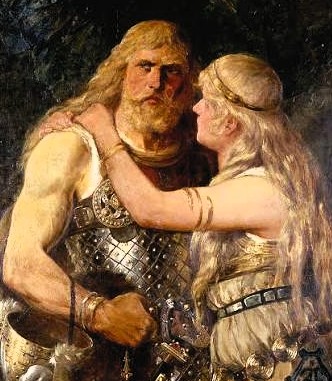
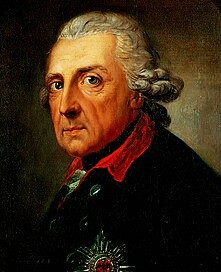
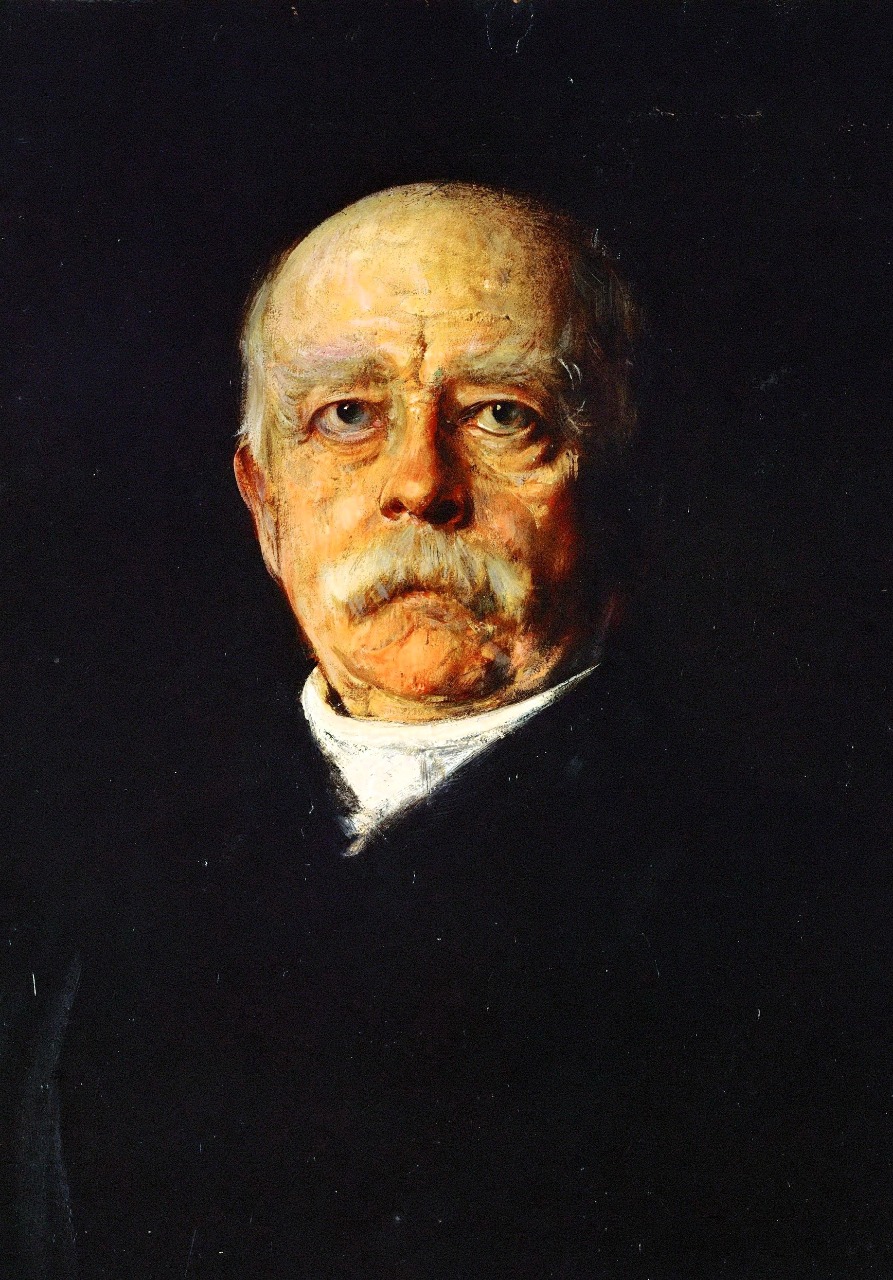
"Less Hitler, more Bismarck" is the new catch-word. AfD is advocates cuts in state support for initiatives honouring victims of Nazi terror, as well as highlighting the darker sides of German colonialism. At the same time, just as in the Nazi era, modern art and architecture are being attacked. In Saxony-Anhalt, AfD has demanded the closure of the research centre and museum that now are housed in the world-famous Bauhaus design school buildings in Dessau, being part of the UNESCO World Heritage Sites. Bauhus is by AfD described as an "upholder of a pernicious modernism" and a symbol of rootless globalization.
Exhibitions that highlight cultural diversity and/or criticize nationalist positions are mercilessly criticized. Ultra-nationalist forces are still cautious when it comes to condemning people on racial grounds (although such an undertone exists in almost all of them) and instead prefer to claim that "globalization," "modernity," and "foreign cultures" have contaminated a Völkisch and wholesome atmosphere.
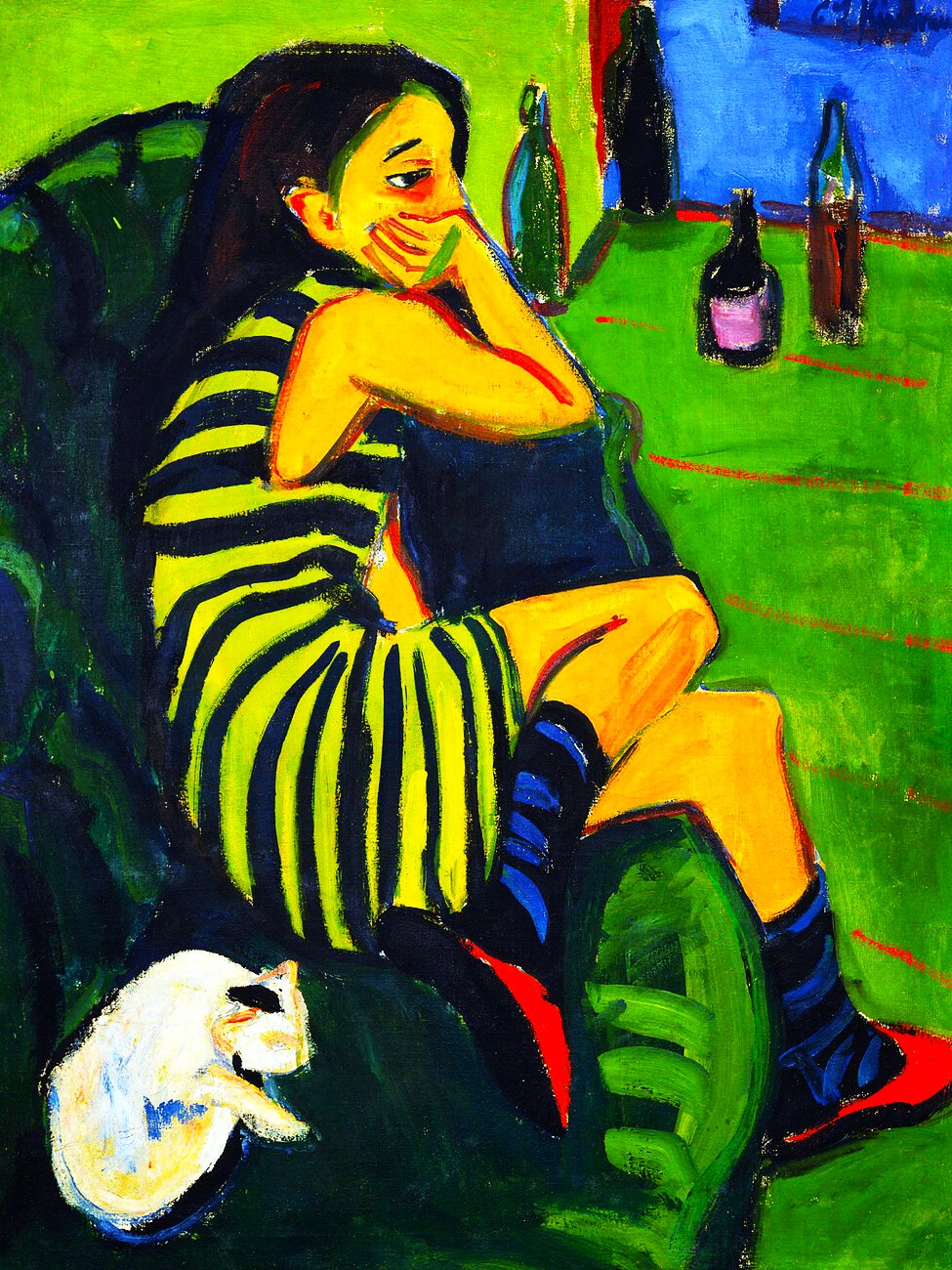
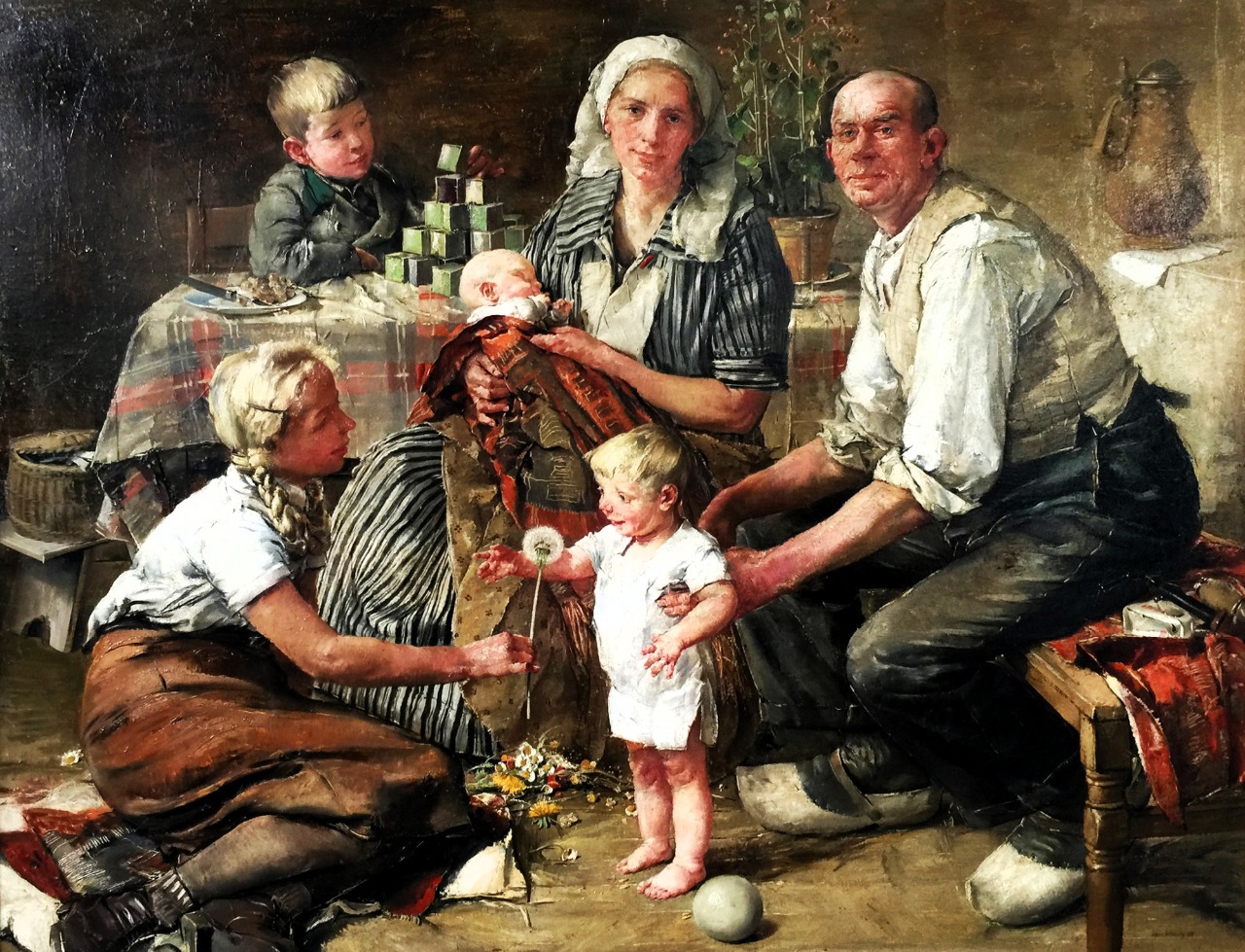
Don't we all agree that no human being can be perfect, and that this alo is true about culture and bygone eras. Why obliterate the shadows? What might be the result of such shallow generalizations and obvious falsifications of history – one-dimensional and worthless stereotypes. Well, not exactly worthless, rather undeniably dangerous, as proven by totalitarian, propaganda-based regimes – Nazism, Stalinism, Maoism and the enormous piles of corpses they left behind. I do not believe that a one-sided spotlight on a nation's excellence and admirable efforts might exclude a realization that all these marvels have been created by beings endowed with both genius and flaws.
I shudder when I find that the AfD uses the same imagery as Nazis and communist regimes. That they attack our creative diversity through veiled celebrations of both National Socialist and Communist uniformity. Consider, as an example, one of AfD’s election posters, how it shamelessly plagiarizes both Nazi and Communist imagery.

How many times have we not, from left and right and throughout the ages, been confronted with such muscular, banner-carrying superheroes?
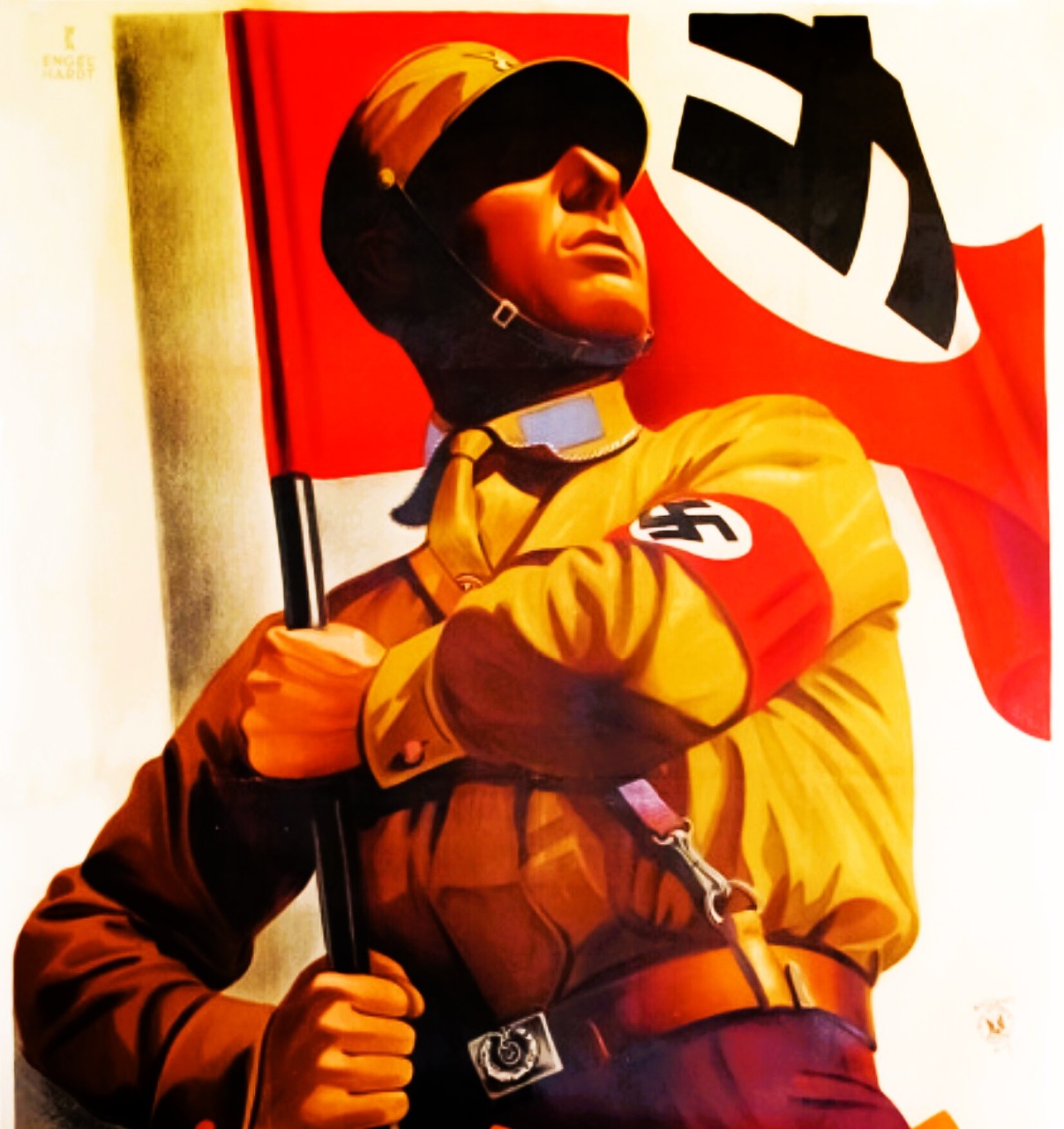
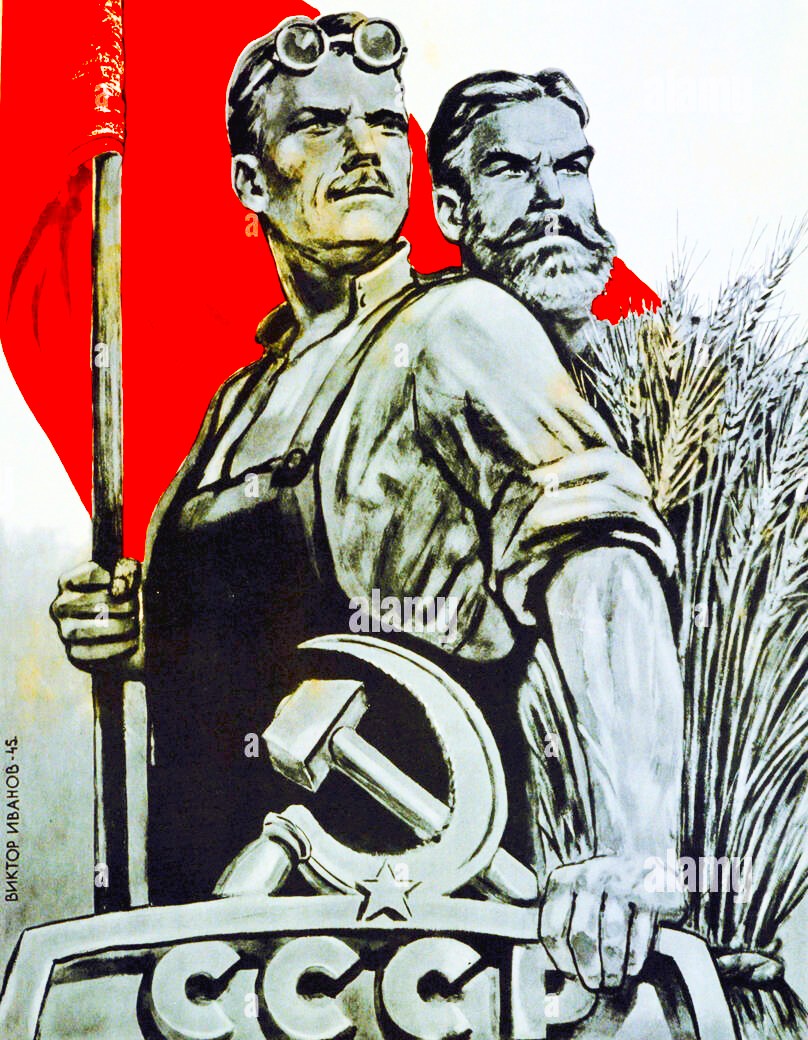
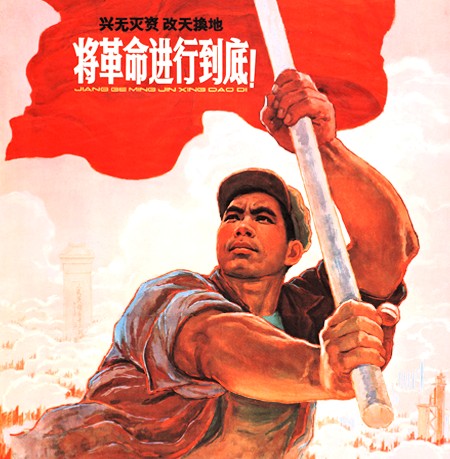
In an attempt to do exactly what the AfD recommends, namely to seek Deutschdenken among its roots, I read Goethe's Faust Part II. This remarkable work, completed just before the death of Germany's greatest poet, must surely be considered as one of the pillars of "German" culture.
Faust II is no easy read, even if the work is presented as a theatrical production, and thus ought to be fairly concentrated, it sprawls out in all possible directions and is certainly as unperformable as Seneca's drama. Like the works of this ancient Roman, the reading of Faust II can be both slow and difficult, but like Seneca's dramas, which are brought forward by a powerful rhetoric, Faust II is endowed with an unfailing poetic strength. In Faust II the lyrical register is adapted to the plot and verse metres vary constantly. Perhaps this kind of drama was primarily intended to be declaimed and/or read?
However, it is quite sure that Faust II, despite its over-cluttered imagination, unplayable length and probably unfeasible stage solutions, with its visual tableaux, dialogues and monologues and almost cinematic scenes was conceived and created as a drama. As in Greek dramas, there is a commentary, co-acting chorus, but there are also elements of Renaissance masquerades and processions displaying mythological and allegorical figures, medieval mystery plays, baroque opera, Catholic mass and Punch and Judy shows.
The devilish character, Mephistofeles, appears as if he is a theatrical impresario, presenting complicated scenes, and/or stage-managing dreams. It is difficult to determine whether it is a reality, dreams, or figments of imagination that the reader is brought into. We are mesmerized by Mephistofeles' versions of a sophisticated shenanigans and while he himself changes character, we do not really know whether what we are reading is ironic or serious – perhaps both.
Goethe exposes many things – his scientific theories about the origin of the world, his perception of Greek Antiquity as something far more demonic and primitive than it was portrayed by his contemporary classicists. Furthermore, Faust II is a hymn praising beauty and female attraction, the power of eroticism over our senses the drama’s last word are Das Ewig-Weibliche zieht uns hinan, the eternal feminine draws us on high. It is also a lesson in the art of rhyming, a demonstration of Goethe's great knowledge and life experience, etc.
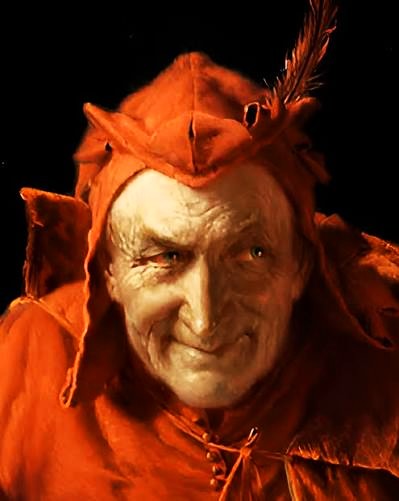
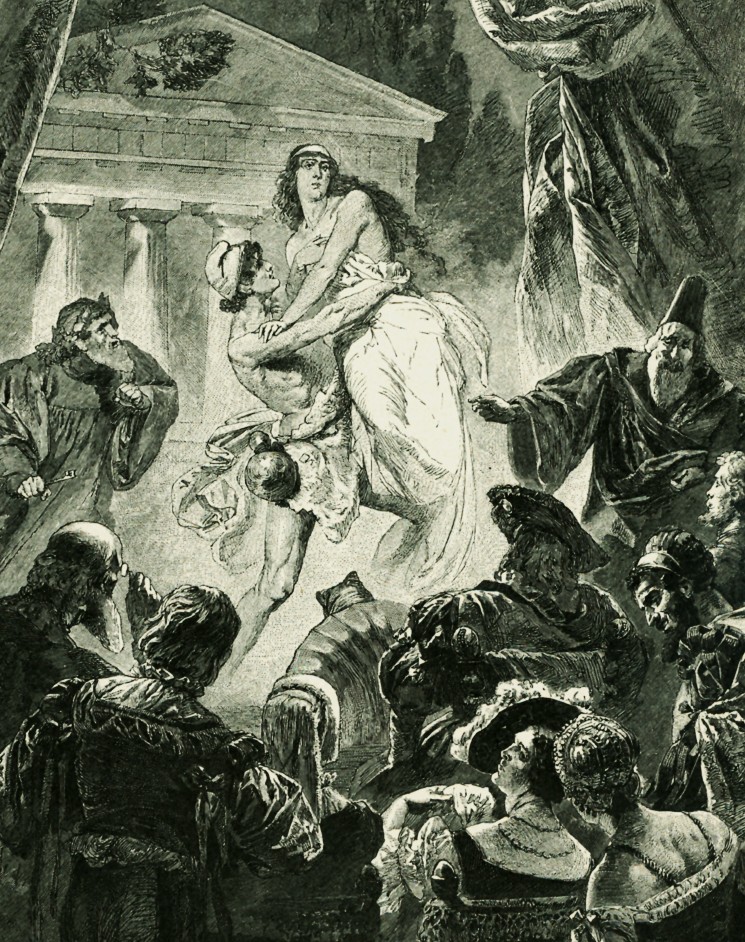
Strange is the chilly cynicism that rests over the Faust character and which is not commented on by Goethe. When he, in the opening of Faust II wakes up on beautiful meadow to the song of elves, it seems as if Faust has forgotten, or is not at all troubled by any bad conscience over the atrocities he committed in the first part of the tragedy – how he seduced the innocent Gretchen, made her poison her mother and drown their child. How he killed the poor girl's brother in a duel (with Mephistofele's assistance) and how Gretchen was finally executed for her infanticide.
In the second part of the play, Faust does not behave much better, although the reader does not really know whether it is dream or reality. All the time Faust is whipped by his unfulfilled desires and behaves ruthlessly in both war and financial fraud. The reader experiences how a loving old couple and their guest are murdered when Faust wants to seize their land. The murders are actually committed by Mephistofeles and his henchmen, though Faust does not seem to be particularly affected by their deaths.
When Faust's soul is finally brought up to heaven, to the accompaniment of Catholic-inspired hymns, we are not not quite sure whether Goethe is once again making fun of his readers – is he serious or ironic?
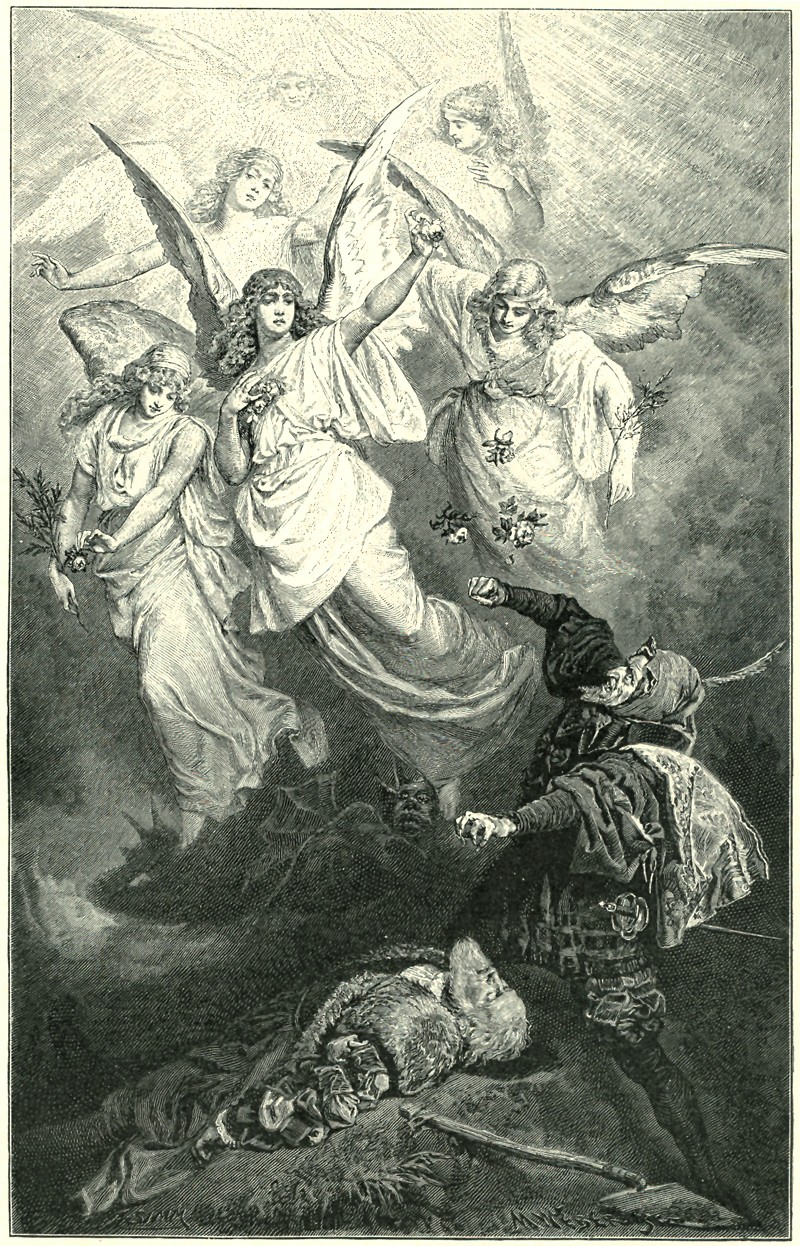
I got the impression that Goethe in his Faust II played on his entire register as a poet, civil servant, scientist and theatre impresario. It is an old man's testament. Proof of his genius, diversity and, above all, a poet's creative ability, his absolute freedom to shape a story exactly as he wants it to be. Goethe offers us a fantastic creation – a unique world that only he could have created, and he does so with the ease of a magician, beyond good and evil.
In Faust II, Goethe created a perfect version of Deutschdenken – a well-crafted masterpiece expressed in exquisite German, where verse and rhythm leave nothing to be desired. The language is as finely calibrated as the mechanics of a Mercedes engine. Goethe, like a Theodor Mommsen, demonstrates a solid education and mastery of ancient culture and its philosophy, while at the same time he seasoned his creation with insights from his own scientific discoveries and experience as an effective state administrator.
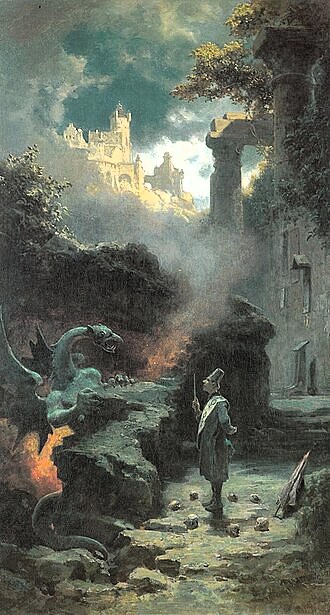
When I read the drama I came to think of a painting by Carl Spitzweg called The Witch Master. A typical Biedermeyer burgher stands in the street of a picturesque little village. Against the background of an ancient ruin and a medieval castle he conjures up a terrifying dragon. Isn't that what Goethe did in his Faust? Firmly rooted in his German culture, he conjured up dragons and demons.
Goethe was a true romantic – he lived in his poetry, as Tegnér wrote:
Goodbye, my lyre! Now comes the end.
Lie down and sleep, I sung to fiend and friend,
with sounds softening my pain,
as it was for Saul, after draught came rain.
I moved others with a mightier brain.
[…]
Svea I have sung, I have Frithiof sung,
acclaiming nature, God and the young.
Actually, I only lived while I sang.
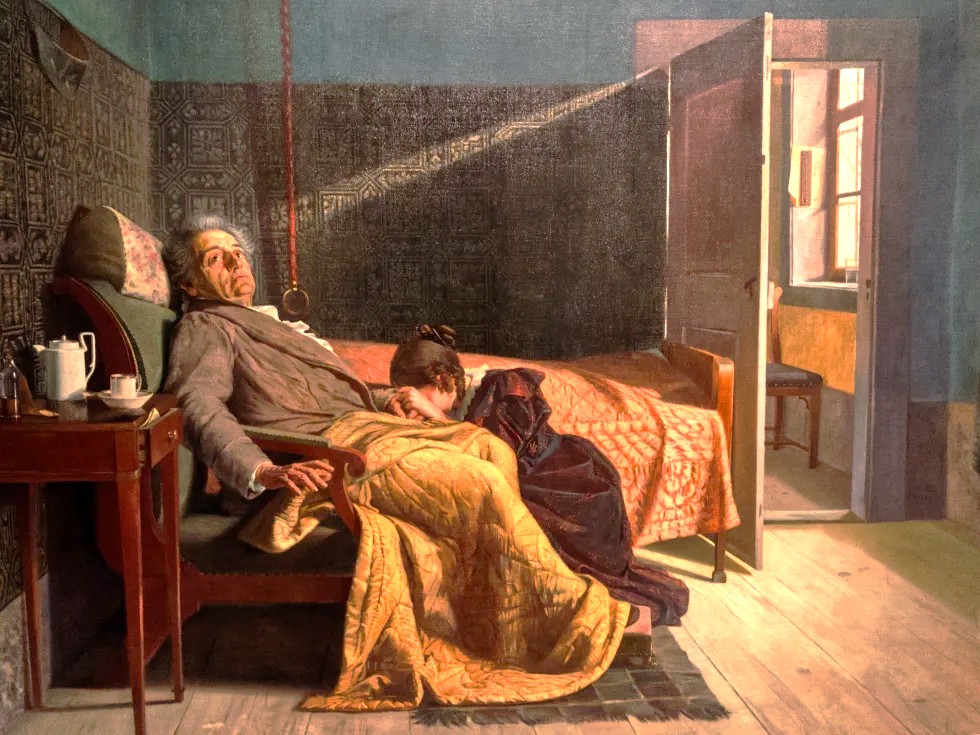
It is primarily from Goethe's Faust that the now common expression Faustian Bargain finds its origin. The expression alludes to someone making a pact with the Devil, or some other demon, by selling her/his soul in exchange for various diabolical services, such as regaining youth, obtaining occult knowledge, wealth, fame and power. Nowadays, a Devil's pact generally refers to the fact that a person entering such a deal leaves all moral qualms behind. ignores social responsibilities, and abandons her/his basic convictions – all in order to obtain power, influence, prestige and money.
Goethe, who was well-versed in literature and folklore, knew that such selfish and superstitious acts had occurred throughout the centuries. Perhaps the most famous instance had been the pact with the Devil allegedly made by the French Jesuit Urban Grandier, which sentenced him to death by burning in 1634. The verdict against Grandier was almost certainly politically motivated, and it is possible that the written pact with the Devil presented to the court was a forgery.
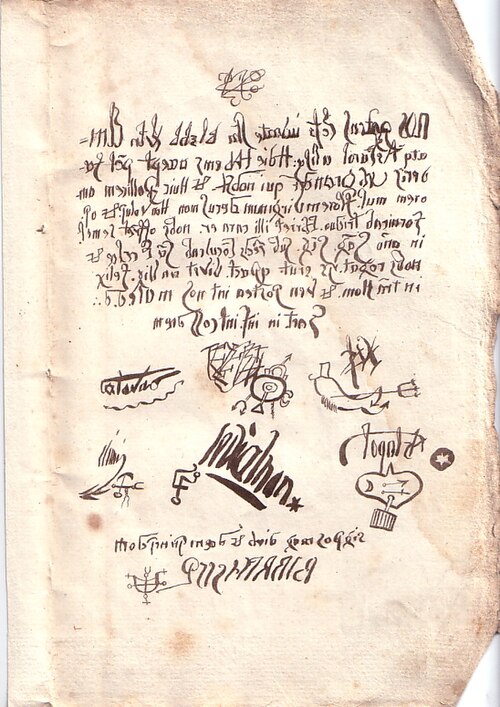
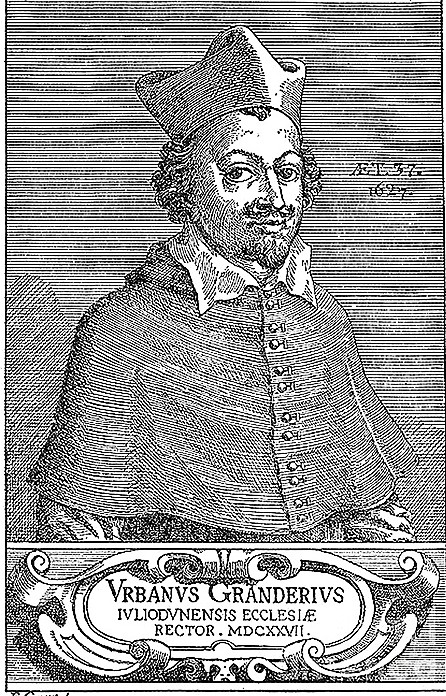
However, it is doubtful whether Goethe was aware of another pact with the Devil, which due to an article written by Sigmund sine then has become another well-known and thoroughly documented example of such an agreement.
In 1668, a destitute and mediocre Bavarian artist named Christoph Haizmann signed a contract with his blood in which he sold his soul to the Devil. He did while he found himself in state of psychotic anguish and later repented his act. To unfetter himself from the unfortunate contract, he turned himself over to the Catholic authorities and underwent an extensive exorcism. However, it was not completely successful. For the rest of his life, Haizmann was plagued by demonic visions during which the Devil appeared in various guises, accusing him of contact breach.
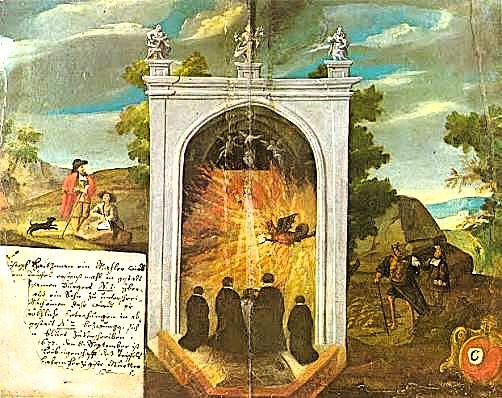
Haizmann made several votive paintings in which he depicted not only the exorcism that liberated him from his agreement with the Devil, but also how the pact had been made and how the Devil on several occasions returned to torment him.n the triptych above, Haizmann has in the center depicted the mass that culminated the exorcism. On the left we see a copy of his written contract with the Devil and above it how the Devil appeared to him as a respectable bourgeois, in the company of a poodle (in Goethe's Faust a poodle is transformed into Mephistofeles at his first meeting with Faust). On the right we see how a furious Devil, whom Haizmann called Achetron, in his true form (as a man and woman) appears and accuses Haizmann of breaking the contract.
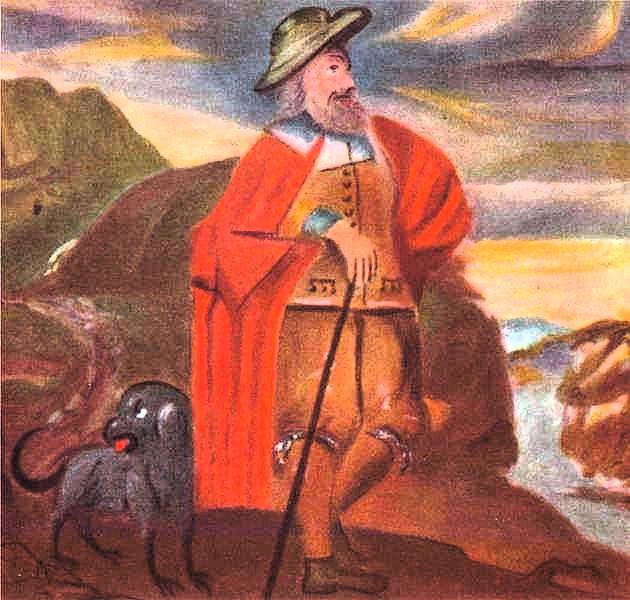
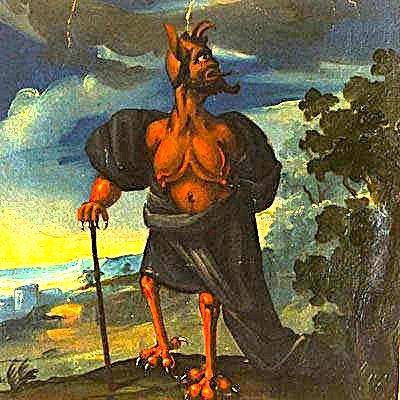
To free himself from the Devil's devastating influence, Haizmann joined the Brothers Hospitallers of St. John of God, a Catholic laymens’ order. In 1700 he died in one of their monasteries. Haizmann's original contract with the devil has disappeared, but is preserved as a transcript in a document written in 1714, as an account of how his exorcism took place.
.jpg)
Haizmann was obviously a poor psychopath in insolvency, who had strayed into an absurd fantasy world. Perhaps this can also be said of a fantasy creation like Faust. However, it is worse with such historical and living individuals who have tinkered with their beliefs, abandoned their previous ideology and morality, and then begun to defend and spread positions they previously denied.
Nowadays, a Fausitian Bargain generally has come to denote how writers, and artists denied, or renounced, their previous radicalism and criticism of the National Socialist movement in order to be able to secure their livelihood, or protect themselves and their families. Men, and some women, thus transformed themselves into loyal supporters and even outspoken defenders of a murderous regime.
Several famous novels have depicted how significant, fictional or real, cultural personalities sold themselves to the Nazis, foremost among them are probably Thomas Mann's Doctor Faustus and his son Klaus’ Mephisto. With his Lichtspiel Daniel Kehlmann has now joined the ranks of prominent German writers depicting artists plight and acts of treason under the Nazi regime.
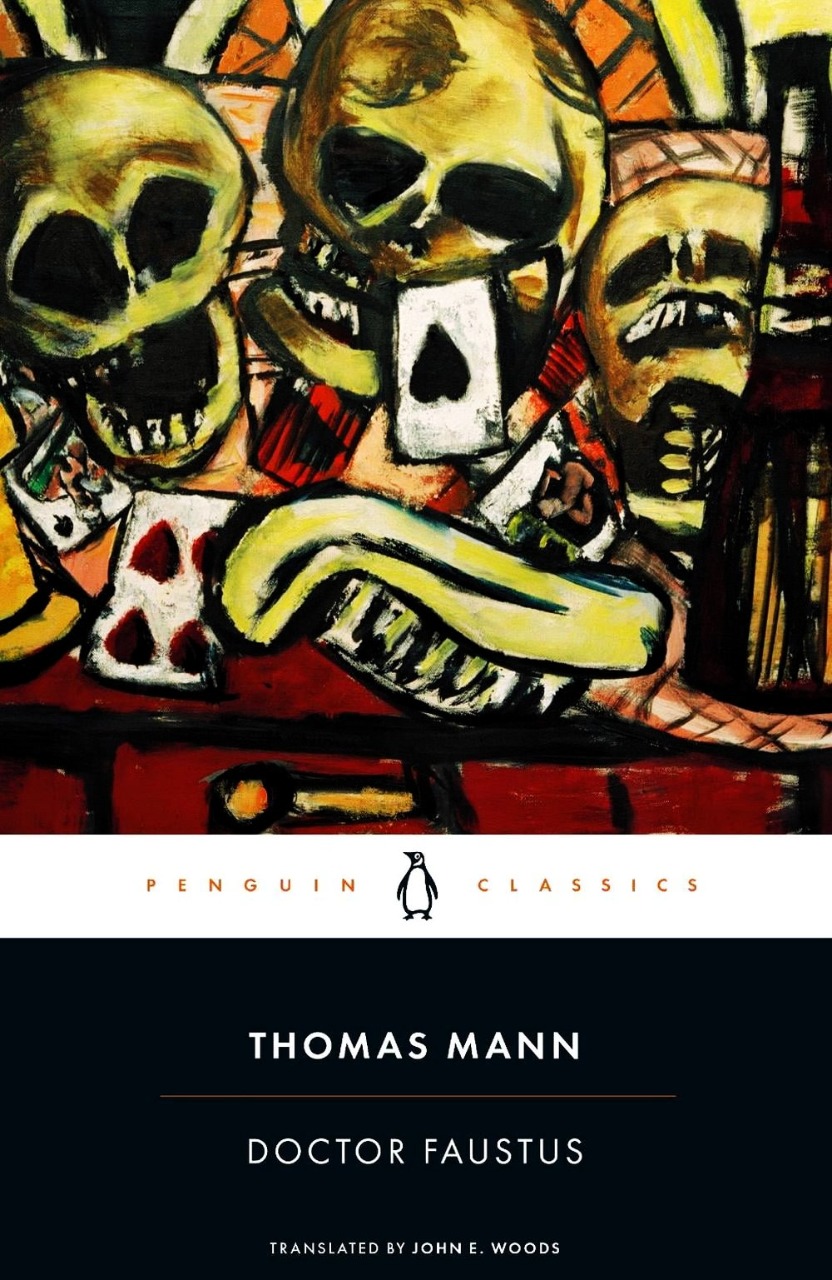

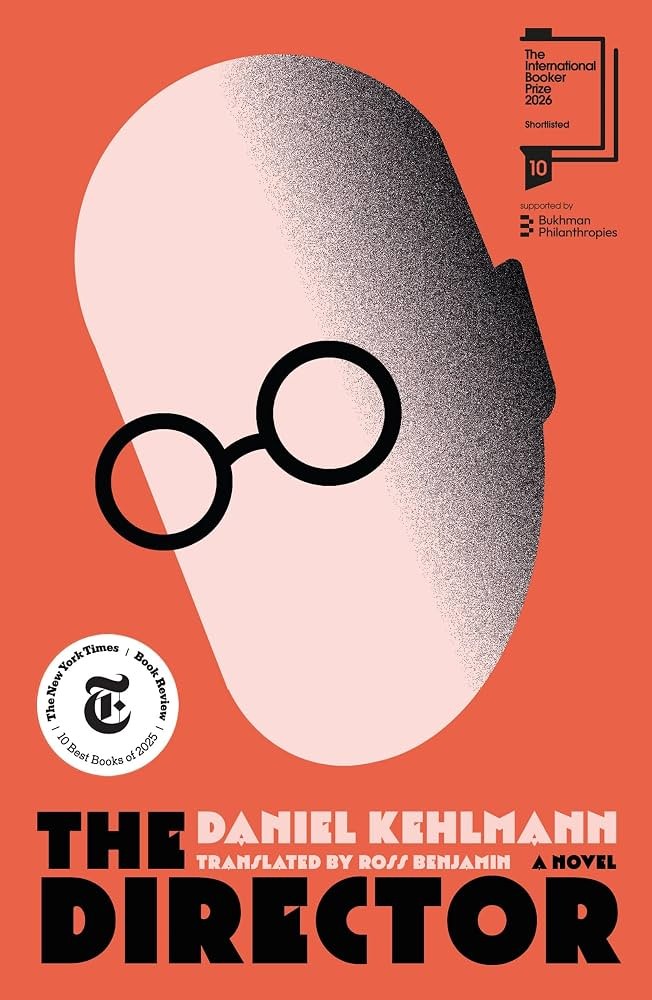
Kehlmann's novel, which title in most other languages has been translated as The Director, is reminiscent of Klaus Mann's Mephisto by fairly accurately rendering the life of a real person. Mann's work deals with the life and career of the popular actor Gustaf Gründgens (in the novel called Hendrik Höfgen), who had had love affairs with both Klaus and his sister Erika. Gründgens, who begun started his career as a left-wing sympathizer, though he continued to perform on stage and screen as an equally appreciated actor during the Nazi era and was then far from being reluctant to submit himself to the Nazi propaganda machine. Likewise, Kehlmann's book follows the life of the Austrian director Georg Wilhelm Pabst, but under his real name.
Pabst was a director of international fame and like the other great German master directors – Fritz Lang, Friedrich Wilhelm Murnau and Ernst Lubitsch – Pabst ended up in Hollywood, but unlike them he did not stay there. He considered himself to be limited and thwarted by demands from producers and financiers. Pabst felt that he had been forced to make far too many concessions and lacked the creative freedom he had had in Europe. Pabst's first and only American film, A Modern Hero, was a fiasco and he was ashamed of film that according to him lacked the high quality standards he had always strived for in terms of character direction, lighting, camera angles and final editing.
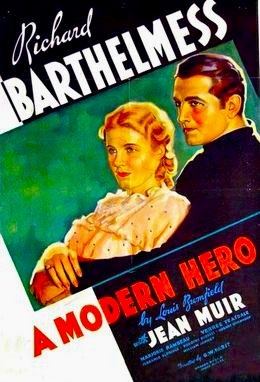
Despite all warnings, Pabst returned to Europe in 1936 and made three fairly successful films in France, before he in 1939 received word that his mother had fallen ill in the somewhat dilapidated castle he had bought in a remote part of Austria. The war broke out and Pabst and his family could not leave Austria – his beautiful wife Gertrude, who was an actress and screenwriter, their sixteen-year-old son Peter and Michael, who was born in 1941, became prisoners at the castle.
If Kehlmann's excellent novel is to be believed, the Pabst family were strange birds in the Austrian countryside. The castle's Nazi caretaker and his wicked wife ignored them, while the scheming couple’s two wicked daughters tortured Pabst’s son "Jakob". Pabst's mother also lived in the castle, suffering from Alzheimer's disease while she was morbidly suspicious of her son's wife and neglected by the evil caretaker couple. When Pabst was pardoned by the Nazis, his mother was transferred to a luxurious nursing home, whose patients lived under the threat of being liquidated as part of the Nazis' euthanasia program.
The Nazi threat also weighed heavily above "the red Pabst", who had collaborated with the well-known Communist author Bertolt Brecht and made a pacifist film, The Western Front in 1918, as well as a “worker movie” Comradeship, both of which were exemplary realistic and widely admired films.
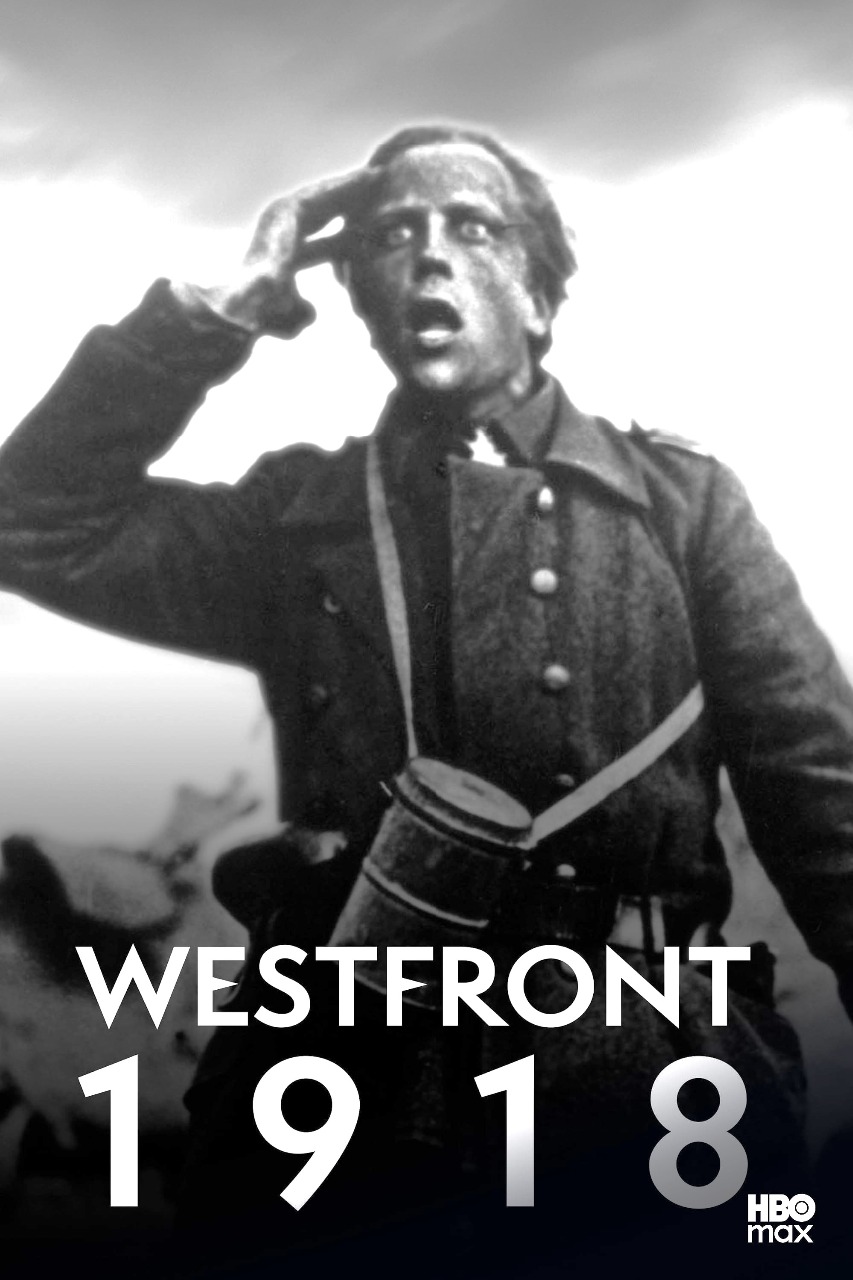
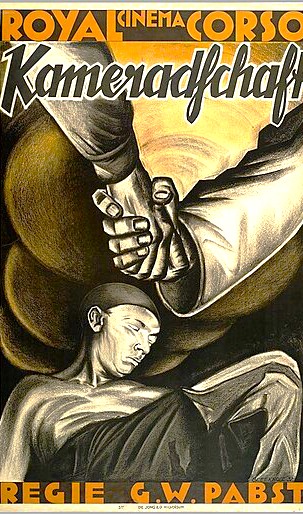
The latter was about a French mining disaster after which German workers had come to the aid of their French colleagues, something that did not at all appealed to the Nazi regime, which also believed that Pabst in his film about the war had insulted the German armed forces and the brave German warriors.
However, the Minister of Propaganda, Goebbels, appreciated good cinematography. He was a great admirer of the Soviet filmmaker Eisenstein and Busby Berkeley's lavishly staged dance scenes and was well aware of the fact that the with "captive" Pabst he had a film genius in his grip.
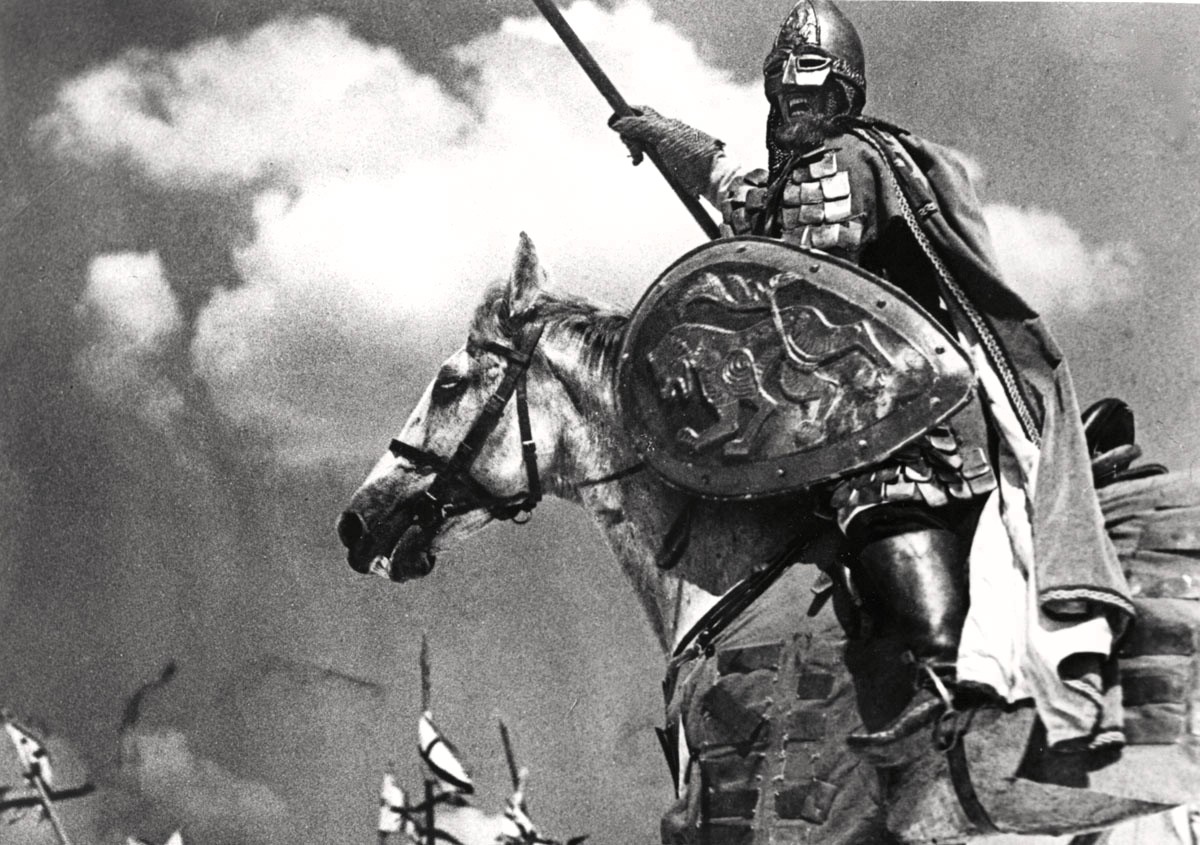
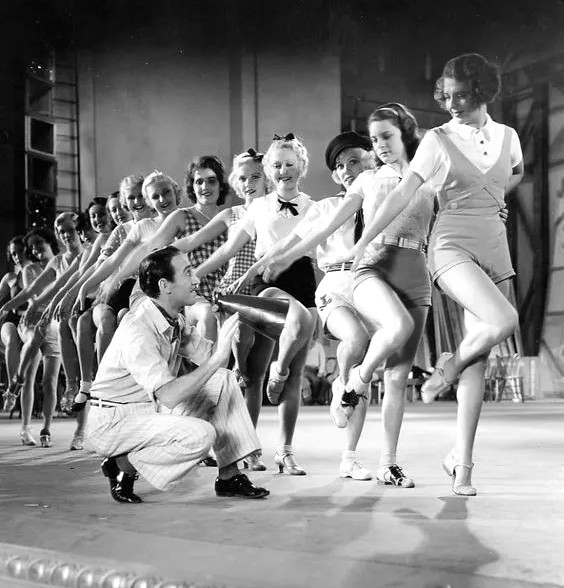
The financially afficted Pabst wanted nothing more than to make films and was thus by Goebbels forced to ally himself with the German film industry. However, Pabst stipulated that he would not make any propaganda films. Goebbels agreed to Pabst's request and gave him, within reasonable limits, all the artistic freedom he requested. Big movie stars and a generous budgets were put at Pabst's disposal.
One of several highlights in Kehlmann's novel is his description of the production of the expensive film Paracelsus, which starred the fanatical Nazi Werner Krauss. A skilled actor who, in the grossly anti-Semitic Jud Süss, with bravura had executed no less than three roles as evil and devious Jews.
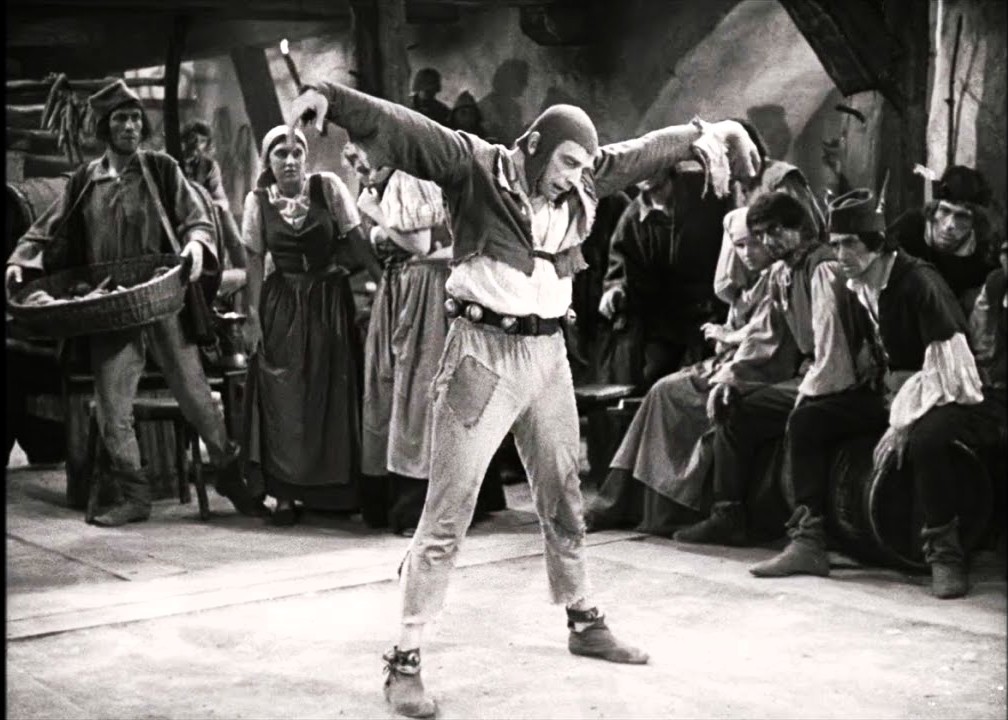
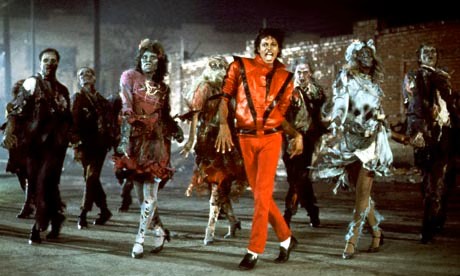
Paracelsus is a perfectly OK history movie, which in my opinion unfortunately suffers from Krauss's slightly too pompous portrayal of Paracelsus. A highlight, however, is when the Austrian "free dancer" Harald Kreutzburg in the role of the plague-infected jester Fliegenbein leads a group of bewitched tavern customers in a mass-psychotic St. Vitus Dance. A clear allusion to Nazi mass hysteria, which went unnoticed by the censors. When I see Kreitzburg leading his dance of madness, I wonder if Michael Jackson didn't watch the movie while he was planning his zombie dance in Thriller.
https://www.youtube.com/watch?v=7wb5NAXK8hk
In Kehlmann's novel, the English, humorous author P.G. Woodhouse is forced to attend the world premiere of Paracelsus in Salzburg . Woodhouse, who had been captured in France, was convinced, like Pabst, to make himself available to the Nazi regime. As an involuntary "guest", Woodhouse, through his "apolitically" light-hearted radio broadcasts, helped to appear as a "European intellectual" who had sided with the Nazi regime.
I don't know if Woodhouse saw Paracelsus. Kehlmann freely creates scenes and characters. For example, Pabst's son "Jakob" Kehlmann’s invention, entirely unrelated to the real Peter Pabst. Jakob makes a career in the Hitler Youth, thrives as a Nazi and is sent to the Eastern Front. Despite this literary speculation, "Jakob" becomes a credible and interesting person. This also applies to other characters, several of them famous persons such as Greta Garbo, Louise Brooks, and Leni Riefenstahl, and so are many others.
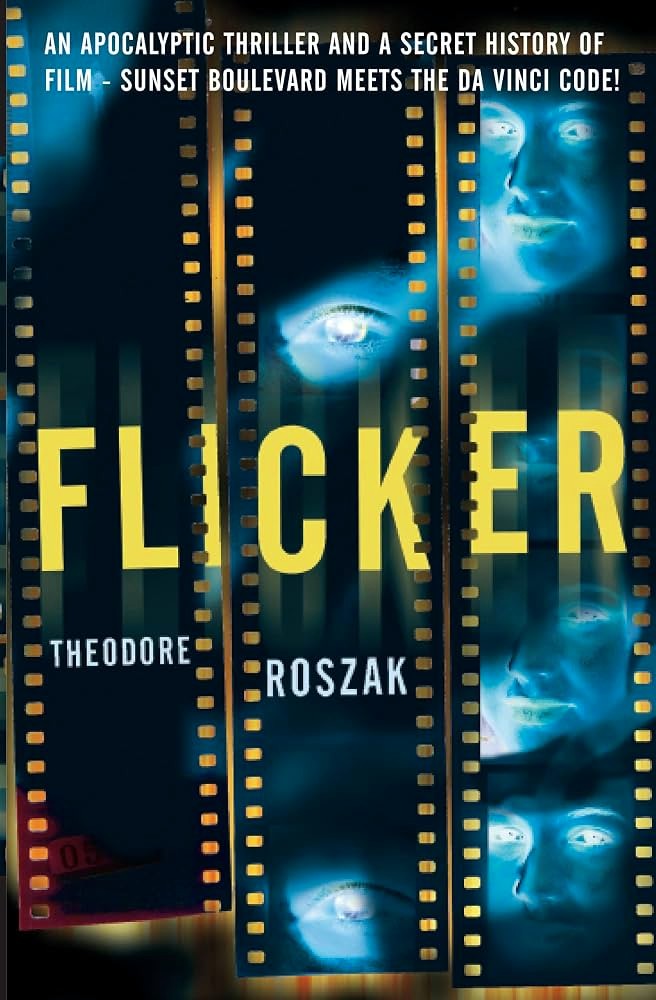
G.W. Pabst is by Kehlmann portrayed as a person whose life was marked by his directorial vocation. Pabst looks at the world and people as if everything and everyone were part of a film. The novel is in many ways a novel about the art of cinema and as such it is the best "film novel" I have read, apart from Theodore Roszak's novel Flicker from 1991.
A rather crazy concoction about a young film student who becomes ‘ captivated by Max Castle's films. Castle is a fictional, forgotten German film director, the master behind films such as The Evil Spirit of Limhouse, The Queen of the Swords, Judas; everyone, and Simon the Magician. Through the main character, the film-obsessed Jonathan Gates, the reader is brought into not only film history, but neighbourhood cinemas and production companies of a bygone era.
The old Max Castle is apparently alive and Jonathan Gates gradually becomes increasingly and hopelessly entangled in conspiracy theories, which turn out to be real, complete with worldwide sinister crime syndicates, murders and abductions. Several movie directors have shown interest in making Flicker into a film, but so far none of these projects have come to fruition.
The dramatic end of Kehlmann's depiction of Pabst's time as a director in the service of the Nazi regime is the tragic loss of his film The Molander Case, which was based on a novel by the undeservedly hyped up Nazi writer Alfred Karrasch, Die Sternengeige, the Master Violin. Pabst reworked the script and completed the film adaptation in Prague's legendary Barrandov studios. Apparently did Pabst consider it to be his masterpiece and managed to complete the final editing in the midst of all urmoil that preceded the Red Army's entry into the city. Together with his assistant director, Pabst fled to Austria, but on their way there they lost the film reels. They have never been found and, according to Kehlmann, this mishap broke Pabst, who never managed to regain his greatness as a director. In this dark register, the novel ends.
It would be sad if Kehlmann's verdict on Pabst and his art would remain undisputed. As a matter of fact, after the debacle with The Molander Case, Pabst lost neither his directorial spark, nor his genius for movie making. He continued to direct excellent films and also staged several acclaimed Italian opera productions. At the 1948 Venice Film Festival, he won the Golden Lion for best director and Ernst Deutsch received the award for best actor. The film The Process in my opinion without doubt worthy of its awards and is now incomprehensibly forgotten.
The film was shot in Austria. Boldly and skilfully it touched the after the war extremely sensitive subject of the terrible extermination of the Jews, to which not only Germany, but Austria, Hungary, the Baltic states and Romania had willingly contributed. It is a seemingly simple and straightforward film, made with all the mastery that G.W, Pabst was capable of. The set design, acting and music are unassailable. The film begins, for example, with a Sabbath celebration in a synagogue in which a cantor sings an ethereally beautiful song, while the Christian villagers gather outside and listen to it devoutly.
.jpg)
The film is based on a real event. In the Hungarian village of Tiszaeszlár, a fourteen-year-old girl disappeared in 1882 and the village's Jewish parishioners were baselessly accused of having ritually murdered her. After previously living quietly side by side with the Jews, the Christian population, with some brave exceptions, exploded in a senseless hatred of Jews, fired up by an anti-Semitic baron, with populist political ambitions. The synagogue was burned down and a number of Jewish leaders were taken in chains to Budapest. The synagogue director's fourteen-year-old son was tortured and brainwashed until he became the main accuser of his own father.
Hungary was shaken by violent riots and pogroms that spread into the German-speaking areas, where anti-Semitic associations breathed morning air. The whole affair could have ended in an even greater catastrophe if it had not been for the upright writer and lawyer Károly Eötvös, albeit more isolated and threatened than the French defenders of Dreyfus a few years later. Eötvös succeeded against all odds in proving the anti-Semites' falsification, torture of witnesses and falsification of evidence. All accused were acquitted.
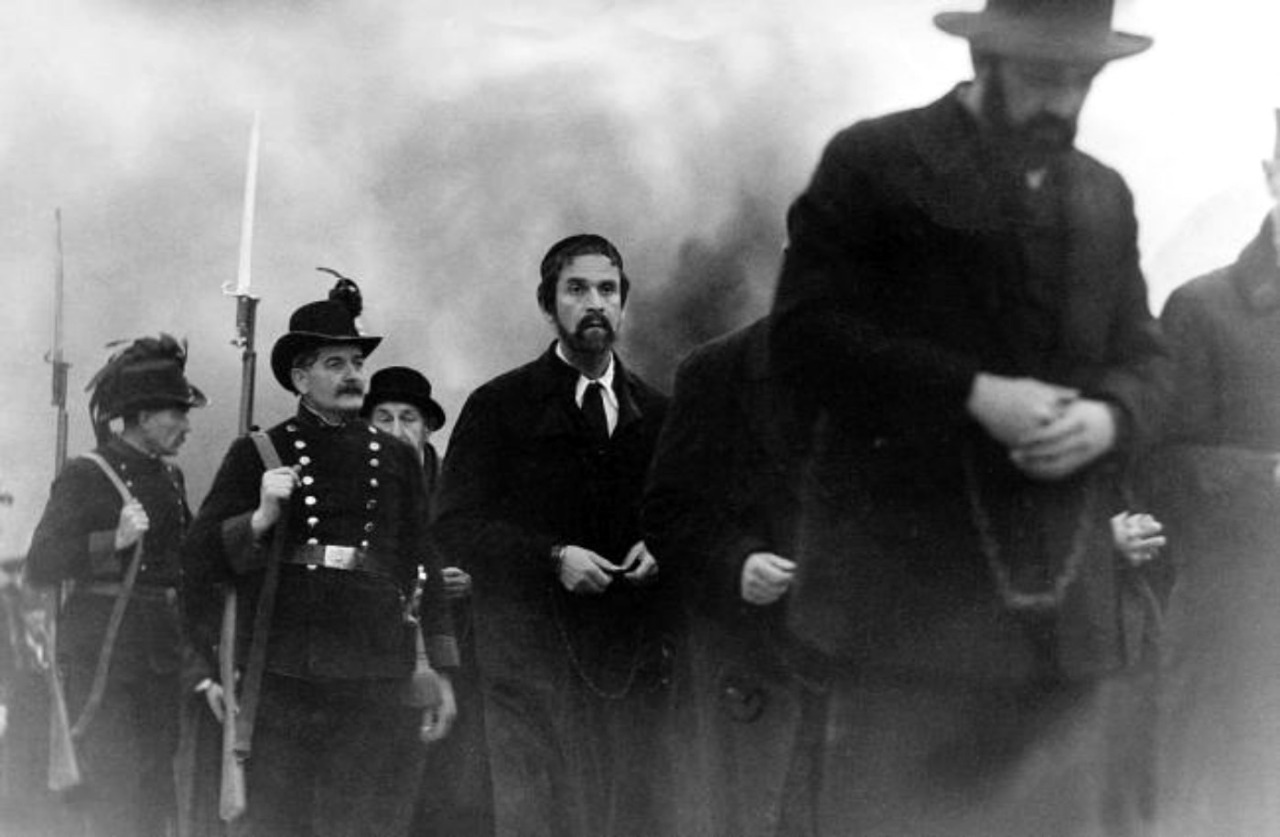
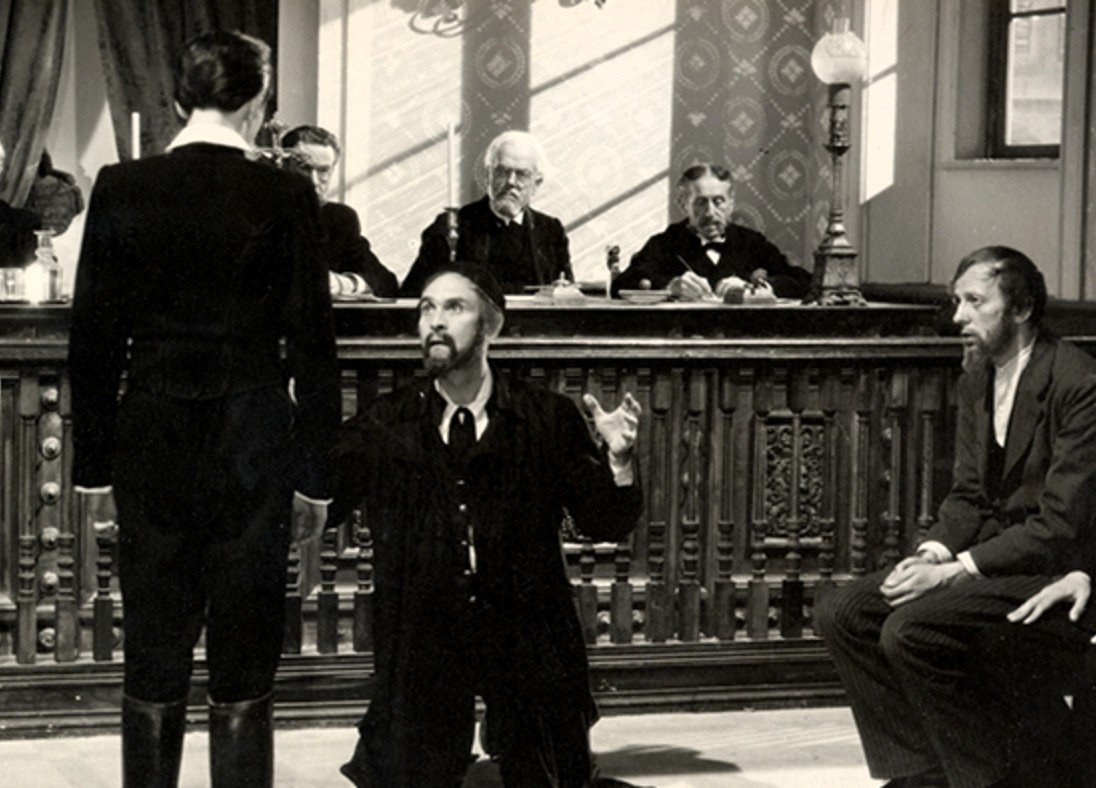
Seemingly unassuming, without exaggerations in any direction, and with reliable documentation, Pabst depicted this drama in a manner that made perfectly clear how anti-Semitism had been smoldering in Europe long before the Nazis came to power, and the fact that it had been allowed to do so led to the catastrophe of the Holocaust. Pabst emphasize that individuals cannot be portrayed as representatives of an entire people and that any attempt at xenophobia can lead to uncontrollable violence and subsequent shame and despair. In other words, Pabst's film is a masterpiece that deserves far more attention than it had ontained, especially in these times dark times of political populism and xeophobia.
Pabst was accused of having made films such as The Process and The Last Ten Days from 1955, an well-informed and proficiently made film about Hitler's last days in the Berlin bunker, as an effort to clear his name after collaborating with the Nazis. I am not at all convinced about this. The films Pabst made under Goebbels' supervison – The Comedians and Paracelsus do not at all reveal any tendencies towards Nazi complicity. Pabst maintained his integrity as an artist until the end of his life. Unfortunate circumstances brought him into the Nazi regime's net, but he did not follow their lead, contrary to several other skilled artists – Gründgens, Richard Strauss, Gerhardt Hauptmann, Emil Nolde, Herbert von Karajan and many more.
Fanaticism, as well as complicity, exhibit a number of paradoxes. Life is not as simple, as white and black, as nationalists such as the Sweden Democrats and Alternative for Germany would like as to believe. Life is quite simply complicated. It is not just a question of "us and them". Take, for example, Alice Elisabeth Weidel, leader of the AfD, a xenophobic, German-praising party, with a large number of members who display homophobic beliefs, describe themselves as Christians and harbour nostalgic views of totalitarian regimes.
Weidel is an outspoken lesbian and lives with her partner and her two children in Einsiedeln in Switzerland, while she herself is officially registered much further to the north, in the German city of Überlingen, close to the Swiss border. Her partner, Sarah Bossard, is a Sri Lankan-born film producer. Wildt is not a Christian, but says she is "fascinated by the question of God" and "would like to be a believer."
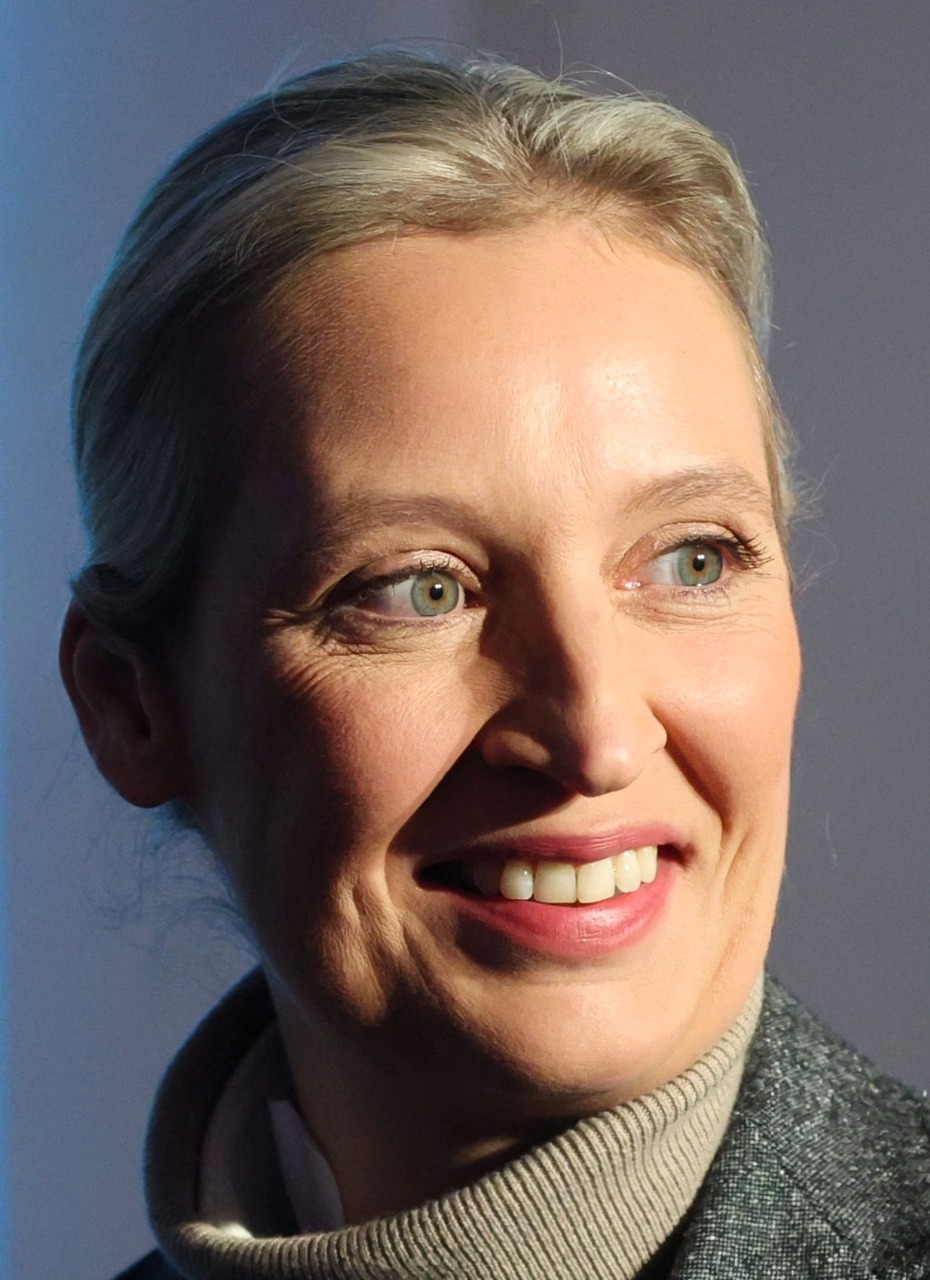
Dr. Weidel is a highly educated economist, a supporter of Friedrich von Hayek's economic theories, which are as far from totalitarian thinking as can be imagined. Possibly one reason to why Weidel has described Hitler as a "communist". Like his good friend, the philosopher Karl Popper, Hayek was a strong critic of all forms of authoritarianism, especially in the form of communism and the like. Hayek is considered by many to be one of the greatest economists of our time, and in 1974 he shared with the Social Democratic politician Gunnar Myrdal the Swedish Central Bank’s Prize in Economic Sciences in Memory of Alfred Nobel.
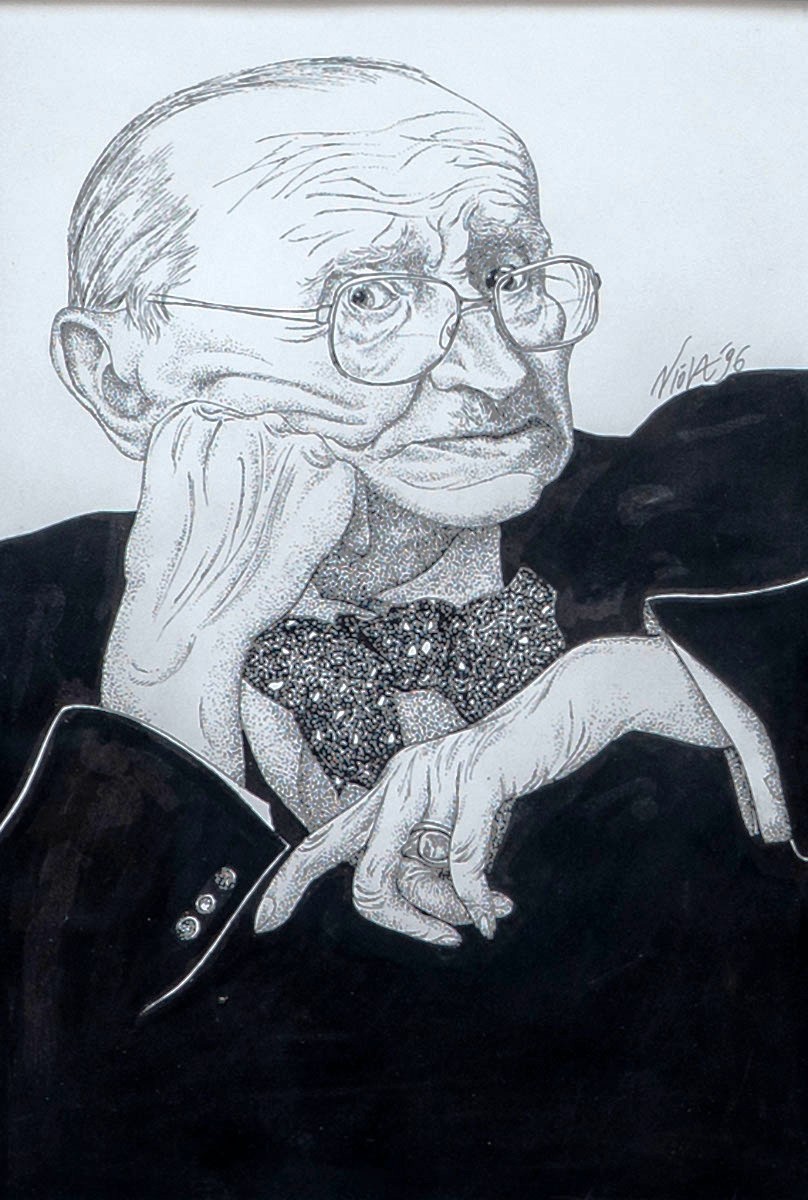
Despite his anti-totalitarian attitude, Hayek was a supporter of Pinochet's murderous Chilean military junta and even sympathetic to South Africa's apartheid regime. Hayek was undeniably a racist and this makes me increasingly convinced of the scandal involved in calling the price in economics a "Nobel Prize". Alfred Nobel never instituted anything like it and it is doubtful whether most of those who have been awarded the prize can actually can be called "scientists", any more than you can call theologians that. No, I don't give that prize much credit and consider it a shame that it was ever established in the name of Alfred Nobel.
Enough of all this. I will now leave the distressing theme of ultra-nationalism and other fanaticism and hope to spend a few hours with unworldly activities, perhaps in the form of music listening or something like that. Music possibly remains one of the areas where nationalism and globalism might still converge – without conflict – into an enjoyable harmony.
Bradnick, David L. (2017) Evil, Spirits, and Possession: An Emergentist Theology of the Demonic. Leiden: Brill. Goethe, Johann Wolfgang von (2009) Faust: Part 2. London: Penguin Classics. Goethe, Johann Wolfgang von (1981) Faust. Der Tragödie zweiter Teil. Mit Materialien. In fünf Akten. Stuttgart: Klett. Goethe, Johann Wolfgang von (2005) Selected Poetry. London: Penguin Classics. Hitler, Adolf (n.d.) Collection of Speeches, 1922-1945. https://www.nommeraadio.ee/meedia/pdf/RRS/Adolf%20Hitler%20-%20Collection%20of%20Speeches%20-%201922-1945.pdf Huxley, Aldous (1952) The Devils of Loudon. Harmondsworth: Penguin. Kehlmann, Daniel (2025) The Director. Weiss, Andrea (2008) In the Shadow of the Magic Mountain: The Erika and Klaus Mann Story. Chicago: University of Chicago Press. Wulf, Andrea (2022) Magnificent Rebels: The First Romantics and the Invention of the Self. New York: Knopf.


